The global economy is often viewed as a complex, impenetrable science, but at its core, it is driven by human behavior and biological imperatives. Economists have developed a unique vocabulary to describe market movements, characterizing them as a menagerie of animals that keep the economic machine moving. This approach acknowledges that economic decisions are influenced by deep-seated emotions such as fear, greed, and the desire for social fairness.
The concept of "animal spirits" was first introduced by John Maynard Keynes in 1936, as a way to explain economic decisions under conditions of radical uncertainty. Keynes argued that standard macroeconomic models, which rely on rational expectations, failed to account for the complexities of human behavior. The idea was later revived by Nobel-laureate economists George Akerlof and Robert Shiller, who used it to describe the role of emotions and narratives in driving economic cycles.
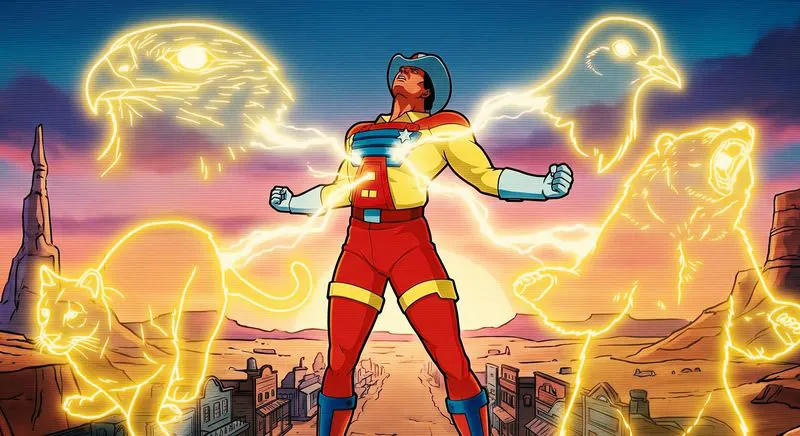
Various animal metaphors are used to describe different market actors, including bulls, bears, hawks, and doves. Bulls are optimistic investors who believe that every stock will rise in value, while bears are pessimistic and hoard cash, waiting for a financial downturn. Hawks, like Reserve Bank Governor Lesetja Kganyago, are vigilant about inflation and advocate for higher interest rates, while doves prioritize full employment and are more willing to implement expansionary monetary policies.
European Central Bank chief Christine Lagarde has described herself as an owl, a term that allows her to maintain policy flexibility without being tied to a specific ideological stance. This approach recognizes that economic cycles are heavily influenced by sentiment shocks and viral narratives, which can be difficult to predict using abstract mathematical formulations.
The use of animal metaphors extends beyond the basic categories of bulls, bears, hawks, and doves. Other niche characters include stags, who frequently buy and sell newly listed stocks, and pigs, who become greedy and hold onto their positions for too long. Algorithm traders, who follow trends mechanically, are referred to as turtles.
According to Bloomberg News editor-in-chief emeritus Matthew Winkler, South Africa has consistently stood out as one of the best emerging markets in the world. He noted that rand-denominated South African government bonds had delivered a 70% return, significantly outperforming the benchmark Bloomberg Emerging Market Global Currency and Government Bond Index.
While the use of animal metaphors provides a simplified way to communicate complex economic realities, it also underscores the inherent unpredictability of the global economy. As Winkler expressed optimism about South Africa's economic trajectory, it remains to be seen whether his words will prove to be a true bullish move or simply a dead cat bounce.
Key points
- Economists use animal metaphors to describe market movements, acknowledging the role of human emotions and narratives in driving economic cycles.