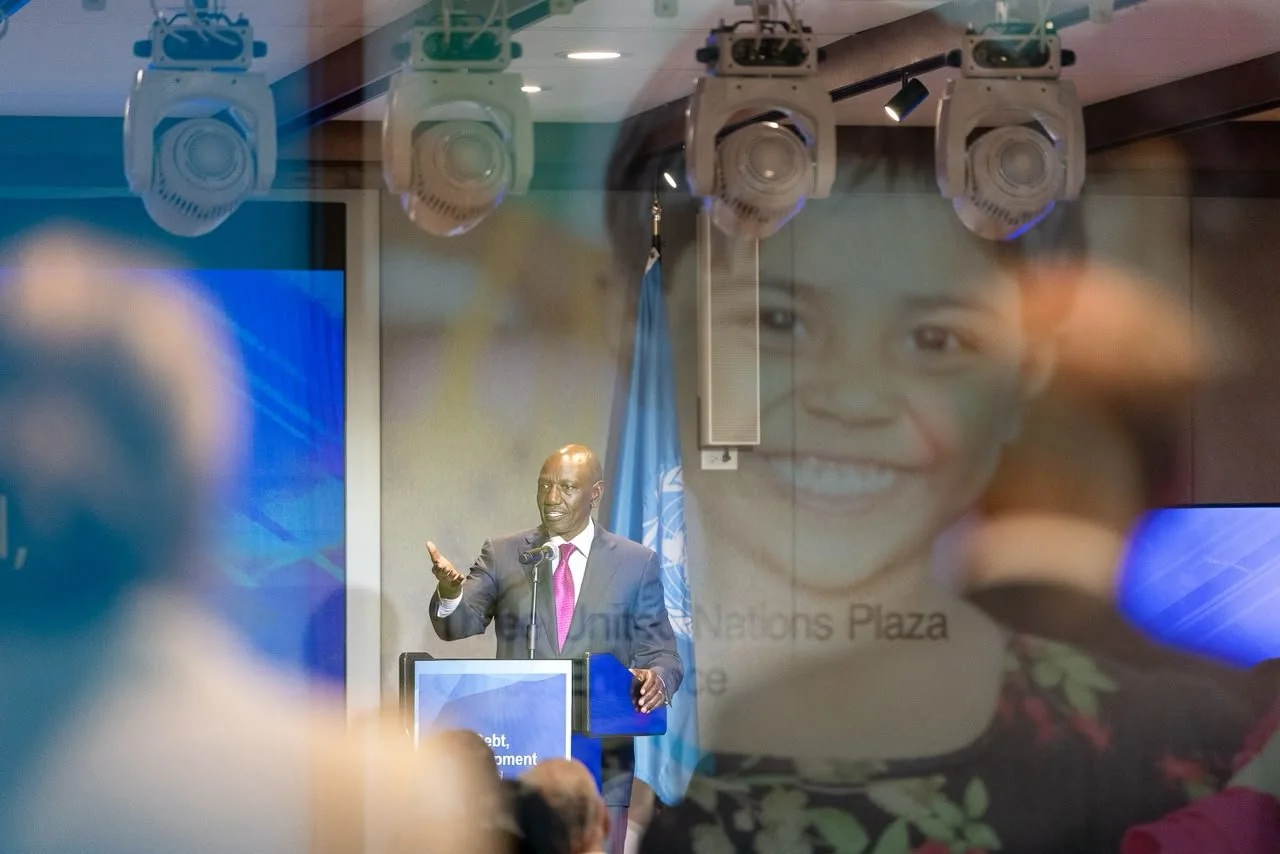
President William Ruto has called for greater protection of spending on children as rising debt costs put pressure on governments to meet their financial obligations while maintaining essential public services. Speaking on September 22, 2026, during the High-Level Dialogue on Debt, Development and the Next Generation in New York, Ruto warned that the growing debt crisis should also be viewed through its impact on children. He emphasized that debt decisions have consequences far beyond government accounts, with children bearing the effects when limited public funds are shifted away from education, healthcare, nutrition, and social protection.
Ruto's remarks came against a backdrop of growing concern over the amount developing countries are spending to service debt. According to UNICEF's State of the World’s Children 2025 report, 45 developing countries were spending more on debt interest than on health, while 22 were spending more on interest than education. The agency warned that continued debt pressure could create an “indebted generation”, with children and young people facing the consequences of borrowing undertaken before they were born.
The President said debt is not only an economic issue but also a children’s rights issue. "Debt is not only an economic issue; it is a children’s rights issue. A debt crisis becomes a children’s crisis when interest payments crowd out hospitals, health, nutrition, and social protection,” Ruto said. He added that the impact of government debt cannot be fully understood by looking at figures showing how much a country owes.
Ruto used Kenya’s education sector as an example of the choices governments face when public finances are under strain. According to Ruto, Kenya was dealing with four major education challenges when he assumed office: a shortage of teachers, inadequate classrooms, weaknesses in the education model, and financial difficulties affecting universities and other tertiary institutions. He said the government opted to put more money into education despite the fiscal difficulties that followed the COVID-19 pandemic.
The Kenyan government has taken steps to address the education challenges. Ruto said they hired an extra 100,000 teachers and built an extra 23,000 classrooms, adding that the government had increased the education budget by $2.2 billion. National Treasury data shows Kenya’s total nominal public and publicly guaranteed debt reached Sh11.81 trillion, equivalent to 67.8 per cent of GDP, by the end of June 2025.
UNICEF has warned that mounting debt can reduce the money available for programmes that support children. Its research indicates that increasing debt costs are already putting pressure on government spending on education, health, and social protection in developing economies. Kenya is facing the same challenge as debt servicing competes with the need to fund public investment while the government pursues fiscal consolidation.
Ruto's intervention connected Kenya’s domestic education challenges with the broader global debate on debt, development, and the next generation. He argued that governments must find ways to honour debt obligations while continuing to invest in the children who will form the future workforce and drive economic growth. UNICEF has urged governments to take children’s needs into account when making economic and fiscal decisions.
Key points
- President William Ruto warns that debt crisis threatens children's services
- 45 developing countries spend more on debt interest than on health - UNICEF
- Kenya's debt stands at Sh11.81 trillion, equivalent to 67.8 per cent of GDP