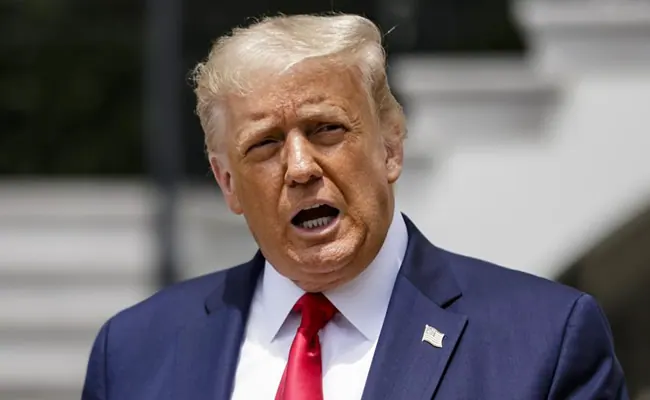
The Norwegian Nobel Committee is under intense scrutiny as they prepare to announce this year's Nobel Peace Prize winner, with US President Donald Trump actively lobbying for the prestigious award. Trump's outspoken calls for the Nobel Peace Prize have placed the five-member committee in a delicate position, navigating a complex web of politics and diplomacy. Last year, Venezuelan opposition leader Maria Corina Machado voluntarily gifted Trump her Nobel gold medal, publicly declaring that he deserved it.
Trump's strongest argument for the Nobel Peace Prize centers on his administration's role in brokering the historic Abraham Accords, announced in 2020. These bilateral agreements normalized diplomatic relations between Israel and several Arab nations, including the United Arab Emirates and Bahrain. Proponents argue that this achievement alone warrants serious Nobel consideration, demonstrating a pragmatic approach to Middle Eastern diplomacy and fostering regional stability.
However, Trump's critics point to a vast array of aggressive foreign policy decisions that directly contradict the ethos of the Nobel Peace Prize. Trump's actions on the ground often involved significant military escalation and the use of lethal force, including strikes on Iranian nuclear sites and the 2020 assassination of Iranian commander Qassem Soleimani. Critics argue that utilizing assassination as a diplomatic tool fundamentally undermines the principles of international law and peaceful conflict resolution.
Trump's approach to the Israeli-Palestinian conflict has been heavily criticized as intensely one-sided, with his administration's policies often deeply alienating the Palestinian people. The highly controversial decision to formally recognize Jerusalem as the capital of Israel and relocate the US Embassy there severed decades of established diplomatic precedent, sparking massive protests and severe international condemnation.
The Nobel Committee's dilemma lies in assessing Trump's legacy against the criteria for the Nobel Peace Prize, which is awarded to those who have "done the most or the best work for fraternity between nations, for the abolition or reduction of standing armies and for the holding and promotion of peace congresses." Experts suggest that this polarizing record could strongly influence the committee to select a laureate who enjoys broad, uncontroversial consensus.
Several organizations and individuals are leading contenders for the Nobel Peace Prize, including Save the Children and Mykola Kuleba, a prominent Ukrainian children's rights activist. Other strong contenders include Sudan's Emergency Response Rooms (ERR) and the Committee to Protect Journalists (CPJ). Conversely, if the committee is prepared to go head-to-head with Trump's political influence, they could select the International Criminal Court or the UN special rapporteur on the occupied Palestinian territories, Francesca Albanese.
Ultimately, whether Donald Trump deserves the Nobel Peace Prize depends entirely on how one weighs the geopolitical breakthroughs of the Abraham Accords against a broader record characterized by aggressive military posturing and deeply polarizing diplomatic maneuvers. The Norwegian Nobel Committee must grapple with this question carefully, fully aware that their decision will reverberate globally.
Key points
- Trump's eligibility for the Nobel Peace Prize is a contentious issue
- The Norwegian Nobel Committee faces pressure as they prepare to announce this year's winner
- Several organizations and individuals are leading contenders for the Nobel Peace Prize