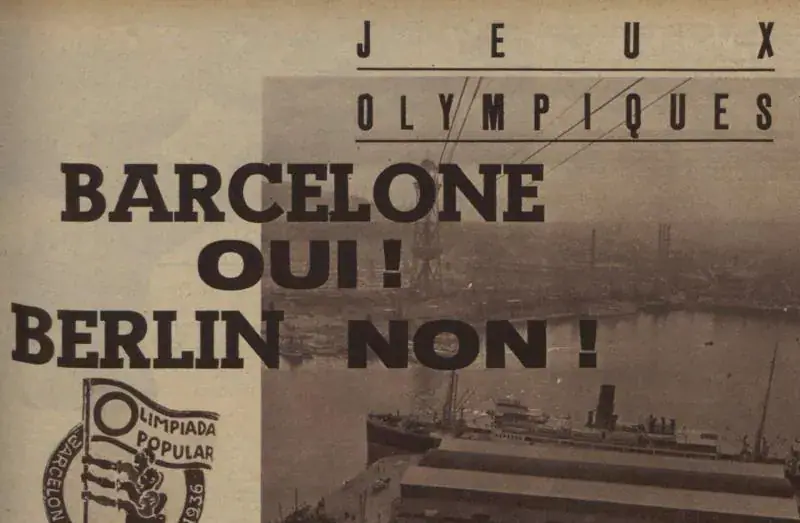
The 1936 Berlin Olympics, initially chosen as the host city by the International Olympic Committee in 1931, became a focal point of controversy following the rise of Nazi Germany. As the country's totalitarian regime and antisemitic policies became more pronounced, the event took on significant political undertones. An alternative event, the People's Olympiad, was planned in Barcelona for the summer of 1936, further intensifying the debate.
In the years leading up to the games, a movement to boycott the event gained momentum in the United States and Europe. The formation of the International Committee for the Respect of the Olympic Ideal highlighted the plight of Jewish athletes in Germany, who faced discriminatory treatment. This movement was fueled by various factors, including the passage of antisemitic laws in Nuremberg in September 1935 and Germany's remilitarization of the Rhineland in March 1936.
In France, the debate over participating in the 1936 Berlin Olympics became particularly sensitive, especially with the country's recent elections and the formation of the Popular Front government. The French Sports and Gymnastics Federation, established in 1934, and left-wing parties such as the SFIO and Communist Party, spearheaded the movement against attending the Berlin games. Instead, they advocated for participation in the antifascist People's Games in Barcelona.
The French press played a significant role in shaping public opinion on the matter. Left-leaning publications, including Sport, Le Populaire, and L'Humanité, actively promoted the boycott and supported the alternative event in Barcelona. In contrast, conservative and sports-oriented newspapers like L'Auto adopted a more nuanced stance, separating the sporting aspects from the politics.
Various voices emerged in the French press, offering differing perspectives on the boycott. Some argued that it was essential to take a stand against the Nazi regime, citing the barbaric nature of the Hitler-led government. Others contended that the Olympics should remain apolitical, focusing solely on sporting achievements.
The debate over the 1936 Berlin Olympics boycott reflected broader concerns about the intersection of sports and politics. As the world grappled with the implications of Nazi Germany's aggressive expansion and discriminatory policies, the Olympics became a focal point for protests and demonstrations.
The controversy surrounding the 1936 Berlin Olympics serves as a historical example of the complex relationships between sports, politics, and social justice. The discussions and debates that unfolded in the years leading up to the event continue to resonate, offering valuable insights into the power of athletic competitions to shape public opinion and influence international relations.
Key points
- The 1936 Berlin Olympics sparked a boycott movement due to Nazi Germany's antisemitic policies and aggressive expansion.