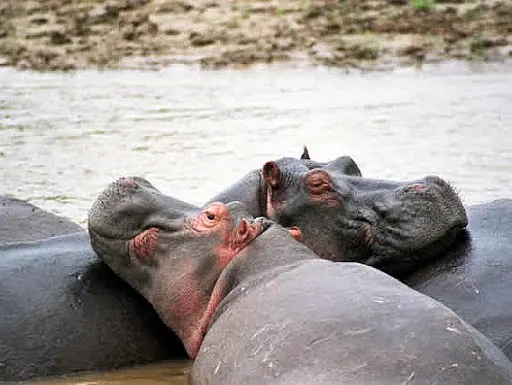
Multiple hippopotamus carcasses have been discovered along the Semuliki River in Beni territory, Democratic Republic of the Congo, since the beginning of the week. The Institut congolais pour la conservation de la nature (ICCN) expressed concern over the situation in a statement released on Wednesday, September 30, 2026. The ICCN is urging residents to exercise vigilance and take precautions to prevent the spread of the disease.
According to the ICCN, joint analysis with veterinarians from the Virunga National Park has confirmed that the cause of death is anthrax, a bacterial disease. The ICCN has set up a response protocol to quickly contain the spread of the disease among wild fauna and prevent any risk to local populations. Residents are advised to avoid touching, moving, or burying the carcasses until the final analysis results are available.
The ICCN warns that anthrax can be transmitted to humans through contact with a sick or dead animal, as well as through the consumption of contaminated meat. To minimize risks, the population is advised not to touch, move, cut, bury, or burn the carcasses of dead hippopotamuses. Additionally, residents are urged not to buy, sell, transport, or consume meat from animals found dead or showing signs of illness.
The ICCN also recommends keeping children, livestock, and domestic animals away from areas where the carcasses are found. Residents are advised to avoid using water near the affected sites and to immediately report any new discoveries of carcasses to local authorities, veterinary services, community relays, or ICCN agents.
The situation has raised concerns about the potential impact on local communities and the environment. The ICCN is working to contain the spread of the disease and prevent further risks to humans and animals. The Virunga National Park, a protected area, is home to a diverse range of wildlife, including hippopotamuses.
This incident is not an isolated case, as a similar alert was reported in Vitshumbi after the discovery of a hippopotamus carrying anthrax. The ICCN and other authorities are taking measures to prevent the spread of the disease and protect local populations. The organization is urging residents to cooperate and take necessary precautions.
The ICCN's efforts to address the situation include ongoing monitoring and analysis to determine the extent of the outbreak. The organization is working closely with local authorities, veterinarians, and other stakeholders to contain the spread of anthrax and mitigate its impact on the environment and local communities.
Key points
- The ICCN has confirmed that the death of hippopotamuses in the Semuliki River is due to anthrax.
- The organization is urging residents to avoid touching or consuming meat from affected animals.
- A response protocol has been set up to contain the spread of the disease and prevent risks to humans and animals.