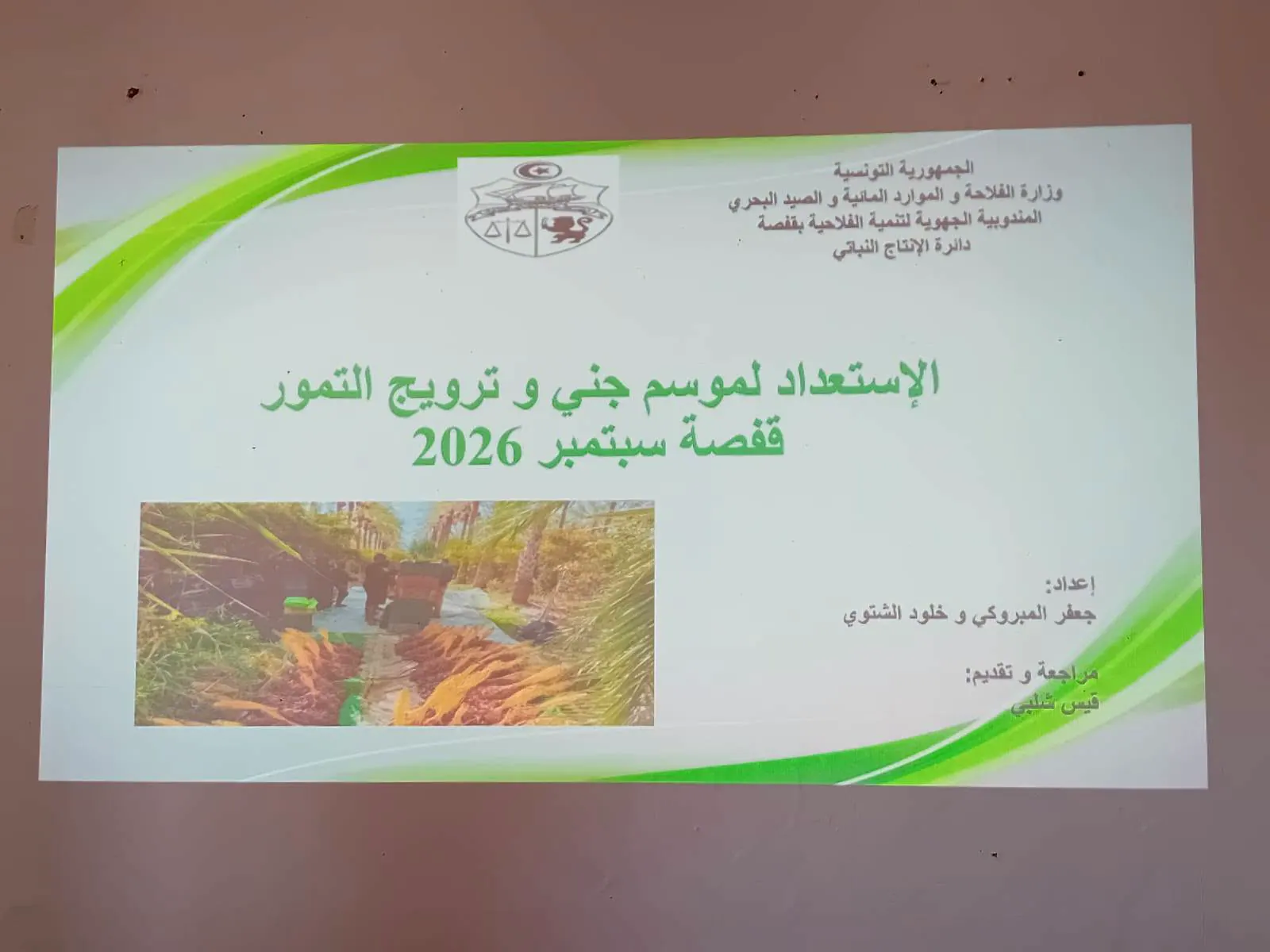
The Gafsa region in Tunisia has begun its date palm harvesting season, which is expected to last until December. A recent meeting was held at the Gafsa governorate to discuss preparations for the season and ensure its success. The region has seen significant growth in date palm cultivation in recent years, with the number of palm trees increasing steadily. This season's harvest is expected to be substantial, with 14,700 palm trees set to be harvested.
According to data from the governorate, the number of palm trees in the region has been increasing over the past few seasons. In the 2023/2024 season, there were 12,500 palm trees, which rose to 15,000 in the 2024/2025 season and 15,680 in the 2025/2026 season. Despite a slight decrease, the current season's harvest is still expected to be significant. The growth in date palm cultivation has made Gafsa a major player in Tunisia's agricultural sector.
The date palm harvesting season, which began on October 1, is expected to last until December. The region's authorities are working to support farmers and ensure a successful harvest. The sector has seen significant investment in recent years, with efforts to improve irrigation, pest control, and harvesting techniques. These efforts aim to increase production and improve the quality of dates.
The Gafsa region's date palm sector has become a vital part of the local economy, providing employment and income for many families. The sector's growth has also led to increased interest from investors and buyers. To support the sector's continued growth, the governorate is working to develop infrastructure and provide training for farmers.
In addition to the economic benefits, the date palm sector also plays a significant role in preserving the region's environment. Date palms are well-suited to the region's climate and soil conditions, making them an ideal crop for sustainable agriculture. Efforts to promote sustainable agriculture practices are underway, with a focus on reducing waste and conserving water.
The success of the date palm harvesting season is crucial for the local economy and for Tunisia's agricultural sector as a whole. The sector's growth has the potential to contribute significantly to the country's economic development. To achieve this, the governorate is working to address challenges facing the sector, including climate change and pests.
As the harvesting season progresses, farmers and authorities will be working closely together to ensure a successful harvest. The sector's continued growth and success will depend on ongoing investment and support. With the right strategies in place, the Gafsa region is poised to remain a major player in Tunisia's date palm sector for years to come.
Key points
- The Gafsa region has 14,700 palm trees expected to be harvested in the 2026/2027 season.
- The region has seen significant growth in date palm cultivation in recent years.
- The date palm sector plays a vital role in the local economy and environment.