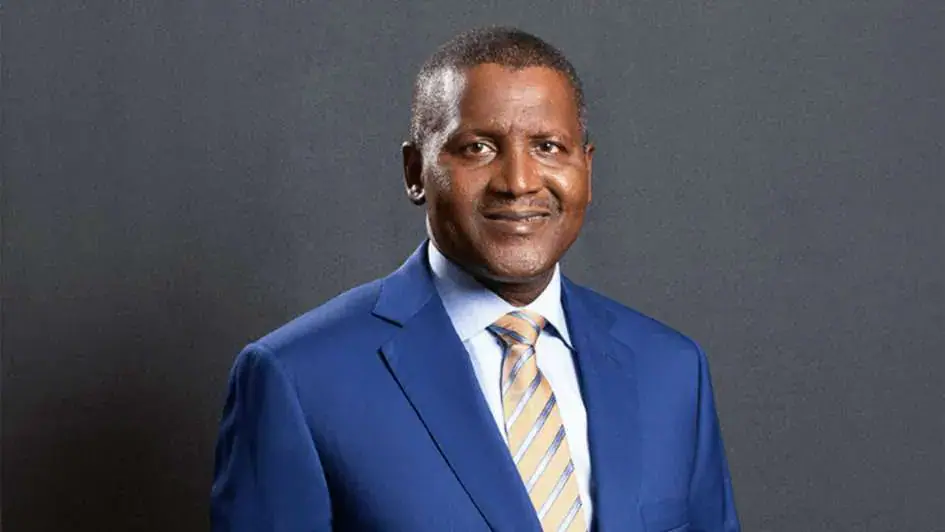
Africa's richest industrialist, Aliko Dangote, has emphasized the need for Nigeria to prioritize manufacturing and domestic production to achieve sustainable economic growth. He warned that the country's dependence on imports and trading could perpetuate poverty. Dangote made these remarks at the 25th Annual Conference of Women in Management, Business and Public Service in Lagos, delivering a keynote address titled 'The Geography of Opportunity: Why the World Needs What Africa Has'.
Dangote lamented that Nigeria continues to celebrate trading at the expense of productive enterprise, despite its enormous natural resources and potential for industrial development. He identified inconsistent government policies and inadequate electricity supply as major obstacles discouraging local entrepreneurs from investing in manufacturing. These challenges hinder the growth of the manufacturing sector, which is crucial for job creation, wealth generation, and economic independence.
The Dangote Group president challenged Nigerian businesses, particularly women entrepreneurs, to look beyond conventional trading and venture into production, processing, and other activities that add value to locally available resources. He cited his conglomerate's experience, recalling how it moved away from import-dependent trading after recognizing the limitations of the business model. This shift led to the group's expansion into cement production and other major industrial ventures.
Dangote cited the group's cement business as evidence of the competitive advantages of investing in domestic manufacturing. He disclosed that Dangote Cement had developed a robotic manufacturing plant and reduced production costs to below $2.40, lower than India's Reliance Industries. This achievement demonstrates the potential for Nigerian businesses to compete globally when they invest in modern technology and manufacturing processes.
Dangote also recounted the difficulties encountered in establishing the Dangote Refinery, which was initially designed to process 300,000 barrels of crude oil daily but eventually reached a capacity of 700,000 barrels per day. He revealed that several international contractors initially considered the project unrealistic, while financial institutions were reluctant to finance it. Despite these challenges, the group took responsibility for the engineering, procurement, and construction of the project.
The industrialist further recalled the financial pressure his businesses faced during the COVID-19 pandemic, disclosing that the group continued servicing loan obligations of $720 million every six months without obtaining repayment extensions. He described this experience as evidence of the importance of understanding one's investments, taking calculated risks, and maintaining commitment to long-term objectives despite uncertainty and opposition.
Dangote warned that Africa risks missing a historic opportunity unless it develops the industrial capacity to harness its natural and human resources. He projected that one in every four people in the world would be African by 2050, yet the continent currently accounts for less than three cents of every dollar generated in global output. He urged African business leaders to replicate investor confidence across other sectors by mobilizing domestic capital and directing it towards productive ventures.
Key points
- Aliko Dangote emphasizes the need for Nigeria to prioritize manufacturing and domestic production to achieve sustainable economic growth.
- Dangote cites his conglomerate's experience in cement production as evidence of the competitive advantages of investing in domestic manufacturing.
- The industrialist warns that Africa risks missing a historic opportunity unless it develops the industrial capacity to harness its natural and human resources.
Reporting sources
- Dangote: Nigeria Must Shift From Trading To Manufacturing To Achieve Prosperity · Business Hallmark