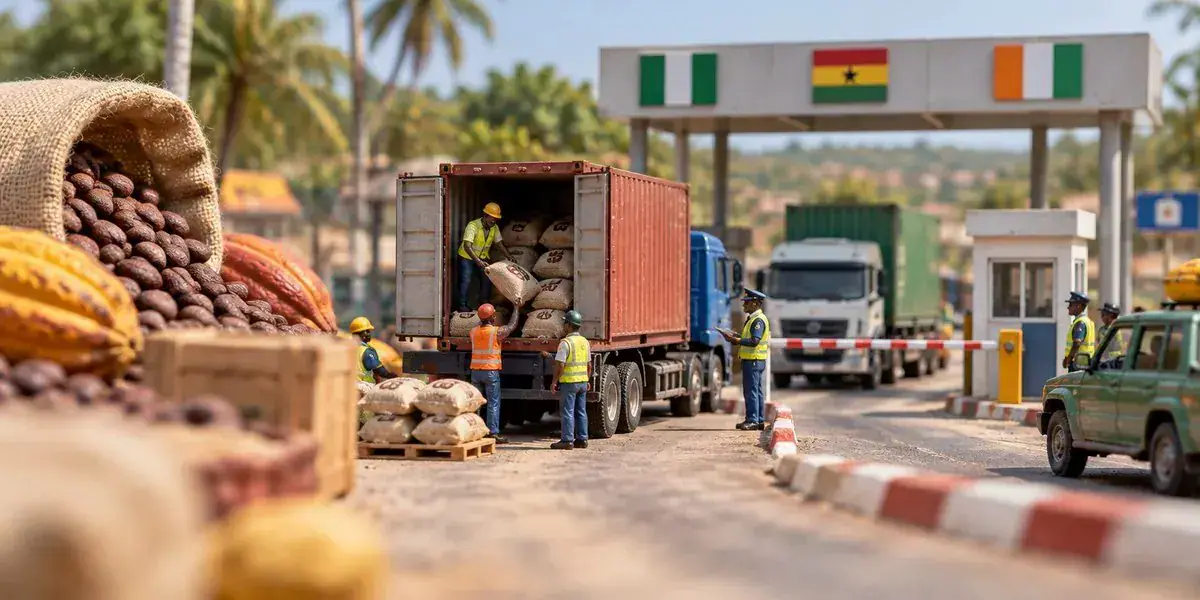
Nigerian business magnate Aliko Dangote unveiled a proposal for a West Africa highway at the Invest in Ghana Summit in Accra on November 16, 2026. The planned highway would span 1,000 kilometers, connecting Nigeria, Ghana, and Côte d'Ivoire. This corridor would serve a substantial ECOWAS market of approximately 450 million people. By positioning Ghana as a gateway to the entire ECOWAS region, Dangote reframed the investment case for the region.
The proposed highway aims to address poor connectivity, a significant constraint facing West African manufacturers. Inefficient transportation inflates costs and reduces margins across borders. A paved and managed corridor through the three countries would shorten delivery times and reduce friction for agro-processors, consumer goods companies, and distributors. This development would be a crucial step towards enhancing regional trade.
Dangote emphasized that Ghana's market should not be viewed in isolation, but as part of a larger regional market. He stated that Ghana's market is, in fact, a 450-million-people market, encompassing the ECOWAS region. This perspective shift draws attention to the wider regional opportunities and potential for growth. The highway proposal has the potential to unlock new investment opportunities in the region.
The Dangote Group has expressed commitment to engaging with Ghana's president and other regional leaders to secure political priority for the proposed route. This commitment signals intent and highlights the importance of inter-governmental coordination before project finance. However, no government has approved a route, and no procurement model, financing plan, or delivery timetable has been announced.
At this stage, the highway proposal is a policy signal rather than a funded asset. Investors should treat the proposal as an early directional indicator. If governments formalize the project, it could attract development financiers, construction contractors, and logistics operators. ECOWAS infrastructure mandates and multilateral lenders focused on trade corridors would be natural funding partners.
Separately, the Dangote Group has committed 3.3 trillion naira to road infrastructure within Nigeria. This domestic spending is a distinct initiative and should not be conflated with funding for the regional corridor. Investors and policymakers should monitor developments, including route feasibility studies, a formal inter-governmental framework, and a multilateral financing mandate.
The clearest near-term signal to watch is whether a joint government statement emerges from Nigeria, Ghana, and Côte d'Ivoire. The proposed highway's success will depend on the ability of governments to coordinate and formalize the project. If realized, the highway could significantly enhance regional trade and economic growth.
Key points
- The proposed highway would span 1,000 kilometers, connecting Nigeria, Ghana, and Côte d'Ivoire, and serve an ECOWAS market of approximately 450 million people.
- The project could attract development financiers, construction contractors, and logistics operators if governments formalize it.
- The Dangote Group has committed 3.3 trillion naira to road infrastructure within Nigeria, a separate initiative from the proposed regional corridor.
Reporting sources
- Dangote West Africa highway links Nigeria Ghana Ivory Coast · FurtherAfrica