Dangote Industries Limited has stated that Africa's commodity wealth has trapped the continent in a cycle of economic slavery, with raw materials being extracted and processed abroad before returning to the continent as costly finished goods. According to Edwin Devakuma, the group's vice president, this cycle has cost Africa decades of lost value. He compared it to bondage, where copper, diamonds, and other raw materials leave African soil only to return as luxury goods priced far beyond their original value.
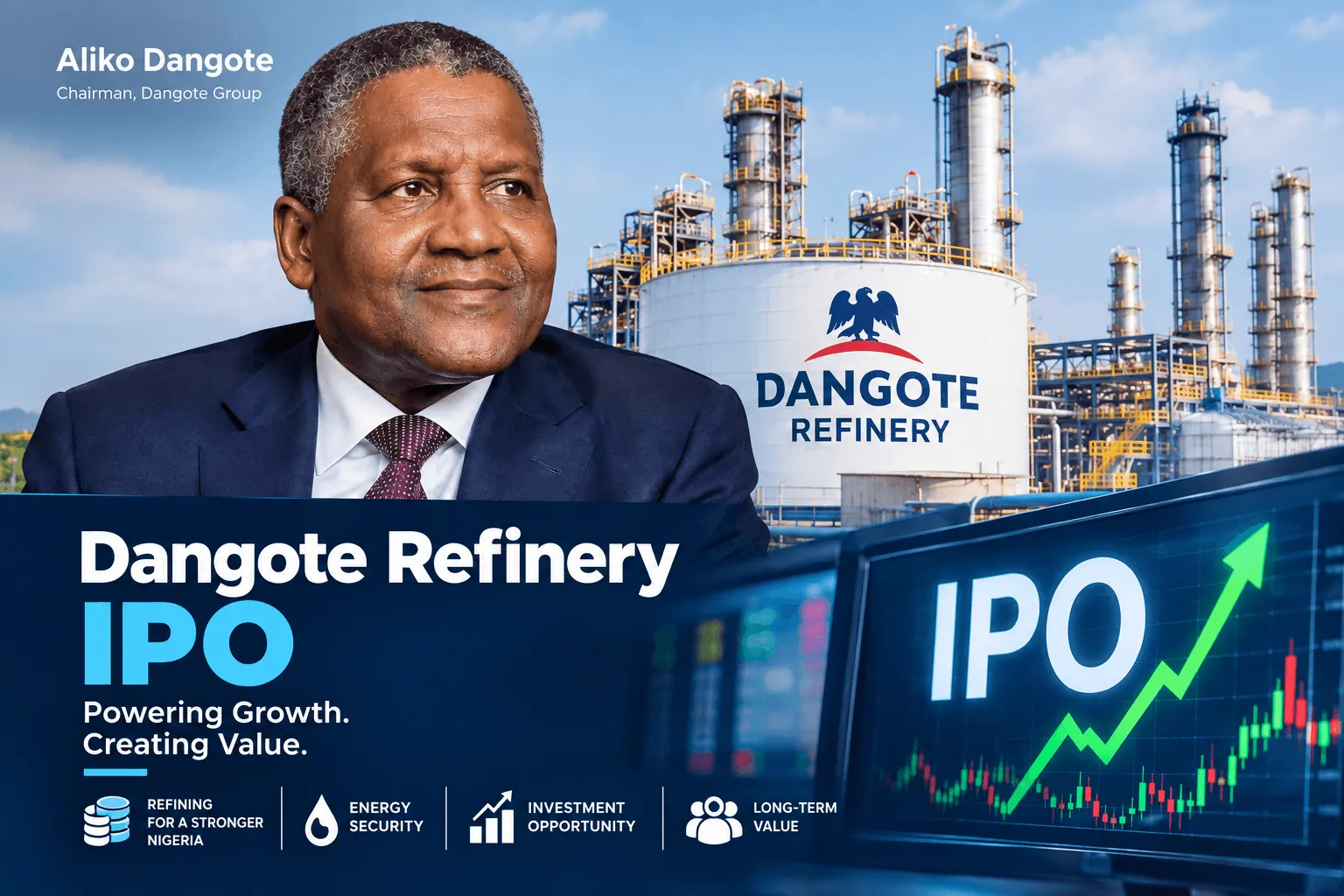
The Nigerian conglomerate's Vision 2030 strategy aims to fix this problem by pushing beyond crude refining into petrochemicals. The plan includes producing linear alkylbenzene for detergents, base oils for industrial lubricants, and polypropylene for plastics. These products are designed to force value addition to happen on African soil rather than overseas. Devakuma also pointed to planned cross-border pipeline networks stretching thousands of kilometres into landlocked nations, including Ethiopia, Zimbabwe, and Sudan.
Devakuma recounted some of the challenges faced during the construction of the refinery project. He noted that the sheer size of the project meant that standard supply chains and local infrastructure could not suffice. Local construction firms stated they lacked the capacity to build the main facilities. However, Dangote scaled up, buying 2,563 heavy-duty equipment units and securing massive infrastructure from scratch to overcome national deficiencies.
One of the most striking aspects of the project was the construction of a fully serviced, climate-controlled residential city with a capacity for 50,000 people. The city, which included running water, street lighting, a dedicated water treatment plant, solid-waste management, and its own 36-megawatt power plant, became critical when the pandemic hit. As global supply chains froze and construction sites around the world shut down, Dangote kept building.
The residential compound played a crucial role in maintaining the workforce during the pandemic. Dangote sealed roughly 20,000 workers inside the compound while managing thousands more under strict controls outside it. Devakuma stated that if they had not had this facility, they would have lasted another two years of COVID. The company's refinery, the largest single-train facility of its kind, has already positioned Nigeria as a net exporter of refined petroleum products.
Experts have noted that the feasibility of replicating the same model across petrochemicals, minerals processing, and cross-border energy infrastructure remains an open question. The success of this model will hinge on financing, regulatory alignment among African governments, and the continent's ability to build and staff projects at a scale historically reserved for multinational conglomerates operating elsewhere.
Dangote's Vision 2030 strategy has the potential to transform Africa's economy by unlocking the value of its natural resources. The company's focus on petrochemicals and cross-border pipelines could serve as a model for other African nations to follow. However, the challenges that lie ahead should not be underestimated, and the company's success will depend on its ability to overcome them.
Key points
- Africa's commodity wealth has trapped the continent in a cycle of economic slavery.
- Dangote's Vision 2030 strategy aims to break this cycle by focusing on petrochemicals and cross-border pipelines.
- The success of the model will depend on financing, regulatory alignment, and the continent's ability to build and staff large-scale projects.