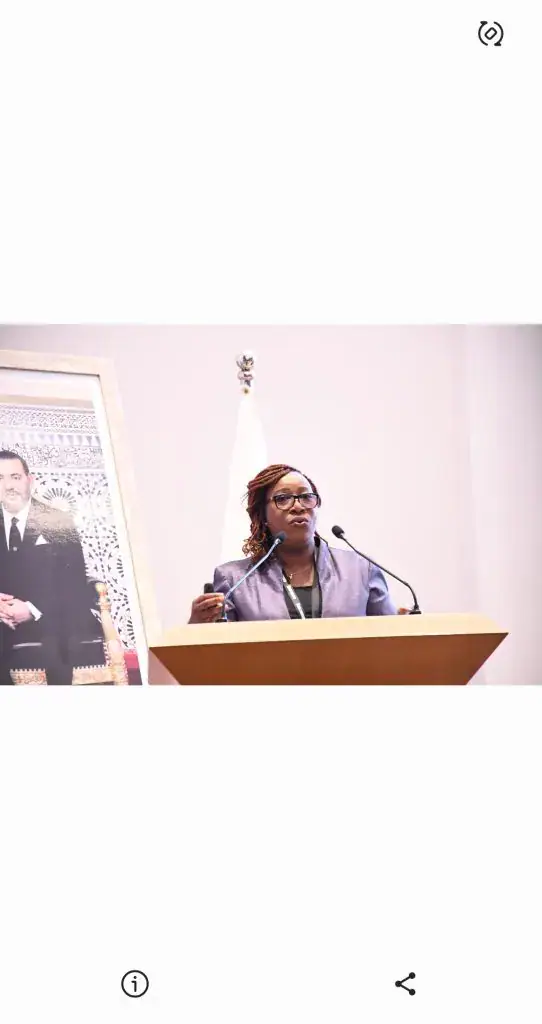
The Dakhla Global Summit in Morocco recently hosted a panel discussion on vaccination challenges in Africa, focusing on coverage, public trust, and financing. Experts, including Professor Chakib Abdelfattah from Morocco and Professor Pétronille Acray-Zengbé from Côte d'Ivoire, shared their insights on the current state of vaccination in Africa. They highlighted the continent's significant gap in meeting the 2030 World Health Organization (WHO) vaccination targets. According to Abdelfattah, Africa's vaccination coverage for diseases such as DTC3, pneumococcus, and measles falls short of the 90% target.
Professor Abdelfattah emphasized that Africa is far from achieving the WHO's 2030 vaccination goals, with coverage rates of 76% for DTC3, 65% for pneumococcus, and 56% for measles. He also noted that there are approximately 6 million "zero-dose" children on the continent, and 1.5 million children die annually from infections preventable by vaccination. Abdelfattah attributed the problem to a decline in public trust in vaccines, fueled by alarmist messages on social media and inadequate scientific communication.
The issue of public trust in vaccines was a major concern for Abdelfattah, who pointed to the loss of credibility among decision-makers and the quality of relationships in vaccination centers. He also highlighted cultural representations of the body and disease, where some parents may view vaccination as unnecessary if they perceive themselves as healthy. To restore trust, Abdelfattah recommended moving away from vertical and guilt-inducing campaigns and towards participatory communication, as well as ensuring transparency on side effects and involving socio-anthropologists in the vaccination process.
Professor Acray-Zengbé, a health economist, discussed the paradox of underinvestment in prevention, noting that the benefits of vaccination are often diffuse, delayed, and politically invisible. She argued that decision-makers tend to prioritize immediate and visible crises over long-term prevention efforts. Acray-Zengbé advocated for a shift in approach, using data to demonstrate the cost of inaction and making the benefits of vaccination more tangible.
Acray-Zengbé emphasized that vaccination is not a cost, but an investment, citing estimates that in low- and middle-income countries, every dollar invested in vaccination generates approximately $16 in healthcare cost savings and $44 in societal benefits. She also recommended using the Disability-Adjusted Life Year (DALY) metric to measure the burden of disease and advocate for increased investment in prevention.
The experts also discussed the challenges of financing vaccination programs in Africa, particularly in the context of the transition of Gavi, the Vaccine Alliance. Acray-Zengbé cited the example of Côte d'Ivoire, which has committed to investing 259.2 billion CFA francs in vaccination efforts from 2026 to 2030. She emphasized the importance of domestic financing and the need for African countries to take ownership of their vaccination programs.
The Dakhla Global Summit, now in its second edition, brings together delegations from Africa, the Maghreb, and Europe to discuss pressing issues in health, social protection, and human development. The summit provides a platform for experts to share knowledge, experiences, and innovative solutions to address the complex challenges facing the continent.
Key points
- Experts call for increased investment in vaccination programs and improved public trust in vaccines to address Africa's vaccination challenges.