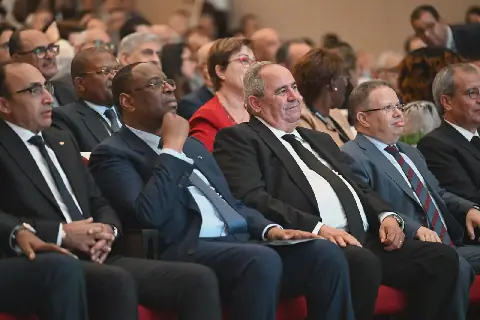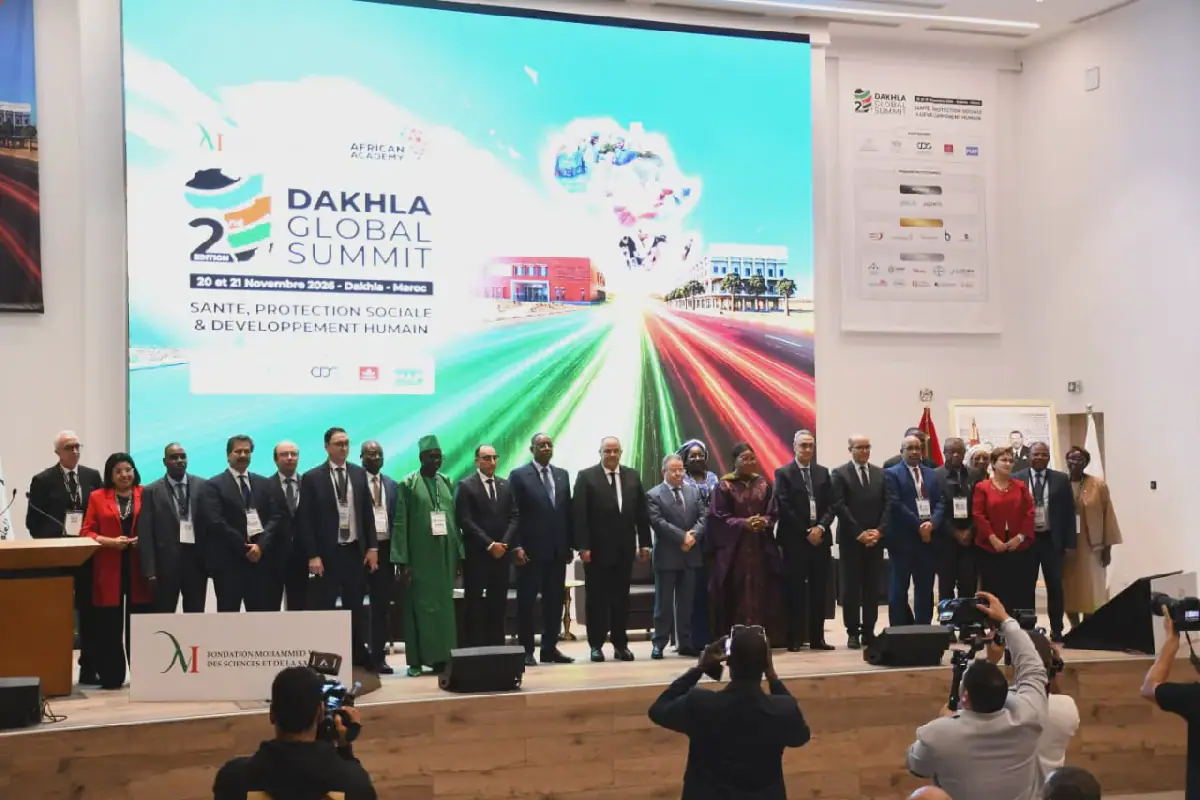
The Dakhla Global Summit, themed "Health and Social Protection: A Royal Project," kicked off in Dakhla, Morocco, with over 600 attendees, including African and European dignitaries. The summit was opened by Pr Lahcen Belyamani, President-Director General of the Mohammed VI Foundation for Science and Health, who emphasized the importance of healthcare sovereignty in Africa. He noted that Dakhla, once lacking a medical faculty and university hospital, now boasts both, with the Mohammed VI University Hospital Complex having recently opened its doors.
Pr Belyamani highlighted the significance of the summit's location, citing Dakhla's strategic position, looking both towards the Atlantic and the South. He stressed that the summit aims to produce tangible outcomes, including the Declaration of Dakhla, which will be adopted on Saturday, and an index of health investment, designed to measure states' healthcare expenditure and its impact on families and health outcomes. The index, developed by a committee of ten independent scientists, is expected to yield its first results in early 2027.
The Moroccan Minister of Health and Social Protection, Pr Youns Bjijou, presented his country's experience in generalizing social protection, emphasizing the importance of healthcare sovereignty in the face of the Covid-19 pandemic. He outlined Morocco's four-pillar social edifice, including universal access to mandatory health insurance, family allowances, expanded retirement schemes, and unemployment benefits. Bjijou noted that Morocco's health insurance coverage has risen from 42% to nearly 89% of the population in recent years.
Pr Bjijou also detailed Morocco's efforts to revamp its national health system around four pillars: renovated governance, modernized healthcare services, human capital, and digital transition. He called for synergy between public, private, and non-profit sectors, stressing that citizens are indifferent to institutional boundaries. The minister expressed hope that the Dakhla Declaration 2026 will be a robust action pact, with clear, solidary, and sustainable commitments.
The Moroccan Minister of Higher Education, Research, and Innovation, Pr Azzeddine El Midaoui, emphasized that scientific sovereignty is crucial for Africa's development. He argued that sovereignty is increasingly technological and that Africa must invest in producing its own tools and expertise. El Midaoui called on academics to assume responsibility for innovation, research, and training, advocating for continental construction in areas where individual countries cannot achieve sovereignty alone.
El Midaoui highlighted the potential of Africa's youth, describing them as the continent's greatest asset. He urged strengthened cooperation between African universities, foundations, and research institutes, emphasizing that science and innovation must be harnessed to drive progress. The minister's sentiments were echoed by other attendees, who recognized the importance of collective action in addressing Africa's healthcare challenges.
As the summit continues, participants are expected to engage in discussions and workshops aimed at fostering collaboration and identifying solutions to Africa's healthcare needs. The Dakhla Global Summit serves as a platform for leaders to share experiences, expertise, and innovative ideas, with the ultimate goal of advancing healthcare sovereignty and social protection across the continent. Key outcomes from the summit are expected to be announced in the coming days.
Key points
- The Dakhla Global Summit focuses on healthcare sovereignty and social protection in Africa.
- Morocco's experience in generalizing social protection was presented as a model for other countries.
- The summit aims to produce tangible outcomes, including the Declaration of Dakhla and an index of health investment.