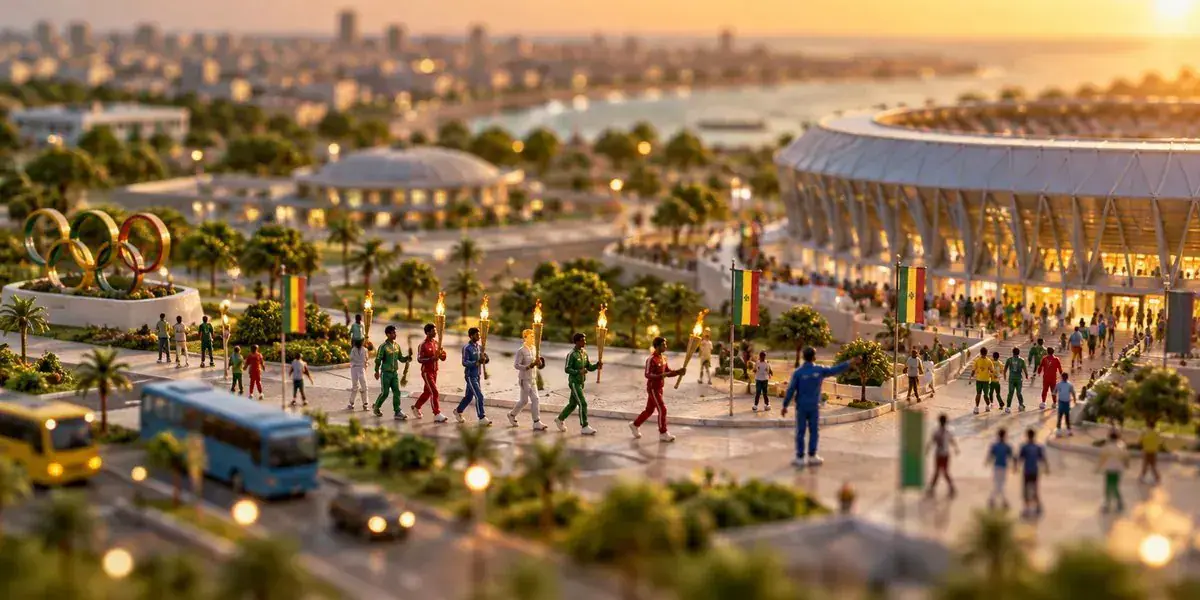
The Dakar 2026 Youth Olympics will mark a significant milestone for Africa, as it hosts its first Olympic event. Scheduled to take place from 31 October to 13 November 2026, the Games will bring together around 2,700 athletes aged 15 to 17 from across the globe. According to the International Olympic Committee, the event will feature 25 sports, with a total of 239 competition events and 153 medal ceremonies. This historic event will put Senegal at the centre of a global sporting and investment story.
The competition will be held across eight venues spread over three locations, with Dakar and Diamniadio serving as the main anchors. The coastal resort of Saly, approximately 80 kilometres from the capital, will also host several events. This three-site model will test transport links and event coordination at scale. The programme is built around near-equal participation, with 114 events for male athletes, 114 for female athletes, and 11 mixed-team events. The inclusion of beach wrestling, Baseball5, and wushu taolu will add a new dimension to the Youth Games programme.
Dakar 2026 will also be notable for being the first Youth Olympics to field a Refugee Olympic Team. Six Africa-based athletes will compete across several disciplines, including athletics and combat sports, with support from the national Olympic committees of Kenya and Uganda. This move signals a broader public mandate for the event beyond sport alone. The organisers have linked a youth engagement and education programme to the Games' legacy framework, which is expected to be a key long-term metric for policymakers and donors.
The investment case for Dakar 2026 rests on what the Games leave behind. Government documents and official communications point to infrastructure upgrades, tourism growth, and youth development as primary objectives. Diamniadio, Senegal's planned satellite city, will host several venues, with new or upgraded facilities potentially supporting future commercial and civic activity. The value of these investments will depend on operating costs and post-event demand.
The inclusion of Saly in the event extends the Games' footprint into Senegal's coastal tourism corridor. Investors tracking hospitality and real estate in the region will be watching to see whether visitor numbers in late 2026 translate into sustained demand. However, domestic concerns around living costs and employment remain relevant context, and these pressures will shape local sentiment and the political environment for post-Games development spending.
The participation of Russian athletes adds a layer of policy complexity to the event. The Russian Olympic Committee has indicated that 13 athletes will compete in Dakar 2026. This development will likely be closely watched by policymakers and observers, given the current global sporting landscape. The event's legacy framework will also be closely monitored, as it is expected to provide a model for future Olympic events.
As the first Olympic event in Africa, Dakar 2026 presents a unique opportunity for Senegal and the continent as a whole. With a focus on youth development, infrastructure upgrades, and tourism growth, the Games have the potential to leave a lasting impact. The success of the event will depend on various factors, including the execution of the competition, the legacy framework, and the investment climate.
Key points
- Dakar 2026 will be the first Olympic event to be hosted in Africa.
- The Games will feature 25 sports and 239 competition events.
- The event's legacy framework includes a youth engagement and education programme.