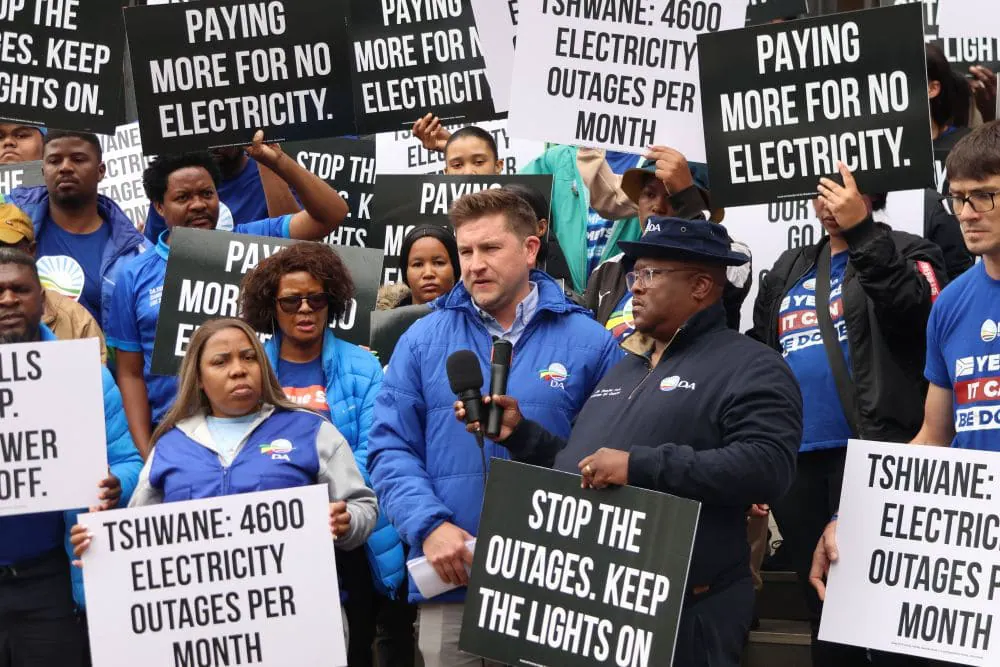
The Democratic Alliance (DA) in Tshwane has lodged a complaint with the National Energy Regulator of South Africa (Nersa) against the Tshwane metro, highlighting the city's persistent electricity problems. Cilliers Brink, the DA's mayoral candidate for Tshwane, stated that the party's action was not planned in response to the recent storm that caused widespread power outages. A storm had hit the city, causing a significant fire at the Waltloo substation and leaving nearly half of Pretoria without electricity.
According to Brink, the Tshwane metro generates R14 billion in electricity revenue annually but experiences an average of 4,600 power outages per month, with about 70% of these outages lasting longer than eight hours. He believes that such frequent and prolonged power outages may constitute a breach of the Tshwane metro's licensing conditions for electricity distribution. The Electricity Regulation Act sets standards for the quality of electricity supply and service, targets for performance improvement, and the proper functioning and maintenance of distribution networks.
Brink expressed concerns that the Tshwane metro's electricity network is not resilient to severe weather conditions due to inadequate maintenance and capital replacement over the years. He attributed the decline in the reliability of Tshwane's electricity network not only to aging infrastructure but also to poor political and budgetary decisions. The DA mayoral candidate pointed out that the current administration's priorities have been misplaced, with a focus on paying irregular invoices to contractors for water tankers and security companies rather than investing in infrastructure.
The consequences of these poor decisions are now being felt across Tshwane, according to Brink. He noted that the city has lost approximately 85,000 jobs between April 2025 and April 2026, while the Cape Town metro, governed by the DA, has recorded a net increase in employment opportunities. Brink believes that Tshwane's failing electricity network has contributed to these job losses. He emphasized that the city's infrastructure is collapsing, and the government's decisions are unsustainable.
Brink, a former mayor, has vowed to address Tshwane's electricity crisis if re-elected. He plans to conduct an engineering assessment of the electricity network and develop a program for upgrades within the metro's available budget. This initiative aims to ensure a reliable electricity supply and protect jobs. The DA's mayoral candidate emphasized that his party will prioritize infrastructure investment and make tough decisions to restore the city's electricity network.
The complaint filed with Nersa highlights the DA's concerns about the Tshwane metro's ability to provide a reliable electricity supply. Brink argued that the city's electricity network is critical to its economic growth and development. He urged the regulator to take action and hold the Tshwane metro accountable for its performance. The DA's move is seen as a bid to hold the municipal government accountable for its service delivery failures.
The outcome of the complaint and the DA's plans for Tshwane's electricity network remain to be seen. Brink's commitment to addressing the city's infrastructure challenges has been welcomed by some residents. The DA's proposal to upgrade the electricity network and improve service delivery will likely be closely watched by voters in the upcoming local government elections.
Key points
- The DA has filed a complaint with Nersa against the Tshwane metro over frequent and prolonged power outages affecting nearly half of Pretoria.
- Tshwane metro generates R14 billion in electricity revenue annually but experiences an average of 4,600 power outages per month.
- The DA plans to conduct an engineering assessment of the electricity network and develop a program for upgrades within the metro's available budget.