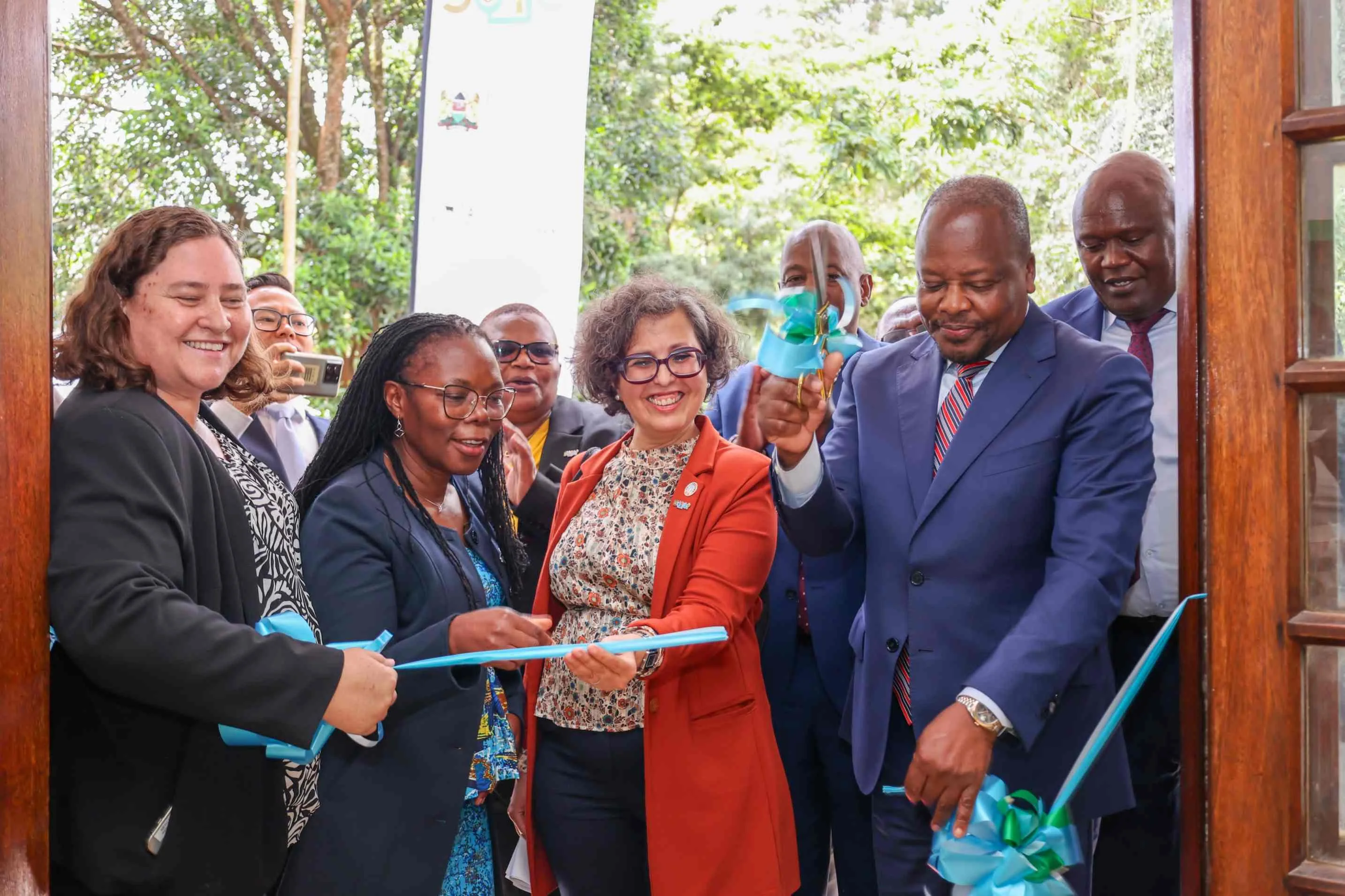
Agriculture and Livestock Development Cabinet Secretary Mutahi Kagwe has launched a national soil testing drive to help farmers match fertiliser use to their land's specific needs. The initiative, known as the Soilfer Initiative, aims to improve agricultural productivity by providing farmers with accurate information about their soil conditions. According to Kagwe, about 63 per cent of Kenya's arable land is acidic, with nearly seven million acres classified as strongly acidic.
The launch of the Soilfer Initiative took place at the Kenya Agricultural and Livestock Research Organisation (KALRO) headquarters in Kabete, Nairobi. During the event, Kagwe also officially handed over the refurbished KALRO Soil Chemistry Laboratories, which were upgraded at a cost of Sh220 million. The laboratories are expected to speed up testing and delivery of results, enabling farmers to make informed decisions about their fertiliser use.
Kagwe warned that subsidised fertiliser could fail to benefit farmers if it was applied without determining the condition and nutrient requirements of their soil. He emphasised the importance of soil testing, comparing it to medical diagnosis. According to Kagwe, farmers should not be expected to apply the same fertiliser to different soils with different nutrient levels and acidity.
The Cabinet Secretary shared his own experience as a farmer, saying he previously bought fertiliser based on what was commonly used in his area. However, a subsequent soil test showed that he was supplying nutrients his land already had while failing to address deficiencies. Kagwe said the government was seeking to make fertiliser subsidies more targeted by linking them to soil information.
More than eight million farmers are registered on the Kenya Integrated Agricultural Management Information System (KIAMIS), while more than 180,000 bags of subsidised fertiliser were moved daily through National Cereals and Produce Board stores and registered outlets during the height of a planting season. The government now wants to use soil data to improve the effectiveness of such support.
Kagwe directed KALRO to continue analysing about 77,000 soil samples collected from 45 counties and publish county-level soil fertility maps that can be accessed by farmers and other stakeholders. The Ministry of Agriculture and KALRO will also explore linking soil test results to KIAMIS so that farmers can eventually receive input recommendations based on the specific needs of their land.
The National Soil Partnership, National Soil Laboratory Network, and the Global Soil Doctors Programme will be implemented to coordinate soil health initiatives, establish common standards for soil testing, and train farmers to understand soil health. Kagwe urged county governments to co-finance soil testing services and ensure farmers can access the services closer to their farms. He also encouraged farmers to use lime to address acidic soils and increase the organic matter in their land.
Key points
- 63% of Kenya's arable land is acidic, with nearly seven million acres classified as strongly acidic.
- The government has launched a national soil testing drive to help farmers match fertiliser use to their land's specific needs.
- The initiative aims to improve agricultural productivity by providing farmers with accurate information about their soil conditions.