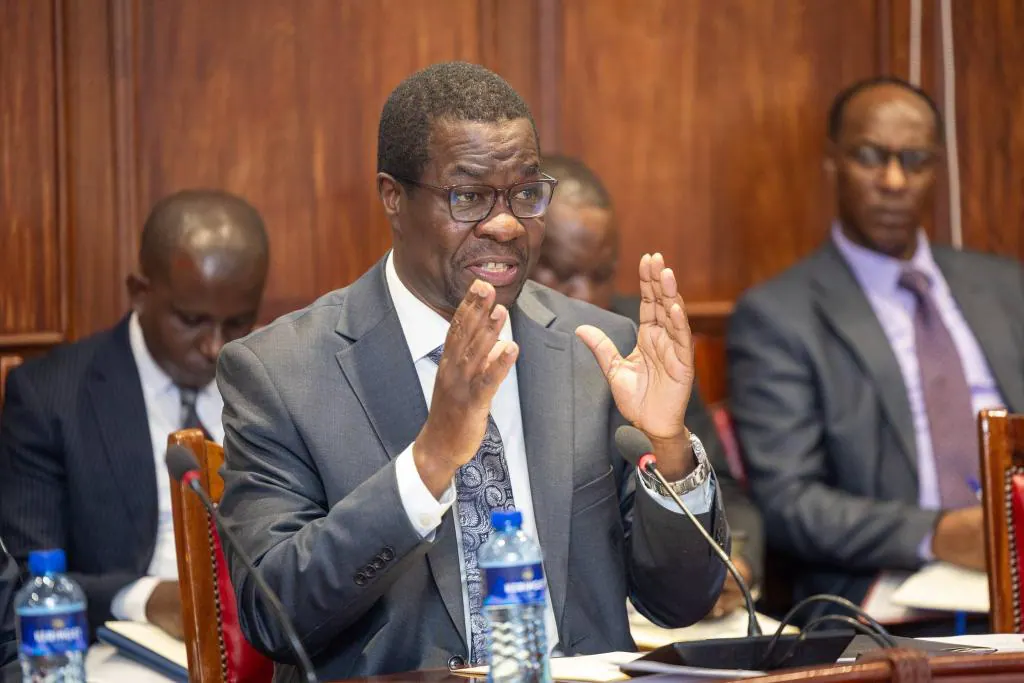
Energy and Petroleum Cabinet Secretary Opiyo Wandayi has defended Kenya’s Government-to-Government (G-to-G) fuel import arrangement, saying it was introduced to address a severe shortage of US dollars that threatened fuel supplies and the wider economy. The arrangement was signed in March 2023 with Saudi Aramco, Abu Dhabi National Oil Company (ADNOC) and Emirates National Oil Company (ENOC). Wandayi stated that the deal was designed to ease pressure on foreign-exchange reserves by allowing suppliers to provide fuel on 180-day credit terms.
At the time the arrangement was signed, Kenya was spending about $500m a month on refined petroleum imports, accounting for about 35% of the country's total import bill. The G-to-G arrangement aimed to alleviate US Dollar liquidity challenges by ensuring accumulation of additional foreign reserves to the tune of US Dollars 500 million per month. Wandayi also said the arrangement had helped revive the interbank market and reduce pressure on the shilling.
Under the deal, international oil companies were allowed to appoint licensed Kenyan oil marketing companies as local counterparts for logistics and distribution. The government provided the suppliers with a list of licensed oil marketers, after which Gulf Energy, Galana Energies and Oryx Energies were initially selected. One Petroleum, Asharami Synergy and BE Energy were later added to the list of appointed marketers.
Wandayi also disclosed that freight and premium charges had fallen through negotiations. Petrol costs dropped from $97.50 to $84 per metric tonne, diesel from $118 to $78 and Jet A1 from $114.25 to $97 between the start of the arrangement and March 2025. These premiums remained fixed even during the height of the Middle East crisis.
The Cabinet Secretary's defence of the G-to-G arrangement comes amid growing calls for an audit and full publication of the deal. Ugandan President Yoweri Museveni recently remarked that Uganda had been buying petroleum products through middlemen in Kenya. Museveni stated that a Kenyan senator alerted him to this issue, after which Uganda shifted towards sourcing fuel through the Uganda National Oil Company and Vitol.
In response to Museveni's remarks, Jubilee Deputy Party Leader Fred Matiang’i and the Motorist Association of Kenya have called for publication of the G-to-G agreement and a forensic audit covering intermediaries, commissions, contracts, pricing and beneficiaries. Wandayi's statement is likely to alleviate some concerns, but further scrutiny of the deal is expected.
The G-to-G fuel import arrangement has ensured security of supply while allowing petroleum imports to be paid for in Kenya shillings through 180-day letters of credit. Key aspects of the deal include the accumulation of additional foreign reserves and reduced pressure on the shilling.
Key points
- The G-to-G arrangement helped alleviate US Dollar liquidity challenges.
- The deal resulted in lower freight and premium charges for fuel imports.
- Calls for an audit and publication of the G-to-G agreement continue.