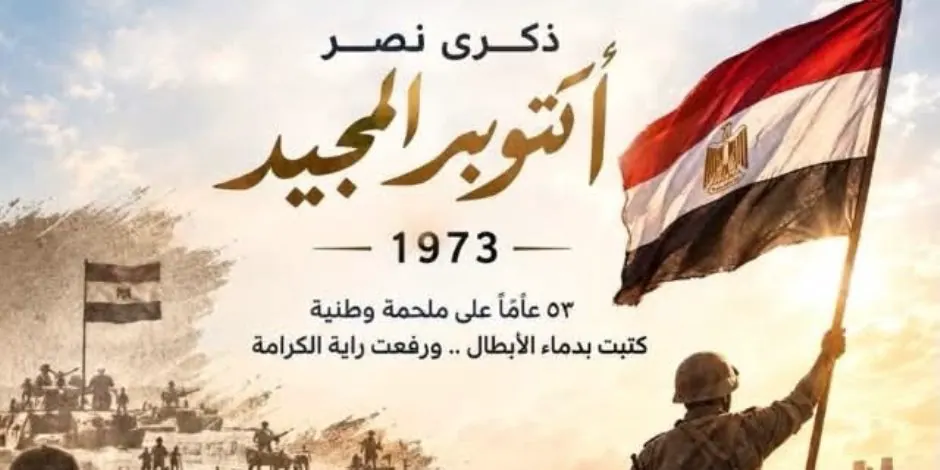
Today, Egypt marks the 53rd anniversary of the glorious October 6 victory, a pivotal moment in modern Egyptian history. On this day in 1973, the Egyptian army achieved a heroic feat by crossing the Suez Canal and breaching the Bar-Lev Line, a remarkable military operation that caught the enemy off guard and altered the regional balance of power. This event continues to be studied in military colleges worldwide.
Over the past five decades, the October victory has remained a vibrant part of Egyptian collective memory, extending beyond books and documents to influence cinema, drama, theater, and music. These art forms have attempted to capture various aspects of this period, documenting bravery, sacrifice, and the human experience of soldiers and Egyptian society during the war years. Critics emphasize the significance of art in preserving this historical legacy.
Film critic Mustafa Al-Kilani notes that discussing films about the October War should not solely focus on listing works that depicted the battle and victory. Instead, it's essential to examine how Egyptian cinema approached this pivotal moment in modern Egyptian and Arab history. Al-Kilani highlights that the October War was an extraordinary event, making it natural for cinema to document the victory and present future generations with the sacrifices made by Egyptian soldiers.
Al-Kilani praises films like "Al-Rasasa La Tazal Fi Jaybi" (The Bullet Is Still in My Pocket) for successfully reaching a broad audience by linking the military experience to the human life of Egyptian soldiers. He also commends films like "Hatta Akher Al-Omr" (Until the End of Life) for exploring the human and emotional aspects of war and its impact on individuals and relationships. These films demonstrate the power of cinema in portraying the complexities of war.
Film critic Walaa Imran emphasizes that artworks addressing the October War aimed to capture a moment of intense significance in Egyptian collective memory. She notes that war was not just a military event for artists but a shared experience, a moment of ancient defeat, and a turning point in Egyptian history. Imran highlights the importance of approaching the human aspect of the event, making history tangible through art.
Imran discusses how films like "Abanan Al-Samt" (Sons of Silence) and "Al-Rasasa La Tazal Fi Jaybi" presented soldiers beyond their roles as fighters, exploring their lives, relationships, and emotions. She also praises songs like "Bism Allah" (In the Name of God) and "Asah Al-Kheir Ya Sina" (Good Morning, Sinai) for distilling emotions and converting the victory into a shared memory passed down through generations.
The critics stress that Egyptian art still has ample opportunity to explore the October War from diverse perspectives, delving into human stories that continue to inspire. They emphasize the need for films that provide a nuanced understanding of the war, moving beyond mere documentation of battles and victories to explore the complexities of human experiences during and after the conflict.
Key points
- Egyptian critics highlight the role of art in documenting and preserving the legacy of the October War.
- Films and songs have played a significant role in capturing the human experience of the war and its impact on Egyptian society.
- Critics emphasize the need for continued exploration of the October War through art, focusing on diverse perspectives and human stories.