Kenya's Ministry of Health has confirmed the country's first imported case of Ebola (Bundibugyo) Virus Disease. The patient, a Kenyan citizen who had lived in the Democratic Republic of Congo (DRC) for seven years, passed away in a Nairobi hospital. According to the Ministry, the patient fell ill about a month ago while in the DRC and sought medical care at several facilities before traveling to Kenya.
The patient traveled by road from the DRC to Kampala, Uganda, and then boarded flight 8523 to Nairobi, arriving at Jomo Kenyatta International Airport (JKIA) on October 3rd. Upon arrival, a relative took the patient directly to Nairobi Hospital. Medical staff recognized symptoms consistent with Viral Haemorrhagic Fever, including fever, chills, and bleeding under the skin, and quickly isolated the patient.
Samples sent to the National Virology Reference Laboratory and the Kenya Medical Research Institute (KEMRI) Laboratory both tested positive for the Ebola Bundibugyo strain. The Ministry of Health has launched an aggressive contact tracing campaign, listing 28 close contacts, including family members and healthcare workers who attended to the patient.
Authorities are also pursuing 23 passengers and crew members who traveled on the same flight from Kampala to Nairobi. The Ministry confirmed that arrangements are being made to quarantine individuals deemed at risk to prevent localized transmission. The government has maintained a heightened state of alert for Ebola since a regional outbreak began in May 2026.
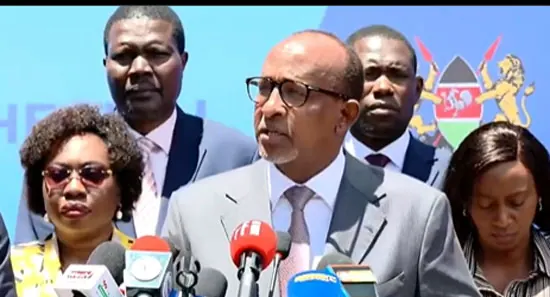
Cabinet Secretary for Health Aden Duale reassured the public that robust systems are in place to mitigate the spread of the virus and urged citizens not to panic. He emphasized that healthcare workers nationwide have been instructed to exercise extreme vigilance and enforce maximum infection prevention and control measures for all patients.
The Ministry of Health advises the public to maintain strict hygiene protocols, including frequent handwashing and avoiding close contact with individuals showing signs of illness, particularly those arriving from countries with active Ebola transmission. The government is working to prevent the spread of the virus and protect the public.
The confirmation of the first Ebola case in Kenya highlights the need for continued vigilance and preparedness in the region. The Ministry of Health will continue to work with healthcare workers and the public to prevent the spread of the virus and mitigate its impact.
Key points
- Kenya confirms first imported case of Ebola, patient dies in Nairobi hospital.
- Ministry of Health launches contact tracing campaign, lists 28 close contacts.
- Government urges citizens to maintain strict hygiene protocols to prevent spread of virus.