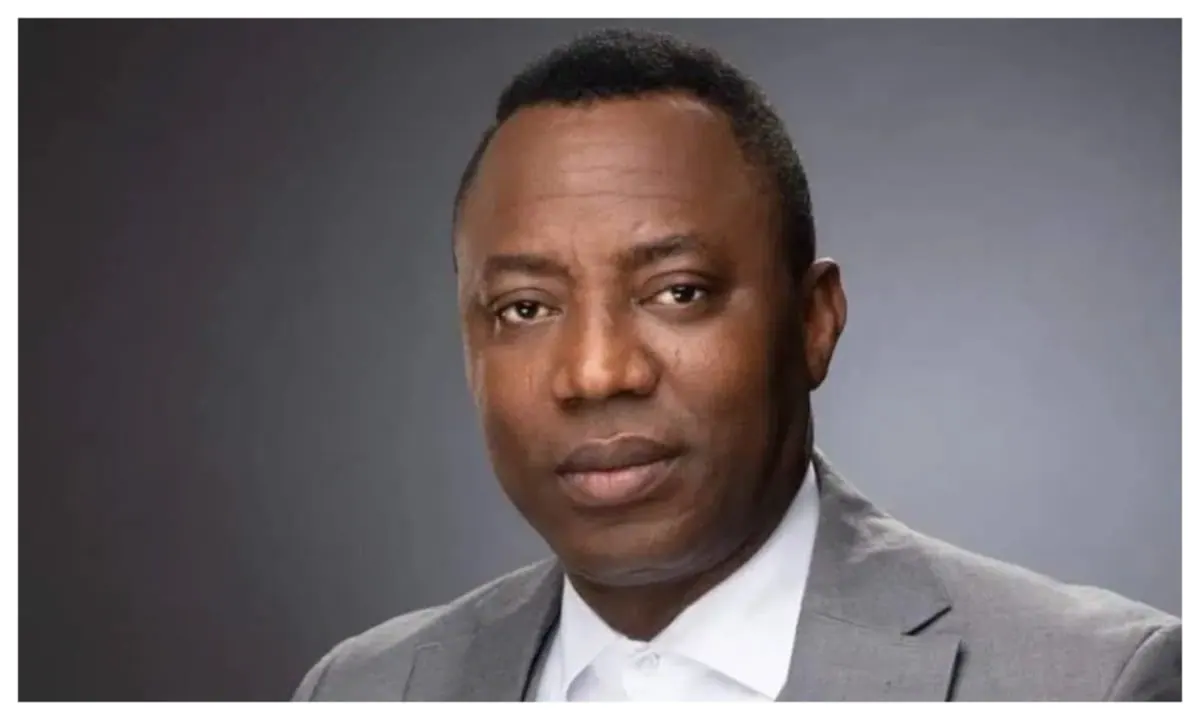
Omoyele Sowore, the African Action Congress presidential candidate for the 2027 general elections, has stated that criticizing or calling President Bola Tinubu names does not constitute an offense. In an interview on Arise Television’s Prime Time, Sowore emphasized that democracy guarantees every citizen the inalienable right to express themselves. He argued that arresting someone for criticizing or name-calling the President would be unjust.
Sowore alleged that President Tinubu himself has a history of name-calling, having referred to others as various names. He cited an instance where Tinubu reportedly said he didn’t want anyone arrested or prosecuted for calling him names. Sowore suggested that Tinubu made this statement because he knew the importance of free speech in a democratic system. This, according to Sowore, is a fundamental aspect of democratic governance.
The AAC presidential candidate expressed his stance on the issue, saying that if he were President, he would not tolerate the arrest of individuals for criticizing or name-calling him. Instead, he would take action against the intelligence officer responsible for such arrests, deeming them unintelligent. Sowore emphasized that citizens should be free to express their opinions without fear of persecution.
President Tinubu has faced criticism in the past, with some referring to him as “dead meat.” Sowore pointed out that Tinubu has also engaged in name-calling, highlighting the hypocrisy in some quarters. He stressed that under a democratic system, individuals should not be targeted for expressing their minds.
Sowore’s comments come amid ongoing debates about free speech and democratic rights in Nigeria. The issue has sparked discussions among citizens, with many calling for greater tolerance and protection of individual freedoms. The President’s office has not officially responded to Sowore’s statements.
The case of Sowore’s alleged cyberbullying of Tinubu is ongoing, with the court fixing October 2 for Sowore to continue his defense. This development has significant implications for the discussion on free speech and hate speech laws in Nigeria. Sowore’s comments are seen as part of the larger conversation on the limits of free speech.
The conversation on free speech and democratic rights is expected to continue in the lead-up to the 2027 general elections. As candidates and politicians weigh in on the issue, citizens are watching closely to see how their leaders will balance individual freedoms with national security concerns.
Key points
- Omoyele Sowore says criticizing or calling President Bola Tinubu names is not an offense.
- Sowore cites democratic rights as the basis for his stance.
- The issue has sparked ongoing debates about free speech and democratic rights in Nigeria.