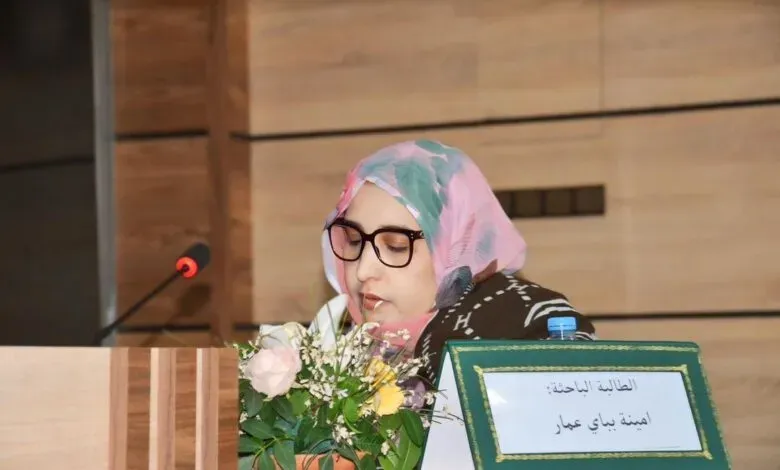
A recent article in Al Akhbar, a Mauritanian publication, has sparked controversy by criticizing modern feminism and its perceived links to atheism and societal decay. The article, written by Aminah Baba Amar, argues that the feminist movement has led to a decline in moral values and an increase in promiscuity. The author contends that the emphasis on women's rights and liberation has been hijacked by atheist and secular ideologies.
The article highlights the case of several women, including Naima Bazzaz, Sarah Hijazi, and Rima Al Omani, who have become symbols of the feminist movement in Mauritania. However, the author argues that these women have been misled by Western values and have lost sight of their cultural and Islamic heritage. The article also references the work of Simone de Beauvoir, a French philosopher and feminist, whose ideas have been influential in shaping modern feminist thought.
The author of the article argues that the feminist movement has been co-opted by atheist and secular ideologies, which seek to undermine traditional values and social norms. The article cites the example of Ismail Adham, an Egyptian writer and atheist, who has written extensively on the subject of atheism and its relationship to feminism. The author suggests that there is a link between atheism and feminism, with both movements seeking to challenge traditional authority and social norms.
The article also touches on the theme of suicide and its relationship to atheism and feminism. The author notes that studies have shown a link between atheism and suicidal tendencies, and argues that this is not a coincidence. The article suggests that the rejection of traditional values and social norms can lead to a sense of disconnection and isolation, which can ultimately contribute to suicidal behavior.
The author of the article argues that the feminist movement has been hijacked by Western values and ideologies, which are often at odds with traditional Islamic values. The article suggests that the emphasis on women's rights and liberation has been used as a tool to undermine traditional social norms and values. The author argues that this has led to a decline in moral values and an increase in promiscuity.
The article concludes by arguing that the feminist movement in Mauritania must be re-examined in light of the country's cultural and Islamic heritage. The author suggests that the emphasis on women's rights and liberation must be balanced with a respect for traditional values and social norms. The article argues that this can be achieved by promoting a more nuanced understanding of feminism, one that takes into account the cultural and Islamic context of Mauritania.
The article has sparked a heated debate in Mauritania, with some critics arguing that it represents a backlash against women's rights. However, others have defended the article, arguing that it raises important questions about the relationship between feminism and atheism. The article has also highlighted the need for a more nuanced understanding of feminism in Mauritania, one that takes into account the country's cultural and Islamic heritage.
Key points
- The article argues that modern feminism has been co-opted by atheist and secular ideologies, which seek to undermine traditional values and social norms.
- The author suggests that there is a link between atheism and feminism, with both movements seeking to challenge traditional authority and social norms.
- The article argues that the feminist movement in Mauritania must be re-examined in light of the country's cultural and Islamic heritage.