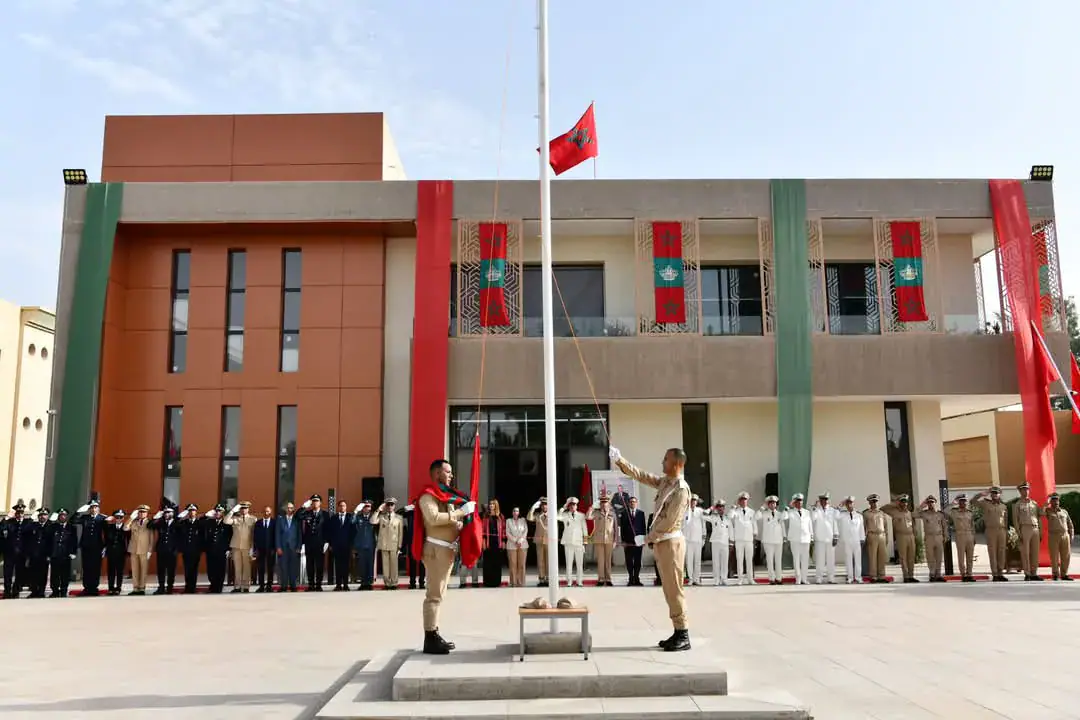
The issue has been raised by various stakeholders in the Rhamna province, who argue that national events should be an opportunity to promote citizenship and institutional openness, rather than a platform for a select few. The criticism comes as it appears that the same faces are repeatedly invited to official activities and ceremonies, while local figures and activists who have contributed to the region's development are often overlooked.
The management of protocol is not just an administrative procedure, but also a reflection of the territorial administration's openness to its local environment. Therefore, it is essential for those responsible for preparing guest lists to adopt clear and transparent criteria that ensure equal opportunities and avoid selectivity. This is particularly important in a context where the region's development is a collective responsibility.
The issue has also been taken up by the Authenticity and Modernity Party in Rhamna, which has organized a gathering of its activists and honored prominent party figures. However, this has further fueled concerns about favoritism and exclusion, with many arguing that such events should be inclusive and representative of the region's diverse stakeholders.
The responsibility for promoting inclusivity and equal opportunities does not rest solely with the administration, but also with elected officials and political parties. These stakeholders have a duty to defend the participation of all components of local society, without narrow calculations or personal considerations. The Rhamna province belongs to all its citizens, and national events should not be used to perpetuate privileges or reproduce the same scenario every time.
The situation has sparked questions about the extent to which the authorities will move to review these practices and open up to local competencies and energies. Will the logic of selective invitations continue to dominate, or will there be a shift towards greater inclusivity and representation? The answer remains uncertain, but one thing is clear: institutional openness begins with listening to all voices and recognizing the value of every individual.
As the debate continues, many are calling for a more transparent and inclusive approach to organizing national events in the Rhamna province. This would involve adopting clear criteria for invitations, engaging with a broader range of stakeholders, and promoting a culture of openness and participation. By doing so, the province can ensure that national events truly reflect the diversity and richness of its community.
Key points
- The selective invitation of individuals to national events in Morocco's Rhamna province has sparked criticism and concerns about exclusion and favoritism.
- Stakeholders are calling for greater inclusivity and transparency in the organization of national events, with clear criteria for invitations and a broader range of participants.
- The issue has implications for the province's development and social cohesion, highlighting the need for a more open and participatory approach to governance.