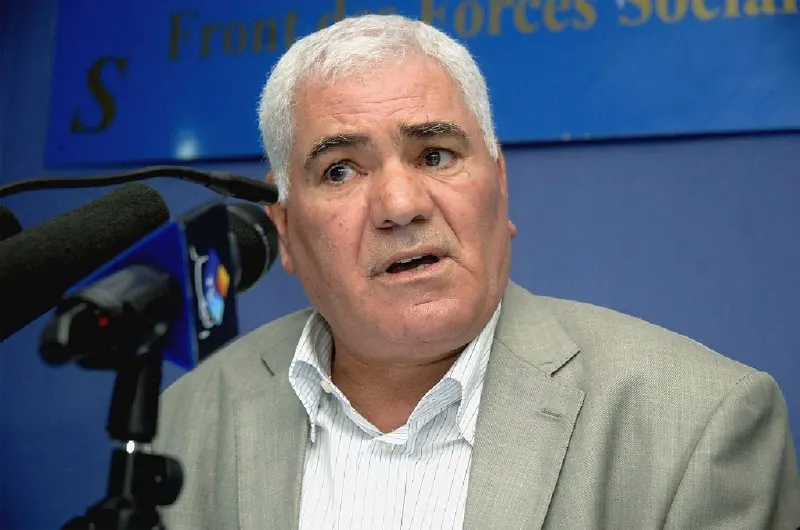
The Algerian opposition party, Front des Forces Socialistes (FFS), is facing a deepening crisis as it struggles to maintain its status as a leading popular opposition force. The party has been plagued by internal conflicts, particularly since the start of the popular protest movement on February 22 against the current system and the possibility of a fifth term for President Abdelaziz Bouteflika. Despite the dedication of its militants to the protest movement, the party's official leadership appears to be mired in internal power struggles.
The internal conflicts within the FFS came to a head last Friday in Algiers, where the party's national council, cadres, and elected officials clashed at the party's national headquarters. A majority of council members, cadres, and elected officials had called for an extraordinary national council meeting without the approval of the party leadership to discuss the country's political situation and the party's internal organization. Despite opposition from the party leadership, led by Deputy Ali Laskri, the meeting went ahead, marked by heated debates and even physical violence.
The FFS leadership's decision to withdraw the party's parliamentarians, announced the previous day, was rejected by the concerned parties. This highlights the significant rift between the party leadership and its parliamentary cadres. The council ultimately adopted a decision to replace the party's first secretary, Mohammed Hadj Djilani, with Mehenni Haddadou, the current president of the Béjaïa provincial assembly. Haddadou has been tasked with organizing a second national council session to discuss several key issues, including the withdrawal of deputies and senators, proposals for a way out of the political crisis, and the date of the next ordinary congress.
The crisis within the FFS has also affected its local branches, such as the one in Bouira. The local federation has been plagued by problems, and its federal council, scheduled for September, has yet to be convened. Local militants, elected officials, and cadres have called for the dissolution of the current federal bureau and the convocation of a federal congress after the national extraordinary congress, as stipulated in the party's statutes. However, this demand was rejected by the outgoing first secretary, Mohammed Hadj-Djillani, triggering anger among militants and elected officials.
Militants and elected officials from Bouira who spoke to La Dépêche de Kabylie expressed concerns that the FFS is no longer playing its role as a leading political force due to the numerous crises that have shaken the party since 2005. They cited the loss of prominent figures and militants, such as Hafidh Yaha and Djamel Zenati, and the marginalization of old guard members. They called for a broad and reconciliatory congress where no one would be excluded.
Some militants, however, have expressed differing views, with some denouncing what they described as a "coup d'état" against the current party leadership. The group of elected officials from the Bouira provincial assembly, for example, disputed the narrative of crisis within the party. These divisions highlight the complexity of the situation within the FFS and the challenges it faces in reasserting its relevance in Algerian politics.
As the Algerian protest movement continues, the FFS's internal conflicts have raised questions about its ability to articulate a coherent and effective opposition to the current government. The party's future will depend on its capacity to address its internal divisions and find a way to work together to present a united front against the government. The next few weeks will be crucial in determining the party's direction and its role in the evolving Algerian political landscape.
Key points
- The FFS is facing internal conflicts and divisions that have weakened its ability to play a leading role in Algerian politics.