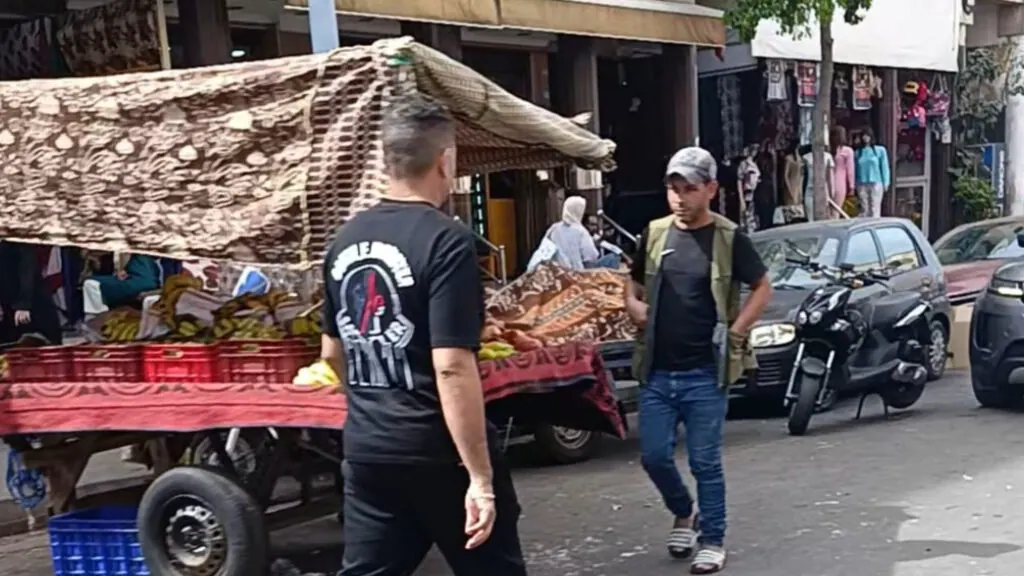
The situation in Ain Sebaa's Al-Wifaq and Al-Abbarar neighborhoods, under the jurisdiction of the Ain Sebaa district, continues to deteriorate as informal vendors spread, causing concerns among residents. They claim that sidewalks and public spaces are being occupied, and several streets have turned into spaces for displaying goods randomly. This situation raises questions about the effectiveness of interventions aimed at organizing urban areas and maintaining smooth traffic flow.
Local data indicates that the proliferation of carts, tables, and makeshift wooden structures is obstructing pedestrian and vehicle movement. Additionally, the accumulation of waste and byproducts from commercial activities, along with congestion and noise, is increasing tension between residents and vendors. The lack of sustainable solutions to address the issue is becoming increasingly evident.
In response to the crisis, there is a growing need for a comprehensive approach that goes beyond temporary measures. Providing organized commercial spaces and exploring the possibility of integrating vendors into the structured economy could offer a solution. This approach would ensure that vendors have decent working conditions while protecting residents' rights to an organized public space.
Civil activists and those affected are calling on local authorities, including the district council and municipal council, to clarify the steps they plan to take to address the issue. They are demanding a practical vision that reorganizes public spaces and balances commercial activity requirements with citizens' rights.
The crisis has sparked concerns about the impact on the quality of life for residents and the overall urban environment. Residents are urging authorities to take decisive action to address the issue and restore order to the public spaces.
The situation in Ain Sebaa highlights the challenges of managing urban growth and the need for effective solutions to balance economic and social needs. The authorities face pressure to find a solution that addresses the concerns of both residents and vendors.
The issue of informal vendors in Ain Sebaa remains a pressing concern, with residents and authorities seeking a sustainable solution to restore order and balance to the public spaces.
Key points
- The crisis of informal vendors in Ain Sebaa is worsening, with residents calling for the organization of public spaces.
- A comprehensive approach is needed to address the issue, including providing organized commercial spaces and integrating vendors into the structured economy.
- Authorities face pressure to find a solution that balances economic and social needs, addressing concerns of both residents and vendors.