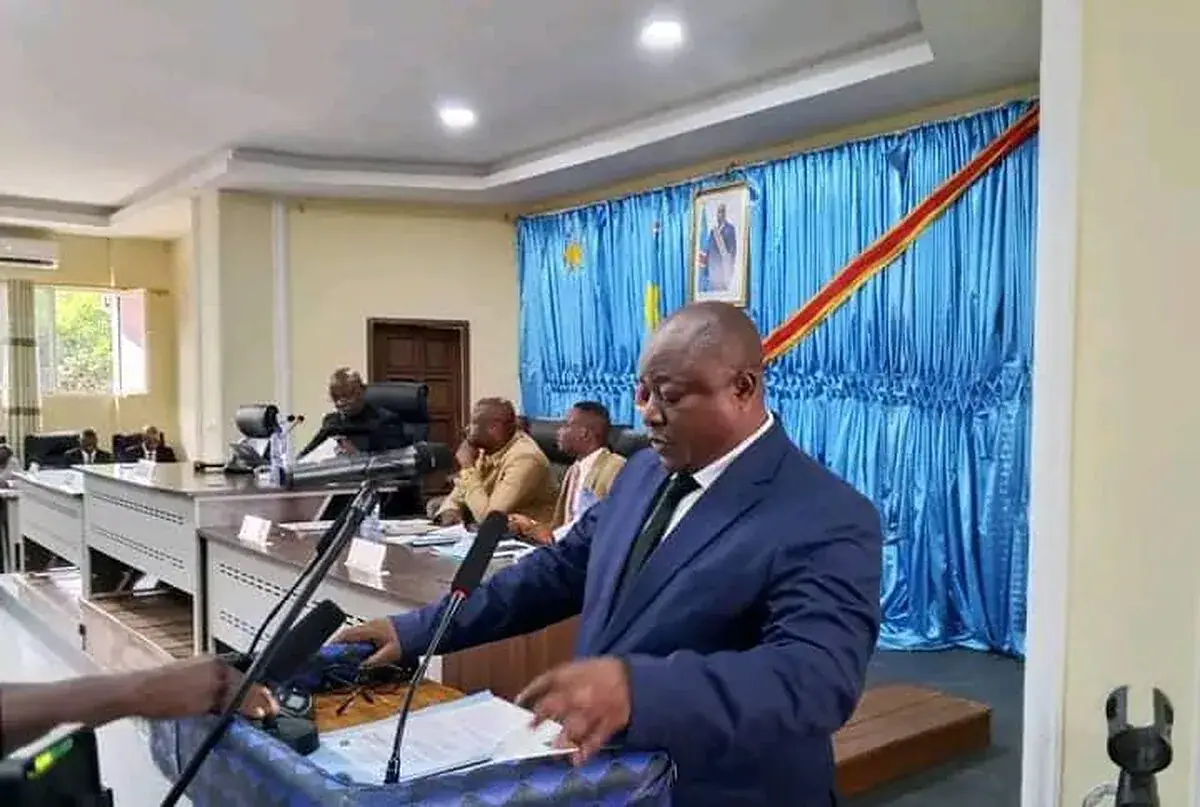
A dramatic sequence of events unfolded in Kananga, Kasaï-Central, on November 18, 2026, as the provincial governor, Joseph-Moïse Kambulu Nkonko, was targeted by a motion of censure following an interpellation. Several members of the Provincial Assembly's Bureau also face petitions from their colleagues, plunging the two main institutions into a confrontation that could alter their configuration. This crisis marks a new zone of institutional turbulence in the province.
The interpellation of Governor Kambulu Nkonko was initiated by provincial deputy Willy Wishiya Bakatushipa, who sought explanations on the province's management since the governor took office two and a half years ago. The deputy aimed to obtain clarifications on the provincial government's record, program implementation, resource mobilization, and achievements in various sectors, including infrastructure, health, education, and public administration. Although the governor provided some explanations, they were deemed insufficient by Bakatushipa, who then transformed the interpellation into a motion of censure against the entire provincial government.
The motion of censure, signed by nine provincial deputies, cites alleged mismanagement and embezzlement. If it obtains the required majority, the governor and his government will be considered resigned. Meanwhile, the Provincial Assembly's Bureau is also under scrutiny, with three of its members – President Guy Sabangu Kashala, Rapporteur Patient Tshiombe, and Deputy Rapporteur Jean-Paul Mbambi Mutamba – facing petitions. These initiatives were introduced by deputies Anaclet Muyaya, Daniel Lukusa, and Sylvain Kandende, and later supported by Willy Wishiya Bakatushipa.
The simultaneous procedures raise important institutional questions, as the Provincial Assembly exercises parliamentary control over the government while managing an internal contestation targeting its own Bureau. This situation may complicate the functioning of the assembly, particularly in conducting its works, programming sessions, and processing parliamentary initiatives. The role of the vice-president becomes crucial in ensuring the continuity of institutional activities and upholding procedures related to petitions.
The Provincial Assembly's Bureau must address the initiatives against its members while respecting defense rights and internal regulations. It is essential to distinguish between the motion of censure against the government, which concerns the responsibility of the entire provincial executive, and the petitions targeting individual members of the Assembly's Bureau. The next steps will depend on the positions taken by the deputies and the evolution of the procedures.
The crisis has sparked concerns about the stability of the provincial institutions and the potential impact on the population. The situation requires careful management to prevent further escalation and ensure the continuity of essential public services. As the Provincial Assembly and government navigate this challenging situation, the vice-president's role will be critical in maintaining order and upholding the rule of law.
The Democratic Republic of Congo's institutional framework will be closely watched as the crisis unfolds, with implications for the country's governance and stability. The situation in Kasaï-Central highlights the complexities of managing power dynamics and institutional relationships in the country's provinces.
Key points
- The provincial government and assembly of Kasaï-Central face motions of censure and petitions, sparking a double-front institutional crisis.
- The crisis raises important questions about institutional relationships, power dynamics, and the management of contestations within provincial institutions.
- The situation requires careful management to prevent further escalation and ensure the continuity of essential public services.