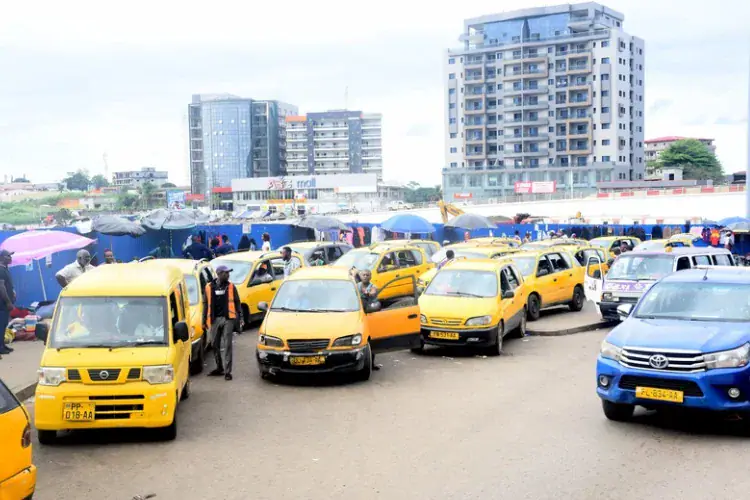
In Libreville, Gabon, a familiar scene has emerged where informal transporters, known as "clandomen," have occupied public spaces, causing disruptions and congestion. These transporters, operating in small yellow vehicles or buses, have taken over sidewalks and parking spaces, reducing the space available for other road users. This has resulted in menacing and threatening behavior towards other drivers, pedestrians, and passengers.
The occupation of public spaces by these informal transporters has become a widespread issue in Libreville, with some areas experiencing blockages of up to 300 meters. The transporters have demarcated their own spaces, prohibiting other drivers from stopping or parking. Those who attempt to do so are often met with aggression, including threats and physical damage to their vehicles.
The situation has become increasingly chaotic, with the transporters' actions causing significant disruptions to traffic flow. At peak hours, the consequences are immediate, with horns blaring, traffic jams forming, and drivers trying to navigate through the congested roads. Pedestrians are often forced to walk on the road, increasing their risk of accidents.
Despite the presence of security agents responsible for regulating traffic, their efforts have been insufficient in restoring order. The lack of visible reaction from municipal authorities has led to a perception of tolerance or complicity. The issue raises questions about the allocation of public spaces and the conditions under which these informal transporters operate.
According to reports, some of these transporters claim to have paid fees to the local authorities for the use of these public spaces. However, this does not grant them the right to restrict access to the road or threaten other users. The issue is not about challenging the need for suburban transportation but about ensuring that it operates within the norms and regulations that apply to all drivers.
The situation highlights the need for clear regulations and enforcement to manage the activities of informal transporters. The government and municipal authorities must address the issue to restore order and ensure public safety. This may involve revising existing regulations, increasing enforcement, and providing alternative spaces for these transporters to operate.
The issue of informal transporters occupying public spaces in Libreville is a complex one, requiring a comprehensive solution that balances the needs of different road users. The government and stakeholders must engage in a dialogue to find a solution that addresses the concerns of all parties involved. Ultimately, the goal is to create a safer, more efficient, and more equitable transportation system for all users.
Key points
- The "clandomen" have occupied public spaces in Libreville, causing congestion and disruptions.
- The situation has become increasingly chaotic, with the transporters' actions causing significant disruptions to traffic flow.
- The government and municipal authorities must address the issue to restore order and ensure public safety.