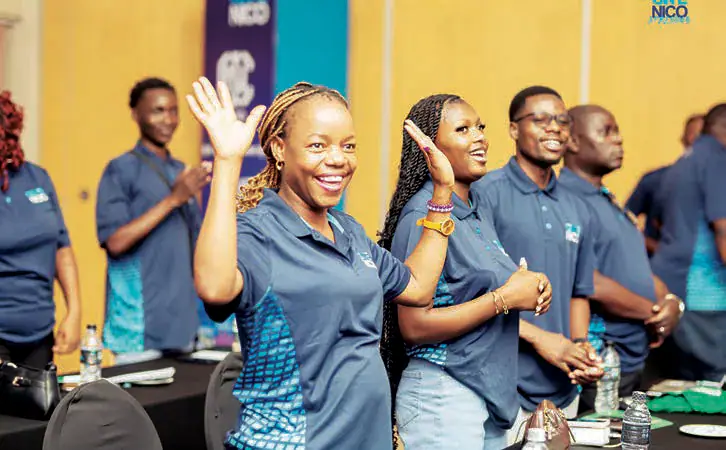
The third cohort of the Investment School of Creative Arts has officially opened in Mangochi, with 50 creatives from various art disciplines in attendance. The event was graced by Donbell Mandala, Chief Executive Officer of Nico General, who emphasized the importance of the creative sector in contributing to Malawi's economic growth and the country's vision for 2063. Mandala encouraged the creatives to become entrepreneurs and turn their talents into wealth.
The Investment School of Creative Arts is a program spearheaded by the Copyright Society of Malawi (Cosoma) through the Copyright Fund. The program aims to equip creatives with business and financial literacy skills to help them convert their craft into sustainable livelihoods. So far, the program has trained over 200 creators. This year's cohort will focus on topics such as finance, investment, branding, proposal writing, intellectual property, contract management, insurance, and business development.
Nico Group has pledged its support to this year's cohort with a K150 million investment, demonstrating its commitment to the creative sector. Mandala stated that the group wants to create opportunities, build wealth, and contribute to national development. He emphasized that the creative economy plays a crucial role in Malawi's growth, alongside agriculture, tourism, and mining.
Principal Secretary of Administration in the Ministry of Youth, Sports and Culture, Francis Zhuwao, saluted Nico Group, NBS Bank, and Eris Properties for offering business and financial literacy to help artists convert their craft into sustainable livelihoods. Zhuwao noted that while Malawi is blessed with extraordinary artistic talent, the sector has witnessed a painful paradox of immense talent but limited livelihoods.
Zhuwao revealed that the government has allocated K4.5 billion under the Constituency Development Fund (CDF) specifically for creative arts and innovation. This translates to K20 million for every constituency. He appealed to creatives in the country to make inquiries through local councils and apply for funds. The government is committed to supporting the creative sector and empowering artists with entrepreneurial knowledge and financial discipline.
Some of the creatives who have made it to the third cohort include singer and guitarist Maggie Kadrum, BFB, Hyphen, Nester, and content creators Nya Uyu and Tupochele. The two-day platform will provide a valuable opportunity for the creatives to engage with experts and learn from their experiences. The program is expected to have a positive impact on the creative sector and contribute to Malawi's economic growth.
The Investment School of Creative Arts is a visionary intervention that recognizes the importance of empowering artists with entrepreneurial knowledge and financial discipline. By providing business and financial literacy skills, the program aims to help creatives build a sustainable industry and contribute to the local economy. The program's impact is expected to be felt beyond the creative sector, with potential benefits for the broader economy and society.
Key points
- The Investment School of Creative Arts has trained over 200 creators since its inception.
- The program aims to equip creatives with business and financial literacy skills to help them convert their craft into sustainable livelihoods.
- The government has allocated K4.5 billion under the Constituency Development Fund (CDF) specifically for creative arts and innovation.