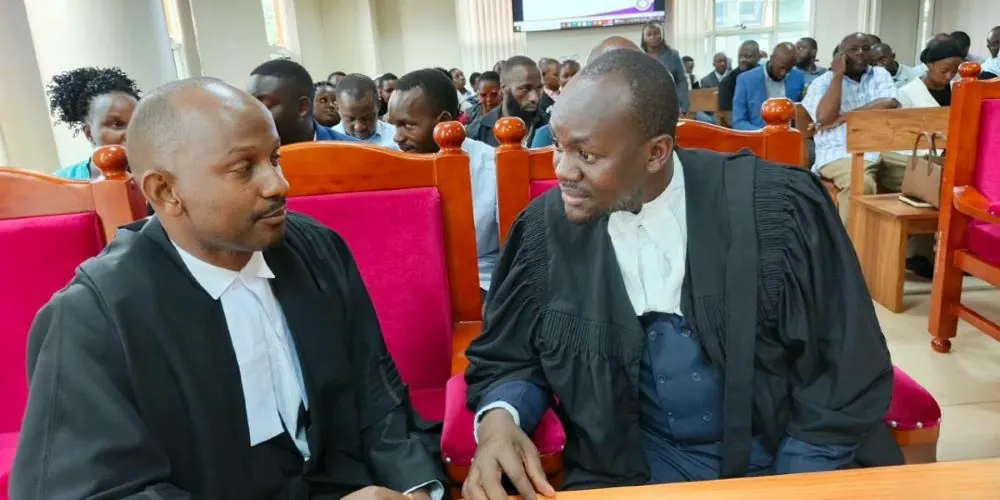
The High Court in Kampala has expunged 97 affidavits filed by David Lewis Rubongoya in his election petition challenging Minsa Kabanda's election as Kampala Central Division Member of Parliament. Justice Flavia Nabakooza ruled that the affidavits were introduced irregularly without leave of court and cannot remain on the court record. This ruling was made on Wednesday, following the consolidation of two applications filed by Kabanda and the Electoral Commission.
Rubongoya filed Election Petition No. 10 of 2026 on March 30, challenging the January 15 parliamentary election in which Kabanda was declared the winner. Kabanda polled 22,280 votes against Rubongoya's 18,211, giving her a margin of 4,069 votes. Rubongoya disputes the result, alleging that more than 1,335 votes were improperly added in Kabanda's favour in several areas. The petition also raises complaints about Kabanda's nomination, academic qualifications, and differences in her names.
Justice Nabakooza rejected the argument that complaints concerning Kabanda's nomination, academic qualifications, and differences in her names should be struck out as pre-election matters. The judge noted that Rubongoya had sought certified copies of Kabanda's nomination and academic documents before the election but only obtained them on February 26, 2026, more than a month after the January 15 election. This made it impractical for him to pursue the complaints through the pre-election process.
However, Justice Nabakooza struck out a separate complaint concerning 23 polling stations allegedly located in restricted security areas in Nakasero II and Kololo II. Rubongoya alleged that the polling stations were situated in restricted environments where the presence of military personnel made it difficult for voters and candidates' agents to freely participate in the electoral process. The judge held that the location and establishment of polling stations was a pre-election administrative matter that could have been challenged before polling day.
The judge also considered the 97 affidavits filed by Rubongoya after the election petition. Rubongoya's lawyers argued that the affidavits contained evidence collected from voters, polling agents, and election officials across Kampala Central and did not introduce new grounds or new remedies. However, Justice Nabakooza disagreed, holding that the affidavits were supplementary in nature and had been introduced without the requisite leave.
The court has now directed that the petition proceed on the pleadings properly on record, subject to the orders made in the ruling. The matter will now proceed to a scheduling conference before the substantive election petition is heard. The ruling does not determine the substantive election petition or whether Kabanda was validly elected. The remaining grounds, including Rubongoya's challenge to the election result, will be considered during the subsequent hearing.
The consolidated applications filed by Kabanda and the Electoral Commission therefore succeeded in part. While the complaint concerning the polling stations in Nakasero II and Kololo II has been removed from the petition, the challenges concerning Kabanda's nomination, academic qualifications, and differences in her names remain before the court. Justice Nabakooza ordered that costs shall be in the cause.
Key points
- The High Court in Kampala has expunged 97 affidavits filed by David Lewis Rubongoya in his election petition against Minsa Kabanda's parliamentary election win.
- The court has directed that the petition proceed on the pleadings properly on record, subject to the orders made in the ruling.
- The ruling does not determine the substantive election petition or whether Kabanda was validly elected.