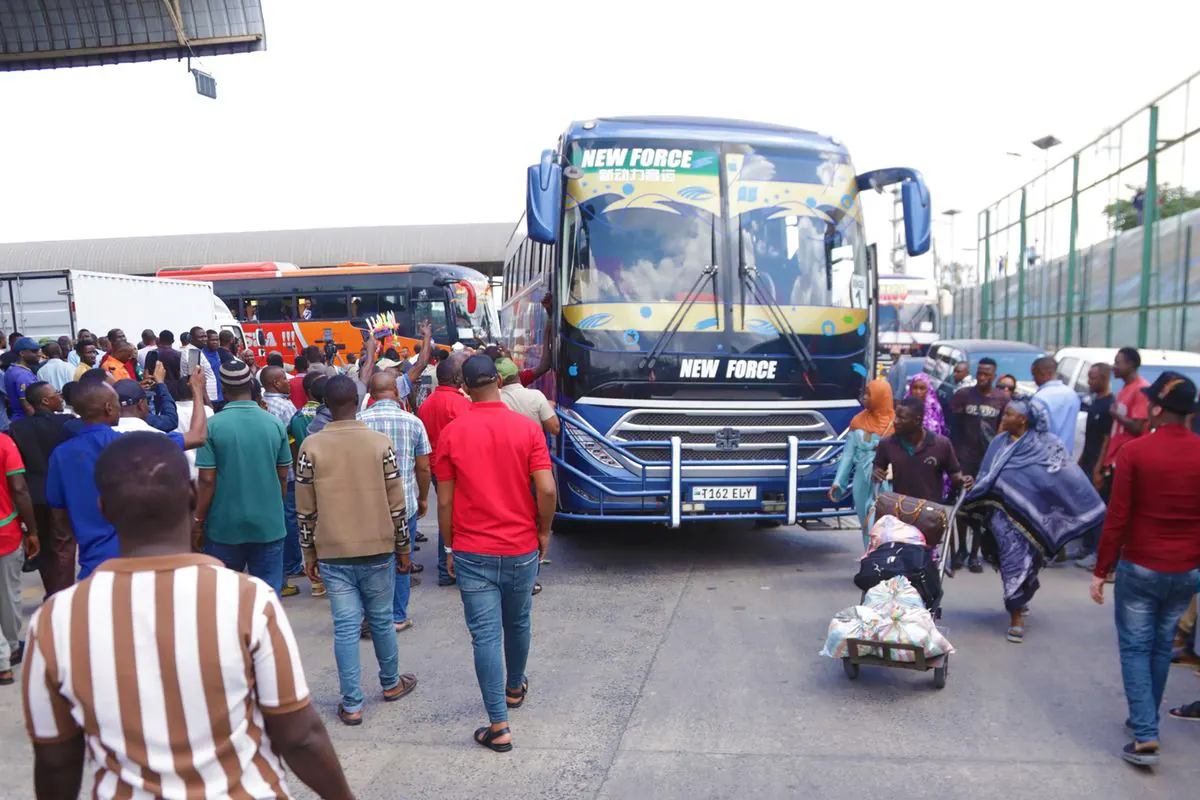
The bus and truck drivers' strike in Tanzania, which lasted for over 24 hours, has ended, but its impact is still being felt across various sectors. The strike, which began on September 29, 2026, was sparked by complaints over the driving licence points system, licence suspensions, and the Vehicle Tracking System (VTS), among other issues. Prime Minister Mwigulu Nchemba met with leaders of bus and truck drivers in Dar es Salaam on September 30, 2026, leading to the suspension of the strike.
As transport services began returning to normal, passengers and transport operators started counting their losses. At Magufuli Bus Terminal in Dar es Salaam, some passengers spent the night waiting for information about their journeys. Abel Solomon Masalla, who was due to travel to Kiomboi in Iramba District, said he had paid Sh57,000 for a ticket and his luggage had been loaded onto the bus, but he was unsure whether he would travel or receive a refund.
Traders who depend on transport to deliver goods to upcountry customers were also affected by the strike. Clothes trader Grace Mbilinyi said customers had asked her to delay dispatching goods until transport services returned to normal. In Mbeya, trader Jackline Anganile said her clothes consignment was stranded in Morogoro, leaving her capital tied up in the goods. The disruption also affected traders from the Democratic Republic of Congo and Zambia who had travelled to Dar es Salaam for shopping.
The strike had a significant impact on the economy, with Senior Lecturer in economics at Sokoine University of Agriculture (SUA), Dr Felix Nandonde, saying that the disruption had wider economic implications because transport connects producers, markets and consumers. He noted that many banks lend to the transport sector, including owners of trucks and buses, and that delays could particularly hurt traders and farmers dealing in perishable goods.
Bus owners also counted losses, with Tanzania Bus Owners Association (TABOA) Director of Information Mustafa Mwalongo saying that more than 85 buses had left Magufuli terminal by midday on Wednesday, compared with about 400 normally operating from the terminal each day. He noted that when a bus does not operate for even one day, the losses are significant, and many owners have bank loan repayments due on these dates.
While many businesses suffered, some food and beverage vendors at Magufuli terminal reported increased sales as stranded passengers remained at the station. Food vendor Babalishe Nasibu Juma said sales on Tuesday were equivalent to what she normally earned in about two weeks. Soft-drink vendor Nashon Elikana said his sales were three times higher than usual.
The strike has highlighted the need for a long-term solution to the issues affecting the transport sector. Land Transport Regulatory Authority Consumer Consultative Council (LATRA CCC) Executive Secretary Daudi Daudi said passengers should not be caught up in disputes between drivers and authorities. Home Affairs Minister Patrobas Katambi has said the points system requires a thorough review and has sought 14 days to consult other ministries on issues concerning VTS, roads, and contracts.
Key points
- The two-day disruption has highlighted how a breakdown in transport can quickly spread from drivers and passengers to traders, farmers, banks, and other parts of the economy.
- The strike was sparked by complaints over the driving licence points system, licence suspensions, and the Vehicle Tracking System (VTS), among other issues.
- The disruption had a significant impact on the economy, with many businesses and sectors affected by the strike.