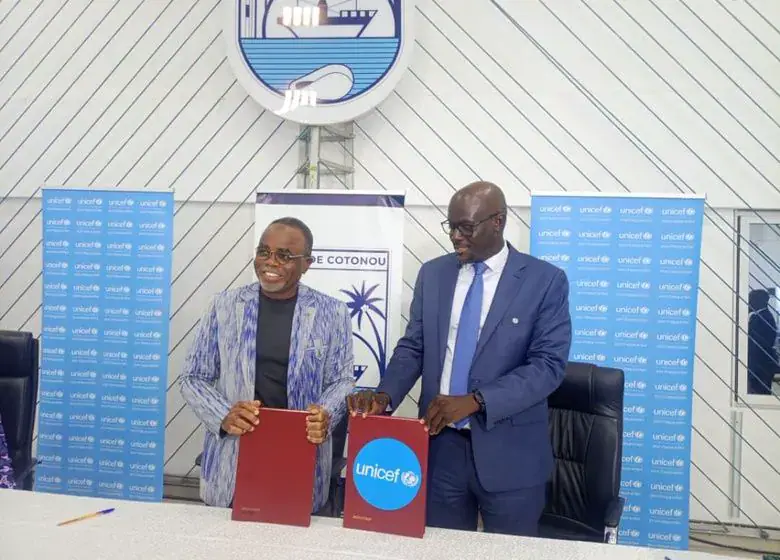
The Cotonou city government and the United Nations Children's Fund, or UNICEF, have formalized a partnership to prioritize the welfare of children in Cotonou, Benin. The agreement, signed on October 26, 2026, focuses on enhancing living conditions, health, education, and protection for children. Cotonou Mayor Luc Gnacadja welcomed UNICEF's commitment to supporting vulnerable populations, particularly in the city's lacustrine areas. Over 50,000 people reside in these areas, facing climate-related risks and other vulnerabilities.
Mayor Gnacadja emphasized the need for tailored approaches to address the unique realities and needs of lacustrine communities, especially children. He expressed a desire to "reveal" a new Cotonou, particularly in these areas. The partnership will tackle essential sectors, including constructing resilient schools, providing access to clean water, hygiene, and sanitation, healthcare, vaccination, and child protection. These efforts aim to improve the overall well-being of children in Cotonou.
UNICEF's Resident Representative in Benin, Ousmane Niang, praised the collaboration with municipal authorities and the current administration's vision. He stated that the partnership signifies a shared commitment to working together concretely in areas that matter to Cotonou's residents. Niang highlighted Cotonou's strategic importance to UNICEF, given its proximity to families and communities, allowing for effective implementation of child-focused initiatives.
Through this partnership, UNICEF will share its expertise and tools with the Cotonou municipality to strengthen local capacities and promote sustainable interventions. The organization will support the construction of welcoming and resilient schools, enhancing access to quality education. Additionally, UNICEF will contribute to improving healthcare and vaccination services, as well as protecting children from harm.
The partnership between Cotonou's city government and UNICEF reflects a concerted effort to address the interconnected challenges facing children in the city. By pooling resources and expertise, both parties aim to create a more supportive environment for children to grow and thrive. This collaboration is expected to have a positive impact on the lives of thousands of children in Cotonou.
The agreement is a significant step towards achieving the goals outlined in the partnership, which include improving living conditions, health, education, and protection for children. By working together, the Cotonou city government and UNICEF can leverage their respective strengths to drive meaningful change. The partnership is poised to bring about tangible improvements in the lives of children in Cotonou.
As the partnership takes effect, residents of Cotonou can expect to see noticeable improvements in the coming months and years. With a focus on enhancing the welfare of children, this collaboration has the potential to create a positive and lasting impact on the city's future. The joint effort between the Cotonou city government and UNICEF serves as a model for effective partnerships in promoting child welfare.
Key points
- The partnership aims to improve living conditions, health, education, and protection for children in Cotonou.
- UNICEF will share its expertise and tools with the Cotonou municipality to strengthen local capacities and promote sustainable interventions.
- The partnership focuses on constructing resilient schools, providing access to clean water, hygiene, and sanitation, healthcare, vaccination, and child protection.