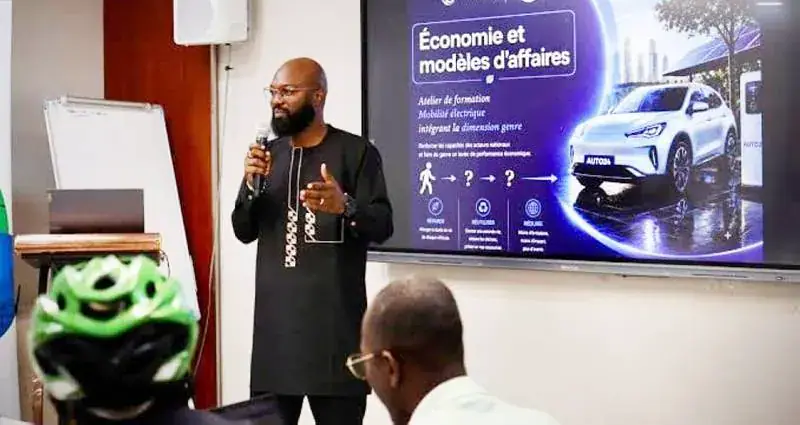
The Ministry of Transport and Maritime Affairs in Cote d'Ivoire is organizing a climate financing workshop in Abidjan on November 3-4, 2026. The workshop aims to train 50 participants from 47 structures on designing climate projects that take into account the needs and specificities of women. The project, funded by the Green Climate Fund (GCF) and the Global Environment Facility (GEF), seeks to address the gap in accessing climate finance.
The GCF has not yet funded any transport projects in Cote d'Ivoire, while the GEF's private sector window remains underutilized. According to the organizers, the challenge is not the availability of funds but the lack of solid, well-elaborated projects that can convince funders. The workshop is part of a program that aims to promote gender-sensitive climate projects.
The project, titled "Integration of Electric Mobility with Renewable Energy Solutions," has a budget of $2.27 million, with $1.6 million provided by the GEF and the rest by the Ivoirian government. The United Nations Industrial Development Organization (UNIDO) is the executing agency. The project targets cooperatives and entrepreneurs in the agro-food and staple food sectors.
The workshop will focus on the architecture of climate finance, mechanisms such as the GCF and GEF, and their eligibility criteria. Participants will also learn about the vulnerabilities of different groups to climate change and the requirements of major funds on gender issues. The second day will be more practical, with participants working on conceptual notes for projects.
The workshop is part of a series of three sessions planned for 2026. The program is implemented by a training cabinet that has mobilized two specialists with complementary skills: one in climate finance and project development, and the other in gender and climate change. The organizers aim to reserve at least 30% of places for women and 20% for young people.
A report by the Food and Agriculture Organization (FAO) in March 2024 showed that rural households led by women lose a larger share of their income during heatwaves and floods. This is due to limited access to land, credit, and equipment, not because they work less. The GCF now requires a gender assessment and action plan for each project proposal.
The workshop's outcome will be measured through pre-tests and post-tests to assess participants' learning. The project aims to ensure that demonstration projects do not remain isolated showcases but are instead replicated and scaled up.
Key points
- The workshop aims to equip 50 participants with skills to design climate projects that address women's needs.
- The GCF has not yet funded any transport projects in Cote d'Ivoire.
- The project has a budget of $2.27 million, with $1.6 million provided by the GEF.