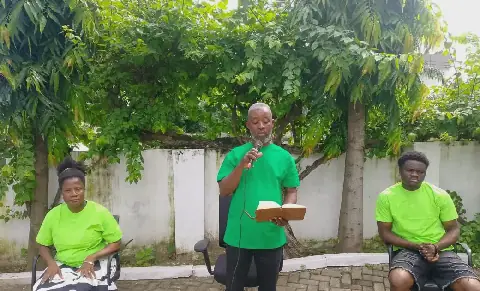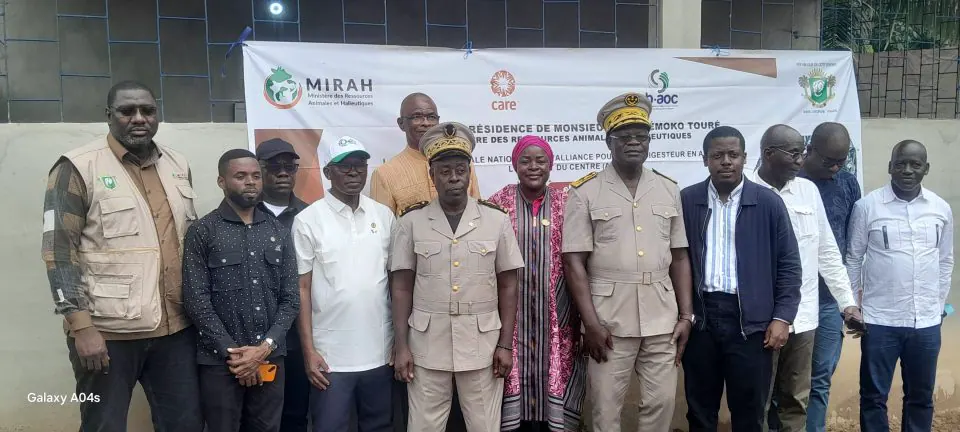
The Ivoirian government, through the Ministry of Animal and Fisheries Resources (MIRAH), is promoting the use of biodigesters as a solution for ecological transition and women's economic empowerment. This initiative aims to accelerate the country's integration into the Alliance for Biodigesters in West and Central Africa (AB-AOC). On September 19, 2026, Dr. Dagnogo Komissiri, technical advisor for animal production at MIRAH, presented this technology to the population of Bohoussoukro, a village near Duékoué known for its high production of attiéké.
The biodigester technology allows for the production of biogas from organic materials, such as animal waste, providing a clean and renewable energy source. This energy can replace wood for cooking attiéké, reducing women's exposure to smoke, labor intensity, and production costs. Additionally, the biodigester produces digestate, an organic fertilizer that can improve agricultural yields. Dr. Dagnogo emphasized that this technology combines several public policies, including those related to livestock, agriculture, environment, energy, health, and women's economic empowerment.
The presentation was part of a workshop aimed at raising awareness and exchanging ideas on biodigesters and the stakes related to the ratification of the AB-AOC convention. Dr. Dagnogo called for concerted action from relevant ministries, local authorities, the private sector, professional organizations, civil society, and technical and financial partners to promote the widespread adoption of biodigesters. He stressed the importance of this technology in achieving a more productive, competitive, and sustainable agriculture and livestock sector.
The event, attended by parliamentarians, aimed to sensitize representatives on the importance of ratifying the convention allowing Cote d'Ivoire to officially join the AB-AOC. As a founding member, the country's accession is expected to facilitate access to dedicated funding, strengthen regional cooperation, and enable the sharing of experiences with countries that have developed this technology further.
The government has expressed its ambition to promote a more productive, competitive, and sustainable agriculture and livestock sector, focused on creating value and jobs. The ministry hopes that adapted biodigester solutions can be developed for other sectors, such as palm oil, livestock, and market gardening. A guided tour of the facilities and a demonstration of the biodigester's operation were conducted in the presence of administrative authorities, local elected officials, and representatives of the private sector and community leaders.
The biodigester technology has been hailed as an innovative, accessible, and sustainable solution that addresses both women's economic empowerment and environmental protection. Its adoption is expected to have a positive impact on the country's ecological transition and economic development. The MIRAH is working to promote the widespread adoption of this technology, with the goal of improving the livelihoods of Ivoirian communities.
The Cote d'Ivoire government's efforts to promote biodigester technology demonstrate its commitment to sustainable development and environmental protection. The country's integration into the AB-AOC is expected to strengthen regional cooperation and facilitate access to funding and expertise. The adoption of biodigester technology has the potential to transform the country's agriculture and livestock sectors, contributing to a more sustainable and environmentally friendly economy.
Key points
- The Ivoirian government promotes biodigester technology to boost women's economic empowerment and environmental protection.
- The technology allows for the production of biogas and organic fertilizer, reducing production costs and improving agricultural yields.
- The country's integration into the AB-AOC is expected to facilitate access to funding and expertise, strengthening regional cooperation and sustainable development.