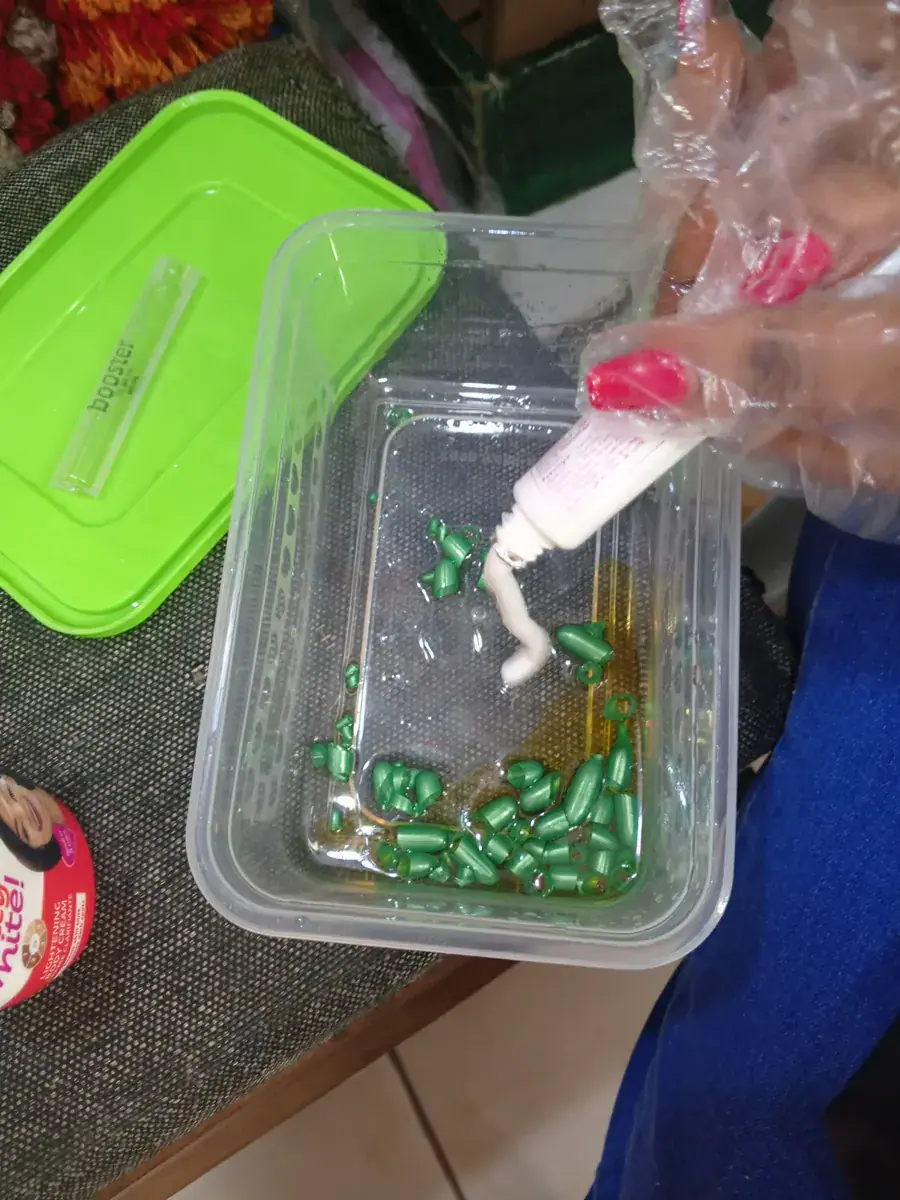
An investigation by KT Press has found that cosmetics traders in Rwanda are continuing to sell skin-lightening creams, despite a ban on the products. A trader in Nyamata market, Bugesera District, offered to mix a skin-lightening cream that could change a customer’s complexion within a week for Rwf15,000 ($11). After negotiation, the price was lowered to Rwf13,500 ($9). The trader warned that the mixture could damage the hands and feet.
The skin-lightening creams being sold in Rwanda contain harmful substances such as hydroquinone, steroids, and mercury, which are associated with damage to the skin and other health risks. The Rwanda Food and Drugs Authority has listed more than 130 prohibited creams and related products. Despite the ban, traders are using new names and sales methods to evade authorities. Products are now labelled as Brightening, Glowing, and Clear Skin.
The investigation also uncovered the experience of a woman who said skin-lightening mixtures had left her with dark, hardened fingers, discoloured feet, and white patches between her fingers and toes. She had started using the products after giving birth in 2020, hoping to restore her complexion. Over six years, she tried mixtures from five different traders, but says the damage has not fully healed.
Traders are preparing the skin-lightening mixtures in secret, often in homes and beauty salons, or selling them through social media platforms such as WhatsApp, Instagram, Facebook, and TikTok. In May 2025, police seized 689 bottles representing 31 varieties of skin-damaging products from three people in Kigali. The products had reportedly been brought from the Democratic Republic of Congo through Rubavu.
Dermatologist Dr Alice Amani Uwajeni warns that changing the names of the skin-lightening creams does not make them safe. She says the products remain available despite the ban and pose a significant risk to users. The Rwanda Police say traders are using new labels to disguise the products, but the ingredients remain the same.
The skin-lightening creams being sold in Rwanda are often mixed with other products, including creams, boosters, vitamins, glycerine, and a product called Diproson, which prevents allergic reactions. A trader displayed products labelled Whitening, Brightening, Skin Lightening, Clear Skin, and Eclaircissant. The reporter was instructed to apply the mixture twice daily.
Rwanda banned skin-bleaching products in 2013 and launched a campaign against their sale and use in 2018. However, the trade continues, with traders adapting to the ban by changing the names and packaging of the products. The government and health experts are urging users to be cautious and aware of the risks associated with these products.
Key points
- Skin-lightening creams containing harmful substances are being sold in Rwanda despite a 2013 ban.
- Traders are using new names and sales methods to evade authorities.
- The products pose significant health risks, including damage to the skin and other health problems.