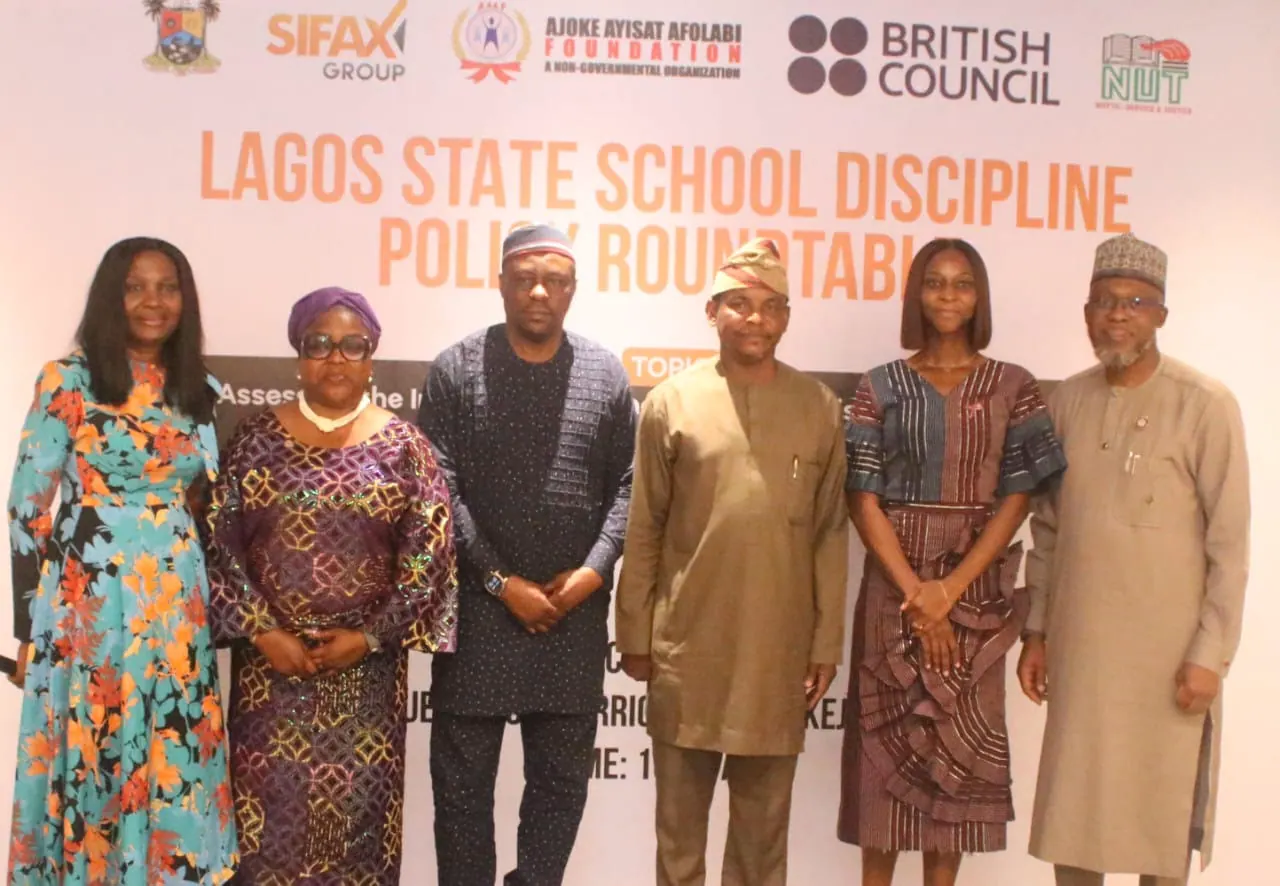
Stakeholders in Nigeria's education sector have called for a comprehensive review of school discipline frameworks, stronger parental involvement, and increased deployment of guidance counsellors to help schools manage student misconduct. This call was made at a roundtable discussion on Lagos State's school discipline policy, organised by the Ajoke Ayisat Afolabi Foundation (AAAF) with support from SIFAX Group. The event brought together policymakers, educators, students, and civil society organisations to discuss alternative strategies for managing student misconduct following the ban on corporal punishment.
The roundtable discussion, themed 'Assessing the Impact of Banning Corporal Punishment on Discipline in Schools', was part of activities marking International Teachers' Day. During the event, outstanding teachers in Lagos State were recognised following a statewide nomination exercise by AAAF. The awardees include Mrs. Modupe Odumade of Ijaye Ojokoro Senior High School, who emerged as the highest-ranked teacher, followed by Mrs. ThankGod Priscilla, Mrs. Ramota Balogun, Mr. Akinola Oluwatobi, and James Mary Omolade.
Stakeholders at the event emphasised the need for increased recruitment of guidance counsellors, specialised teacher training, and stronger collaboration among parents, schools, and government agencies. They agreed that sustainable reform of school discipline in Lagos required shared responsibility among government, schools, parents, civil society organisations, and students. According to them, there is a need for clearer disciplinary procedures, stronger safeguarding mechanisms, and sustained stakeholder engagement to ensure that school discipline promotes accountability while protecting learners' dignity and rights.
Although the ban on corporal punishment aligns with child protection principles, participants noted that schools need clearer operational guidelines, stronger institutional support, and effective alternatives for addressing behavioural challenges. A statewide policy review conducted by AAAF across Lagos State's five divisions provided a major focus of the discussions. The study involved 451 students, 42 school leaders, and teachers, while 150 students participated in focus group discussions across 15 schools.
The study's findings revealed that while most students surveyed considered discipline in their schools to be relatively good, many educators expressed concerns about inadequate guidance on disciplinary alternatives following the ban on corporal punishment. The report identified gaps in policy implementation, teacher capacity, institutional support, and stakeholder engagement. It recommended greater clarity in disciplinary policies, continuous teacher training, and the development of school-level disciplinary frameworks.
The study also proposed structured escalation procedures for dealing with offences, with disciplinary measures made proportionate to the nature and severity of misconduct. Furthermore, it suggested stronger parental participation and periodic reviews of discipline policies to reflect emerging realities. These recommendations aim to ensure that school discipline promotes a safe and supportive learning environment for all students.
Dr. Taiwo Afolabi, Chairman of SIFAX Group and Chairman of the Board of Trustees of AAAF, commended the participants for their contributions to the discussion. He emphasised the importance of collaborative efforts to develop effective school discipline frameworks that prioritise learners' well-being and promote academic excellence. The stakeholders' calls for reform are expected to shape the future of school discipline in Lagos State.
Key points
- Stakeholders call for comprehensive review of school discipline frameworks
- Increased recruitment of guidance counsellors and specialised teacher training are recommended
- Clearer operational guidelines and stronger institutional support are needed for effective school discipline