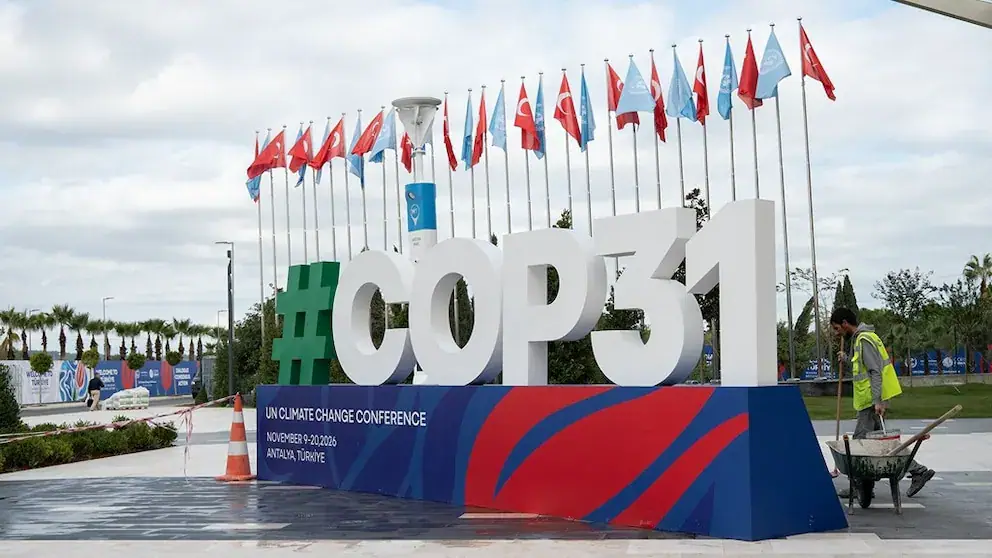
The 31st Conference of the Parties to the United Nations Framework Convention on Climate Change (COP31) has opened in Antalya, Turkey, with climate leaders calling on governments to accelerate the implementation of existing commitments. The two-week conference brings together government representatives, climate negotiators, scientists, businesses, and civil society organisations to discuss measures to address rising global temperatures and climate-related disasters. The summit comes amid concerns about global warming, with the World Meteorological Organisation ranking 2026 among the four hottest years on record.
Simon Stiell, executive secretary of UN Climate Change, said governments must move beyond announcing climate targets and focus on translating existing commitments into measurable outcomes. He said COP31 should prioritise the implementation of agreed targets, particularly in adaptation finance, renewable energy deployment, electrification, and methane emissions reduction. Stiell also urged countries to accelerate efforts to triple global renewable energy capacity by 2030 and expand electricity grids across national borders to support the transition to cleaner energy sources.
According to Stiell, combining faster electrification with reductions in methane emissions could reduce projected global warming by approximately 0.5 degrees Celsius. The negotiations will also cover the proposed Just Transition Mechanism, adaptation, mitigation, and climate finance. Countries are expected to discuss measures to support the transition to lower-carbon economies while addressing the economic and social consequences for affected communities.
However, efforts by African countries to secure greater attention to adaptation finance at the opening of COP31 suffered a setback after parties failed to agree on including the issue as a separate item on the conference agenda. The African Group of Negotiators (AGN) had pushed for the inclusion of adaptation finance to clarify the baseline for measuring the promised increase in funding and establish how additional resources would be mobilised.
Murat Kurum, COP31 president, subsequently ruled that the proposal would not be included as a standalone agenda item, citing that its exclusion would not prevent further discussions under existing agenda items. The decision highlights the challenges developing countries face in securing specific commitments on climate finance, despite growing demands for resources to address the effects of climate change.
Turkey’s COP31 presidency has placed climate finance and electrification at the centre of its action agenda, with an emphasis on improving developing countries’ access to capital, technology, and technical expertise needed to implement their climate plans. Kurum said extreme heat was putting pressure on cities, agriculture, and public health, while climate-related disruptions were affecting food security, migration, economic activities, and national security.
As part of its electrification agenda, the Turkish presidency is promoting the 35-by-35 Global Electrification Pledge, which seeks to increase electricity’s share of final energy consumption to 35 percent by 2035. COP31 is being co-hosted by Turkey and Australia, with Turkey hosting the summit and leading the Action Agenda, while Australia’s Chris Bowen will serve as president of the negotiations. The outcome of the conference will be important in determining whether international commitments can provide the funding and support needed to strengthen resilience and finance for developing economies facing climate-related risks.
Key points
- Governments are urged to accelerate the implementation of existing climate commitments, expand electrification, and improve access to climate finance.