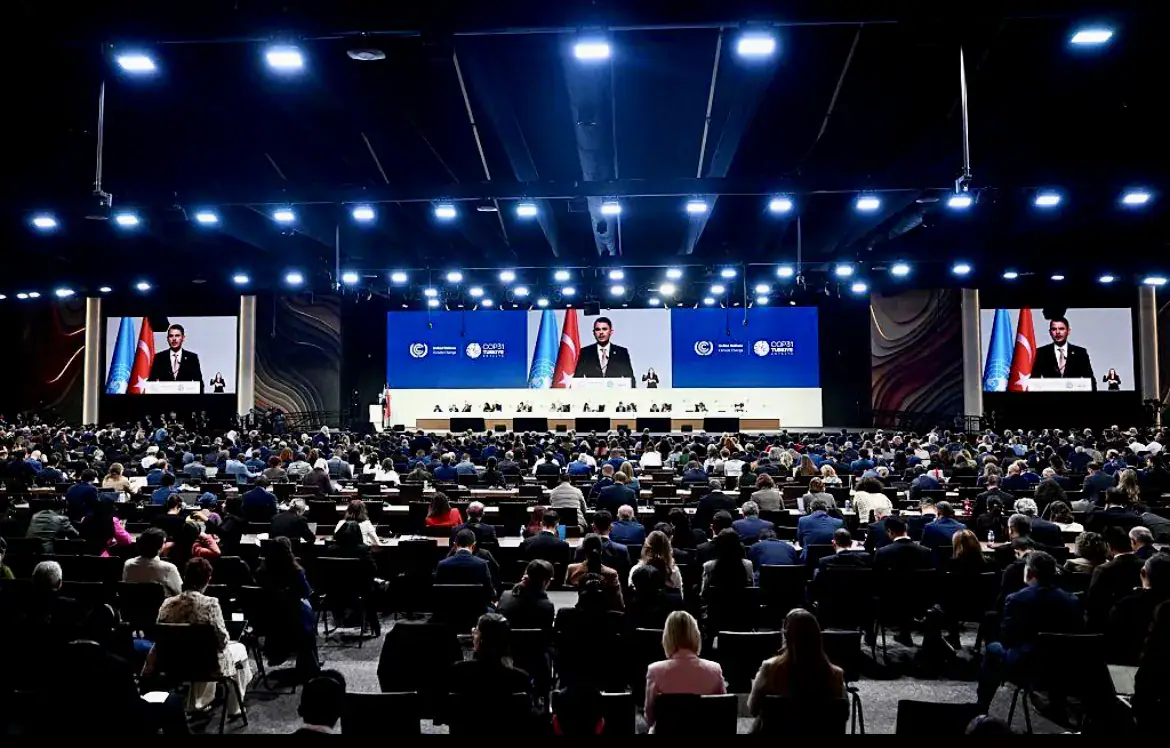
The 31st United Nations Climate Conference, or COP31, concluded on Sunday, November 22, 2026, in Antalya, Turkey, without a comprehensive global agreement on fossil fuels. After two weeks of negotiations, representatives from nearly 200 countries failed to reach a consensus on a final text. The main point of contention was the role of fossil fuels in addressing climate change.
A key sticking point was the absence of explicit references to coal, oil, and gas in the draft final agreement presented by the Turkish and Australian presidencies. Several countries, including European Union members, the United Kingdom, Panama, and island states, refused to support a text that did not clearly reaffirm the need to gradually phase out fossil fuels. They argued that a climate agreement could not ignore the primary sources of greenhouse gas emissions.
Conversely, several fossil fuel-producing countries, such as Saudi Arabia and Russia, opposed introducing more stringent references to fossil fuels. Discussions also stalled on the role of carbon capture and storage technologies, as well as financial commitments to developing countries. Despite this impasse, separate decisions were adopted on certain aspects, including adaptation to climate change and a just transition.
Nearly 100 countries supported an objective to increase the share of electricity in final energy consumption to 35% by 2035. This development suggests that while a comprehensive agreement was not reached, some progress was made on specific issues. The unresolved questions are expected to be addressed in the next climate negotiations, scheduled for 2027 in Ethiopia.
The failure to reach an agreement on fossil fuels has significant implications for global climate efforts. The continued reliance on fossil fuels is a major contributor to greenhouse gas emissions, which drive climate change. Without a clear commitment to phase out fossil fuels, it will be challenging to limit global warming to 1.5 degrees Celsius above pre-industrial levels.
The COP31 outcome highlights the ongoing challenges in international climate negotiations. The lack of consensus on fossil fuels reflects the differing priorities and circumstances of countries. While some countries are pushing for more ambitious action, others are hesitant to commit to significant changes. This dynamic is likely to continue in future climate talks.
The next climate negotiations in Ethiopia will provide an opportunity for countries to revisit the issues that were not resolved at COP31. It remains to be seen whether countries can find common ground on fossil fuels and other contentious issues. One key point is that the transition to renewable energy is crucial for reducing greenhouse gas emissions and mitigating climate change.
Key points
- The conference did not result in a global agreement on fossil fuels due to disagreements over their role in addressing climate change.
- Nearly 100 countries supported a goal to increase the share of electricity in final energy consumption to 35% by 2035.
- The next climate negotiations are scheduled for 2027 in Ethiopia, where unresolved issues, including fossil fuels, will be addressed.
Reporting sources
- Climat : la COP31 s’achève sans accord global sur les énergies fossiles · Le Pays (Tchad)