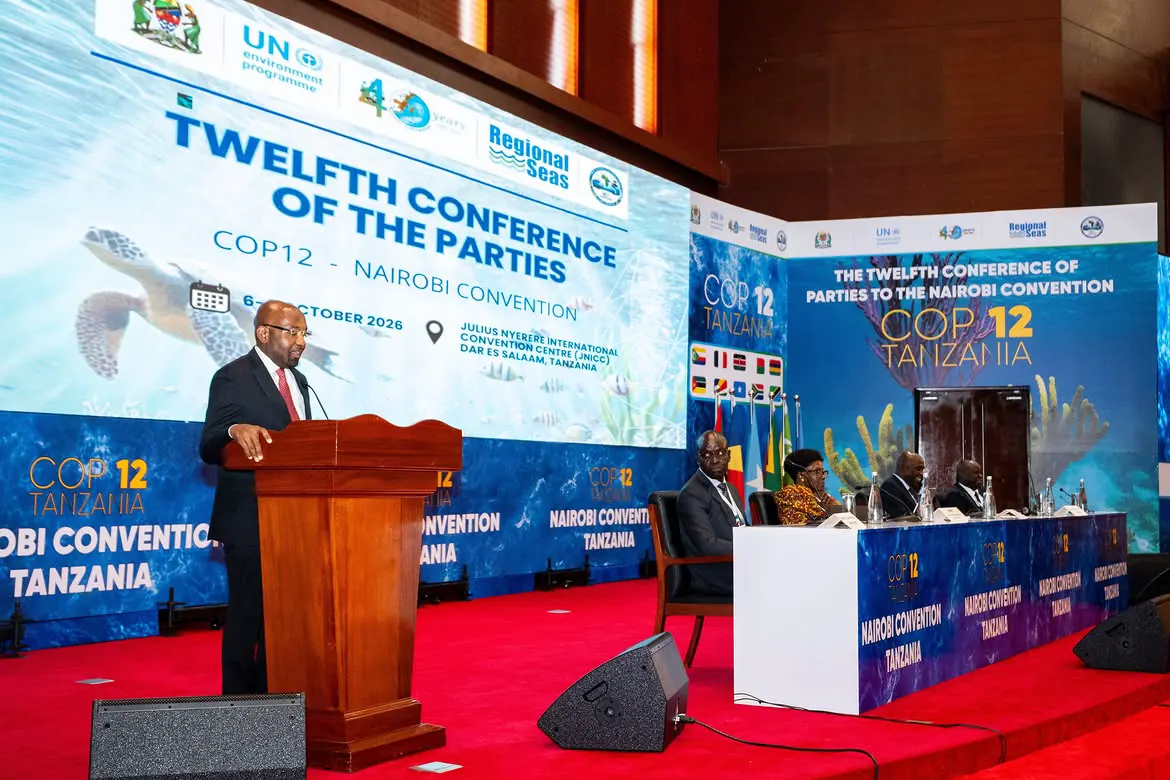
The 12th Conference of Parties to the Nairobi Convention (COP12) has given a significant boost to investment opportunities in Tanzania's marine sector, including fisheries, fish farming, and marine products processing. The conference, currently underway in Dar es Salaam, aims to identify joint projects and programs that stimulate investment in the blue economy while ensuring environmental conservation. Minister of State in the Vice-President's Office, Engineer Hamad Masauni, emphasized the potential of these opportunities to create jobs, increase incomes, and boost government revenue.
The conference has attracted over 700 participants from Tanzania and abroad, including development, environmental, and economic sector stakeholders. For the first time in COP12's history, Tanzania has organized special sessions for women and youth to enhance their participation in blue economy activities, innovation, and technology. These sessions provide a platform for building partnerships, exchanging experiences, and establishing business relationships. The private sector's role in promoting the blue economy has been stressed as crucial.
Marine tourism is one of the sectors expected to benefit from the conference, with the potential to increase tourist arrivals and generate greater economic benefits. Engineer Masauni cited marine tourism as an example of how the blue economy can be developed sustainably, creating jobs and increasing incomes while conserving the environment. The conference aims to produce practical projects, programs, and strategies rather than just discussions and resolutions.
Tanzania and other countries bordering the Indian Ocean face similar challenges, including marine pollution and coral reef destruction. Zanzibar Minister of State, Khamis Juma Khamis, emphasized the importance of solidarity among member states in addressing these challenges, which threaten fish breeding grounds and the livelihoods of coastal communities. The conference provides a platform for countries to pool efforts and develop plans to protect the marine environment while increasing economic benefits.
The UN Environment Programme (UNEP) Executive Director, Dr. Elizabeth Mrema, stressed the importance of educating the public on marine conservation. She highlighted plastic waste as one of the threats affecting marine life and communities that depend on marine resources. The conference aims to raise awareness and promote sustainable practices in the marine sector.
The participation of development partners from various countries has created opportunities to mobilize resources for implementing joint projects aimed at conserving and sustainably utilizing marine resources. Engineer Masauni expressed Tanzania's desire for the conference to produce tangible outcomes, including practical projects and programs that can be implemented to promote the blue economy.
The conference has made significant progress in promoting the blue economy and sustainable development in Tanzania's marine sector. With the involvement of women and youth, the private sector, and development partners, the conference is expected to have a lasting impact on the country's economic development and environmental conservation.
Key points
- The conference aims to identify joint projects and programs that stimulate investment in the blue economy while ensuring environmental conservation.
- The blue economy has the potential to create jobs, increase incomes, and boost government revenue if developed sustainably.
- The conference has attracted over 700 participants from Tanzania and abroad, including development, environmental, and economic sector stakeholders.