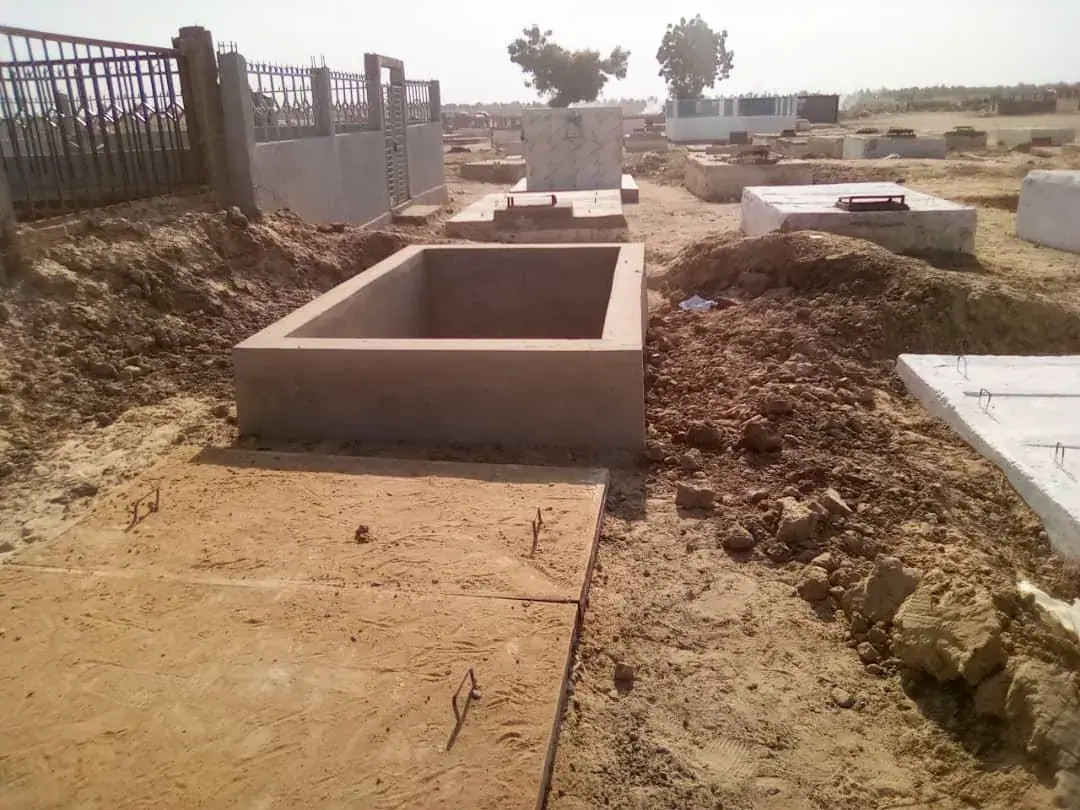
A heated controversy has been unfolding at the Toukra cemetery in N'Djamena, Chad's capital city, over the past few days. A private enterprise, owned by Berasngar Jérémy, has begun constructing tombs and digging graves for sale, a practice that has been met with resistance from users and local authorities. The company, known as the "Entreprise Nouvelle de Construction et de réfectionnement des Bâtiments," claims to have obtained an operating permit from the city's central municipality.
According to sources, the company is offering traditional grave digging services for 30,000 FCFA, while constructed tombs are being sold for between 850,000 and 1,300,000 FCFA. The entrepreneur, Berasngar Jérémy, asserts that his business aims to assist the population, citing difficulties faced by some families in burying their loved ones with dignity. He also denies allegations that his company is forcing families to use its services, instead blaming some municipal agents and young grave diggers for taking bribes from families.
However, several users and local leaders, including the head of the Toukra cemetery's Mousgoum section, dispute Jérémy's claims. They argue that the tradition of allowing families and relatives to dig graves themselves has been in place for years and that privatization of the cemetery is unacceptable. The controversy has led to altercations, with some parties accusing Jérémy of profiteering from death.
The head of the road maintenance service, M. Emmanuel, who is detached to the cemetery, acknowledges that Jérémy's company has an authorization from the municipality, but expresses concerns about the situation's confusion. He reveals that Jérémy arrived at the cemetery early in the morning to give instructions, but has since become unreachable. Emmanuel also reports that a family refused Jérémy's services, leading to threats.
Some users and a police officer from the local post are questioning the legitimacy of the authorization granted to Jérémy's company. They wonder who issued the permit and whether it was approved by higher authorities, such as the National Assembly or Senate. The current cemetery caretaker, Oudaï Pansie, confirms that he is aware of the tensions, but feels his role is limited since Jérémy's company has obtained a permit from the central municipality.
The controversy has sparked a heated debate about the management of public spaces and the role of private enterprises in providing essential services. While Jérémy insists that his business is aimed at helping the population, many argue that his activities are an overstep into a traditionally communal and sacred space. As tensions continue to rise, it remains to be seen how the situation will be resolved.
The incident has also raised concerns about the need for clearer regulations and guidelines on cemetery management in Chad's capital city. With the population of N'Djamena growing, the demand for cemetery services is likely to increase, making it essential to establish transparent and equitable systems for managing these public spaces. Ultimately, a resolution to the controversy at Toukra cemetery will require dialogue and cooperation among all stakeholders involved.
Key points
- A private company has started selling pre-dug graves and constructed tombs at the Toukra cemetery in N'Djamena, Chad's capital city.
- The company's activities have sparked concerns about privatization and have led to tensions with users and local authorities.
- The legitimacy of the company's authorization and the need for clearer regulations on cemetery management have been raised.