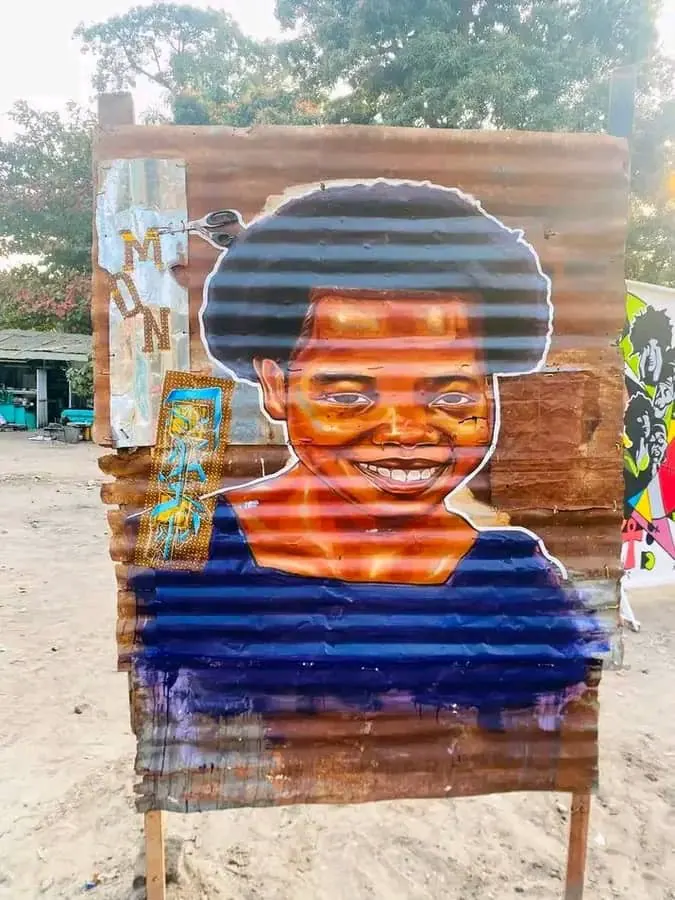
The consumption of contemporary art in the Democratic Republic of Congo is characterized by significant social inequalities, according to John Bongenya, a Congolese art critic. In an analysis of the relationship between contemporary art and social classes in DR Congo, Bongenya stated that the question of whether Congolese people truly consume their contemporary art cannot be reduced to the number of works sold. It must also consider economic conditions, cultural practices, artistic knowledge, and the symbolic value attributed to works.
Bongenya based his analysis on the concepts developed by French sociologist Pierre Bourdieu, who argued that cultural practices are closely tied to economic and cultural capital. Economic capital refers to the resources that enable the acquisition of works, while cultural capital facilitates their understanding, appreciation, and valorization. In popular milieus, economic constraints limit the purchase of original works, and the relationship with art often takes free or low-cost forms, such as digital images, publications, and public exhibitions.
The middle class occupies an intermediate position, with resources that may allow occasional acquisition of works, while greater cultural capital can foster a more regular relationship with artistic creation. However, Bongenya noted that collecting remains fragile, with some works acquired for decorative purposes, as souvenirs, or to express identity, without necessarily being considered elements of an artistic heritage to be constituted and transmitted.
In the most favored social categories, the possession of a work can be a marker of social distinction, but it also competes with other prestige goods, such as real estate, automobiles, fashion, or luxury products. Bongenya's analysis also highlights the notion of habitus, developed by Pierre Bourdieu, which refers to the cultural habits acquired within the family, school, and social environment that influence how individuals encounter and apprehend art.
Bongenya identifies three forms of relationship with contemporary art: the consumption of the image of art, the consumption of the artistic experience, and the economic consumption of the work. The first has become more accessible with digital development, while the second is more closely linked to the frequentation of artistic spaces and events. The third, which involves buying and collecting, remains more restricted. He notes a paradox in the Congolese artistic landscape, where a work can enjoy significant visibility, particularly through digital platforms and international circuits, while being weakly integrated into the patrimonial practices of the society in which it was produced.
To address this issue, Bongenya believes that the challenge lies not only in producing or promoting artists but also in creating favorable conditions for the emergence of a public capable of understanding, appreciating, acquiring, collecting, and transmitting works. He advocates for the development of cultural mediation, artistic education, and the domestic market, which could help bring artists, works, and different publics closer together. The consumption of contemporary art in DR Congo is part of an artistic scene marked by diversity and a growing presence of Congolese artists in national and international cultural circuits.
The reflection of John Bongenya is part of a sociological approach to cultural consumption, inspired by the work of Pierre Bourdieu, who studied the relationships between cultural tastes, social position, and different forms of capital. This approach makes it possible to question the passage from the visibility of works to their effective appropriation by the public, highlighting the issues of access to cultural practices and the role of institutions and the market in promoting the encounter with art, its acquisition, conservation, and transmission as an element of artistic heritage.
Key points
- The consumption of contemporary art in DR Congo is influenced by economic and cultural capital.
- The middle class occupies an intermediate position in the consumption of contemporary art.
- The development of cultural mediation, artistic education, and the domestic market could help promote the consumption of contemporary art in DR Congo.