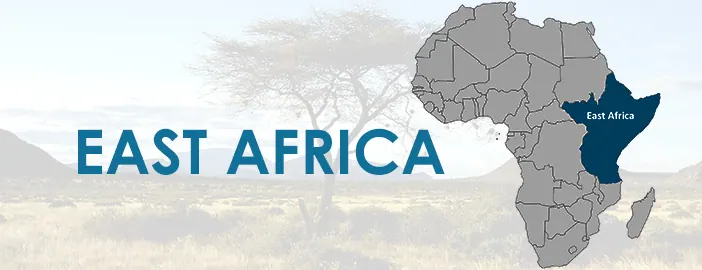
Consultant Gene Grand has urged businesses expanding across East Africa to adopt a split-and-scale model to accelerate growth. According to Grand, companies often struggle with balancing headquarters control and on-the-ground agility. He advises firms to centralize compliance functions while empowering local teams with decision-making authority on pricing, hiring, and marketing. This approach, he argues, will enable businesses to navigate the complexities of the East African market.
Grand notes that many companies make the mistake of treating Africa as a single market with minor variations, rather than as distinct markets. Research by the McKinsey Global Institute supports this view, highlighting divergent growth rates across the continent. Grand emphasizes that a one-size-fits-all approach is ineffective, citing differences in regulatory environments, consumer behavior, and institutional change across countries. For instance, he cautions against equating Kenya with Nigeria.
Grand's framework recommends that compliance architecture, risk management, and reporting standards be built once and applied uniformly across all markets. This, he stresses, reduces exposure that can surface during investor due diligence. At the same time, product, pricing, and promotion can be tailored locally to meet specific market needs. By centralizing compliance functions, businesses can ensure consistency and coherence across their operations.
Conversely, Grand advocates for local teams to be empowered to make decisions on pricing, hiring, marketing, and day-to-day customer interactions. He argues that decision-making speed cannot be uniform across the region, citing the example of a Nairobi team needing to react quickly to a competitor's move. In such cases, approvals cannot flow through a distant headquarters, highlighting the need for local autonomy.
Grand warns that many firms allow the central-local split to evolve by accident, leading to compliance functions drifting to local improvisation and decision authority gradually re-centralizing through ad-hoc approvals. To avoid this, he advises firms to deliberately design their operating model early, documenting which responsibilities stay central and which are delegated. This, he believes, will help businesses avoid regulatory or operational risks.
For businesses building East African operations from scratch, Grand recommends formalizing the split before rapid expansion. This, he argues, will help companies avoid inconsistencies in decision structures that can give rise to regulatory or operational risks. By adopting a deliberate and structured approach, businesses can ensure that their operating model supports their growth objectives.
In conclusion, Gene Grand's split-and-scale model offers a valuable framework for businesses expanding across East Africa. By centralizing compliance functions and empowering local teams, companies can navigate the complexities of the region and accelerate growth. As the East African market continues to evolve, businesses that adopt this approach are likely to be better positioned to capitalize on emerging opportunities.
Key points
- Consultant Gene Grand advises firms to centralize compliance functions while empowering local teams with decision-making authority on pricing, hiring, and marketing.
- A one-size-fits-all approach to East African expansion is ineffective due to differences in regulatory environments, consumer behavior, and institutional change across countries.
- Businesses should deliberately design their operating model early, documenting which responsibilities stay central and which are delegated, to avoid regulatory or operational risks.