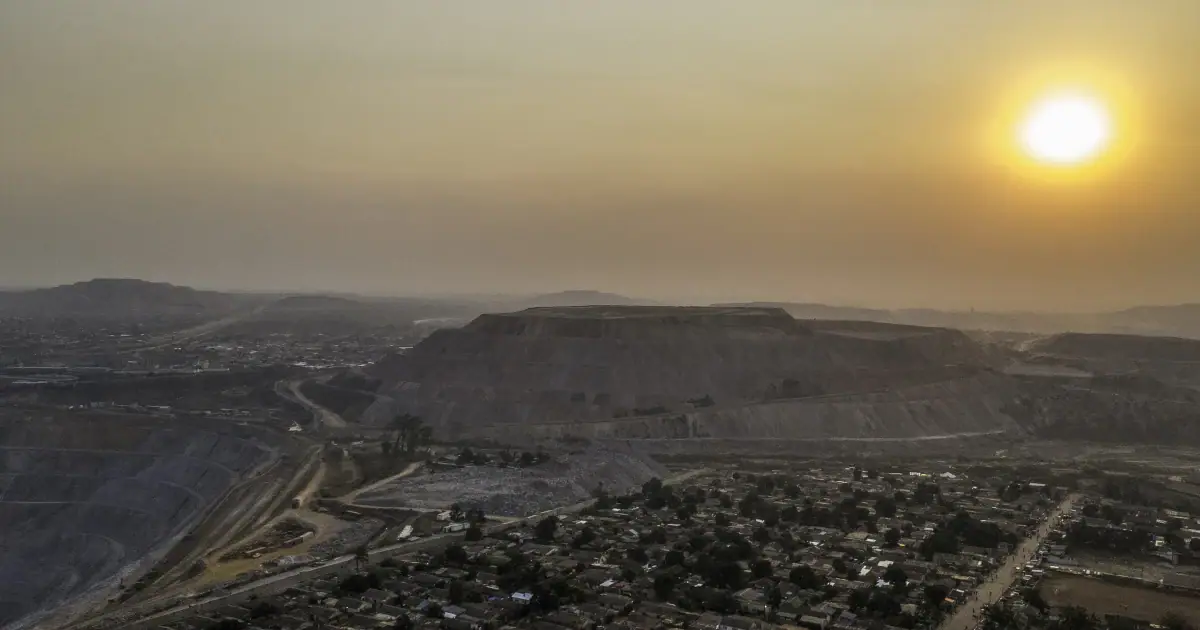
In the Democratic Republic of Congo, 27 residents have taken a Chinese-owned copper and cobalt mine to court, alleging that pollution from the mine has caused severe health problems, including bleeding, birth defects, and miscarriages. The plaintiffs, who live near the COMMUS mine in Kolwezi, claim that the mine's pollution has devastated their lives, with some losing children or suffering from chronic illnesses. They are seeking $1.3 million in compensation for health problems and medical expenses, as well as $5 million to restore the environment.
The COMMUS mine, owned by Chinese multinational Zijin, is located in Kolwezi, a city of over 500,000 people in the heart of Congo's copper belt. Congo is the world's second-largest producer of copper and the source of over 70% of the world's cobalt, a metal critical to the electric-vehicle revolution. Despite the global importance of Congo's copper and cobalt mines, environmental pollution from the industry has received comparatively little scrutiny. A study published in June found that levels of fine particulate matter in Kolwezi were three to six times the World Health Organization's air quality guideline, with the highest concentrations recorded near the COMMUS mine.
The study, carried out by environmental research organization Source International, found that the tiny particles can penetrate deep into the lungs and enter the bloodstream, posing health risks, particularly for pregnant women and young children. The researchers also tested dust samples and found residue of copper, cobalt, and manganese, pointing to mining waste as the main source of pollution. The study's findings have been echoed by residents and health workers in Kolwezi, who point to a string of ailments that they blame on a polluted environment.
In a dilapidated health clinic near the COMMUS mine, nurse Héritier Bukassa said that people routinely break out in itchy hives, and women in the area suffer from high rates of miscarriage. Bukassa added that he had referred four babies born with congenital malformations to hospitals this year alone. Respiratory illnesses are common too, Bukassa said, especially in otherwise healthy babies who develop breathing problems a few weeks after birth. The nurse expressed frustration that no one from the mining company has ever come to talk to them about the health issues.
The plaintiffs' lawyers say they worry that their clients might come under pressure or intimidation to withdraw their testimony. However, one of the plaintiffs, a mother who lost three children, said she had no such fears, adding that she and her community have a right to a clean environment and to health. The case, which began on November 3, is seen as one of the most ambitious legal challenges yet brought by Congolese residents over industrial mining pollution.
The Cobalt Institute, an industry lobby, said that understanding environmental pollution requires an evidence-based approach that considers all potential sources and contributors. It added that companies perform environmental monitoring and carry out mitigation measures. RAID, which is supporting the plaintiffs, described the case as an important test case that could lead to communities challenging other mines in the future.
The outcome of the case could have significant implications for the mining industry in Congo, where environmental pollution is a major concern. The plaintiffs' case highlights the need for greater scrutiny of the industry's environmental impact and for companies to take responsibility for their actions. As the case continues, the plaintiffs and their supporters are hoping for a positive outcome that will bring them justice and help to protect their community's health and environment.
Key points
- The plaintiffs are seeking $1.3 million in compensation for health problems and medical expenses, as well as $5 million to restore the environment.