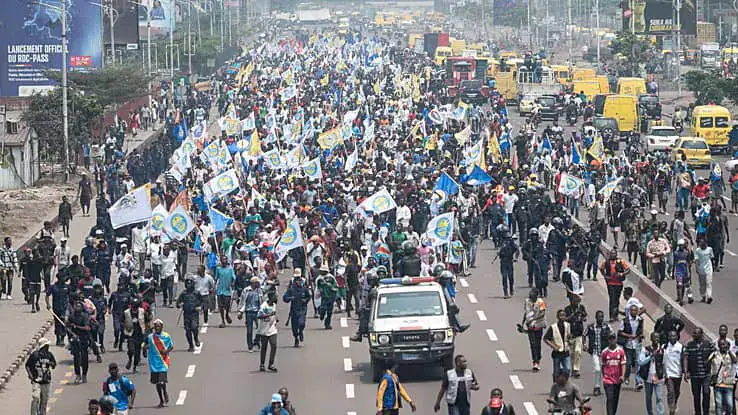
The decision by Democratic Republic of Congo President Félix Tshisekedi to enact a new law facilitating a constitutional referendum has triggered intense controversy. The opposition views this move as a maneuver to clear the way for a third presidential term, despite the current Constitution limiting the head of state to two terms. Jean-Baptiste Kasekwa, an opponent from the C64 coalition, considers this reform a threat to democratic alternation.
Kasekwa accuses Tshisekedi of seeking to modify constitutional rules to remain in power beyond 2028. He describes the initiative as a "declaration of war against the Congolese people," suggesting it could lead to a "life presidency." The enacted text does not directly provide for a new presidential candidacy but eases conditions for organizing a referendum on constitutional matters. Critics argue this change could allow revisiting certain constitutional articles, particularly those governing presidential term limits.
Analysts are increasingly concerned about the implications of this decision. Trésor Kibangula, a researcher at the Congolese institute Ebuteli, believes it risks heightening political tensions rather than easing them. According to him, the opposition and civil society now have a new argument to denounce the government's alleged intention to cling to power beyond current limits. This controversy arises in a fragile context, with ongoing fighting in the east and a resurgence of conflict with the M23 group, led by former President Joseph Kabila.
President Tshisekedi, in power since 2019, stated in May that he did not plan to seek a third term but would accept it if the population desired. The next elections are scheduled for 2028, but political uncertainty is already fueling tensions between the government and opposition. The opposition and critics argue that Tshisekedi's move undermines the Constitution and could destabilize the country further.
The new law has significant implications for Congo's democratic processes. By potentially allowing a third term for Tshisekedi, it challenges the country's progress toward consolidating democracy. The situation is being closely watched by both national and international observers, who fear the consequences of such a move on the country's stability and reputation.
In response to growing criticism, the government has yet to provide a detailed justification for the law. However, it emphasizes the need for constitutional reform to address pressing national issues. The debate over the law is expected to continue, with various stakeholders weighing in on its potential impact.
As the controversy unfolds, Congo's political landscape remains volatile. The international community is urging restraint and dialogue to prevent further escalation. The country's future hangs in the balance, with the outcome of this political standoff likely to have far-reaching consequences for its people and the region.
Key points
- President Tshisekedi's decision to enact a law facilitating a constitutional referendum has sparked concerns about a potential third term.