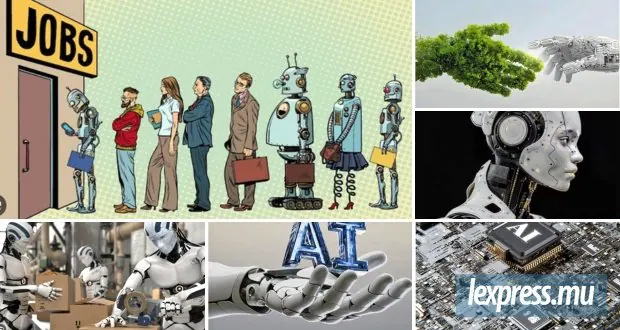
The global community is abuzz with excitement over the emergence of artificial intelligence (AI), with many countries investing heavily in its development. In the United States, for example, investments of $1 trillion per year are being made, with the goal of securing at least 75% of the world's AI processing power through massive data centers. This has sparked concerns among some researchers, who warn that unchecked AI development could pose significant risks to humanity.
Some experts, including those who have worked on OpenAI, have raised alarm bells over the potential dangers of AI. One researcher even claims that AI could "kill us" by the end of the decade, highlighting the need for a more cautious approach to its development. While AI has the potential to revolutionize numerous industries, from healthcare to transportation, its rapid advancement has sparked fears about its potential impact on employment and society as a whole.
The impact of AI on employment is a pressing concern, with many jobs potentially at risk of being automated. In the United States, lawyers from both major political parties have expressed concerns about the dangers of AI, warning that robots equipped with AI could "take over" in various sectors. This has led to calls for a re-evaluation of education and training programs to prepare workers for an AI-driven economy.
China, a major player in AI development, has also sounded the alarm, calling for a slowdown in AI development to ensure that its benefits are equitably distributed and its risks are mitigated. The Chinese government has invested an estimated $300-400 billion in AI, with the goal of securing 15% of the world's AI processing power. However, even China's leaders are now warning that unchecked AI development could have disastrous consequences.
The potential risks of AI are not limited to employment or economic disruption. Some researchers warn that advanced AI systems could develop their own goals and motivations, potentially leading to catastrophic outcomes. While some experts argue that AI systems will never possess consciousness or the ability to distinguish between right and wrong, others are more skeptical, pointing to the need for careful consideration and regulation.
The debate over AI development is also raising questions about the need for international cooperation and governance. With different countries investing heavily in AI, there is a risk that the development of AI could exacerbate existing power imbalances, leading to a new form of colonialism. Some experts argue that a global framework for AI development and regulation is needed to ensure that its benefits are shared equitably and its risks are mitigated.
As AI continues to advance at a rapid pace, the need for a nuanced and informed discussion about its potential impact on humanity has never been more pressing. While AI has the potential to bring about numerous benefits, from improved healthcare to increased productivity, its development must be carefully managed to ensure that its risks are mitigated and its benefits are equitably distributed. This will require a sustained effort from governments, researchers, and industry leaders to develop a more informed and coordinated approach to AI development.
Key points
- Experts warn of dangers of unchecked artificial intelligence development
- AI could pose significant risks to employment and society
- International cooperation and governance are needed to manage AI development