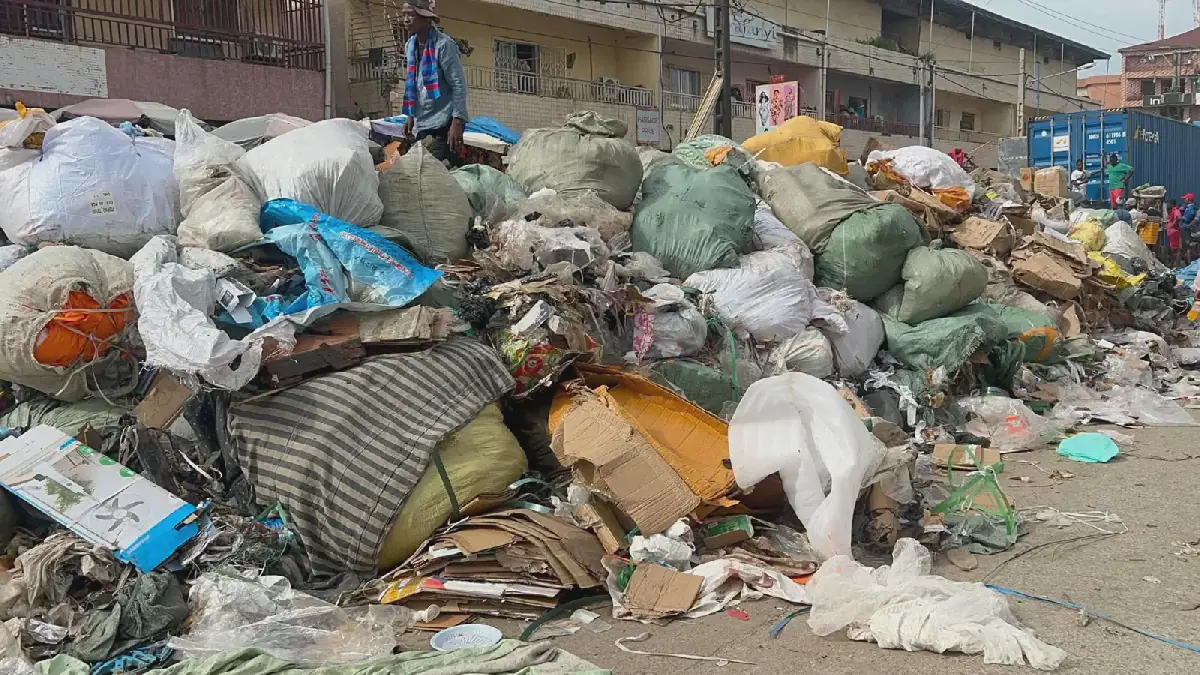
The closure of the Dar-es-Salam landfill in Conakry, Guinea, has severely disrupted the city's waste collection and disposal system. Following a deadly landslide on August 23, the landfill was shut down, leaving the city struggling to manage its waste. Residents are now facing a growing crisis, with trash accumulating in streets, markets, and residential areas. The problem of irregular waste disposal is not new in Conakry, but it has worsened since the Dar-es-Salam landfill closure.
In several neighborhoods, including Cosa and Matoto, residents are expressing frustration with the lack of waste collection services. Despite paying private companies for waste collection, many residents are not receiving regular services. Some are forced to pay young people to collect their trash, but this has not solved the problem. On the Le Prince road, one of Conakry's main arteries, illegal dumping is on the rise. Residents like Zeinab Kaba and Matou Sylla are calling for government assistance to address the issue.
The situation is particularly dire in commercial areas like the Madina market. Trash is piling up, and waste collection has become rare. Market vendors are complaining about the difficulties they face, with some saying they are exhausted and in need of government help. Adama Sylla, a resident of Matoto, says the accumulation of waste is a serious concern for public health and the environment. The situation is also affecting the city's economy, with businesses struggling to operate amidst the waste crisis.
The closure of Dar-es-Salam has also had a significant economic impact on private waste collection companies. Ousmane Sow, head of a waste collection company, says the longer distances and traffic congestion are reducing his team's ability to provide services. As a result, many clients are canceling their subscriptions, and the company is struggling to operate. The government has announced plans to open a new landfill site in Baritodé, but its implementation is still pending.
According to the Coordination nationale des acteurs d'assainissement, the new landfill site is located nearly 80 kilometers from Conakry, which will complicate waste collection and transportation. The city's waste production is substantial, with over 2,000 tons of waste generated daily. The Dar-es-Salam landfill had accumulated over 9 million cubic meters of waste, or approximately 7.2 million tons, over nearly three decades. The site's closure has also raised environmental concerns, including methane emissions and leachate contamination.
The government has launched a project to rehabilitate the Dar-es-Salam site and has also announced plans to develop a new waste management system for Conakry. However, residents are growing impatient, and the city's waste crisis continues to worsen. The situation is a major challenge for the government, which has promised to make Conakry a "clean city." For now, residents are left to deal with the consequences of the waste crisis, which is affecting their daily lives and their environment.
As the situation continues to unfold, residents are calling for urgent action to address the waste crisis. With the new landfill site in Baritodé still under development, the city needs a comprehensive solution to manage its waste effectively. The government, private companies, and residents must work together to find a solution to this pressing issue. The health and well-being of Conakry's residents depend on it.
Key points
- The closure of the Dar-es-Salam landfill has disrupted waste collection in Conakry, leading to a growing crisis.
- The city's waste production is substantial, with over 2,000 tons of waste generated daily.
- The government has launched a project to rehabilitate the Dar-es-Salam site and develop a new waste management system for Conakry.