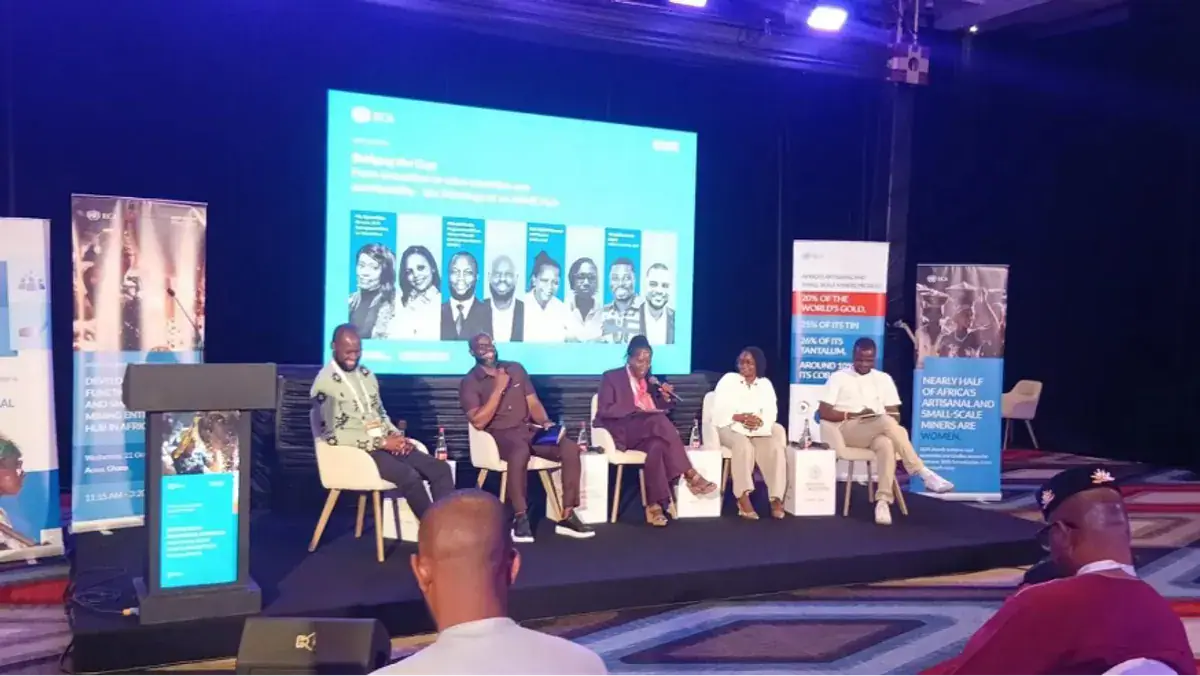
Comprehensive geological mapping is essential for Ghana's mining sector to delineate concessions for small-scale and large-scale mining operators. According to Denis Gyeyir, Programme Manager for Resources Futures in Africa at the Open Society Foundations, this mapping will help prevent operational conflicts between local miners and multinational companies. The mapping will provide a clear understanding of the country's geological resources, enabling effective management and regulation of the mining industry.
The mining sector is a significant contributor to Ghana's economy, but it has faced challenges in recent years, including conflicts between local and multinational mining operators. These conflicts often arise from unclear or overlapping concession boundaries, leading to disputes over land and resources. By creating comprehensive geological maps, the government can establish clear boundaries and prevent such conflicts, creating a more stable and secure environment for mining operations.
The importance of geological mapping was highlighted by Gyeyir, who emphasized its role in protecting local mining investments. By having accurate geological information, local miners can make informed decisions about their operations, and the government can ensure that mining activities are carried out in a responsible and sustainable manner. This, in turn, can help to increase revenue for the government and local communities, while also promoting economic growth and development.
Ghana's mining sector has faced criticism for its lack of transparency and accountability, with some arguing that the industry has not done enough to benefit local communities. Comprehensive geological mapping can help to address these concerns by providing a clear and publicly accessible record of mining activities. This can help to build trust between mining operators, local communities, and the government, and ensure that the benefits of mining are shared equitably.
The Ghanaian government has taken steps in recent years to improve the management of the mining sector, including the establishment of the Minerals Commission. However, more needs to be done to ensure that the industry is regulated effectively and that local communities benefit from mining activities. Comprehensive geological mapping is a crucial step in this process, and it is hoped that it will help to promote sustainable and responsible mining practices in Ghana.
The use of comprehensive geological mapping is not limited to Ghana, and it is a practice that is widely used in other countries. For example, countries such as South Africa and Australia have used geological mapping to manage their mining sectors and promote sustainable mining practices. Ghana can learn from these examples and adapt best practices to its own context, taking into account its unique geological and cultural characteristics.
In conclusion, comprehensive geological mapping is essential for Ghana's mining sector to prevent conflicts, promote sustainable mining practices, and ensure that local communities benefit from mining activities. The government, mining operators, and local communities must work together to ensure that geological mapping is carried out effectively and that its findings are used to promote responsible and sustainable mining practices.
Key points
- Comprehensive geological mapping can help prevent operational conflicts between local miners and multinational companies in Ghana's mining sector.
- The mapping will provide a clear understanding of Ghana's geological resources, enabling effective management and regulation of the mining industry.
- Geological mapping can help promote sustainable and responsible mining practices in Ghana, and the country can learn from best practices in other countries.