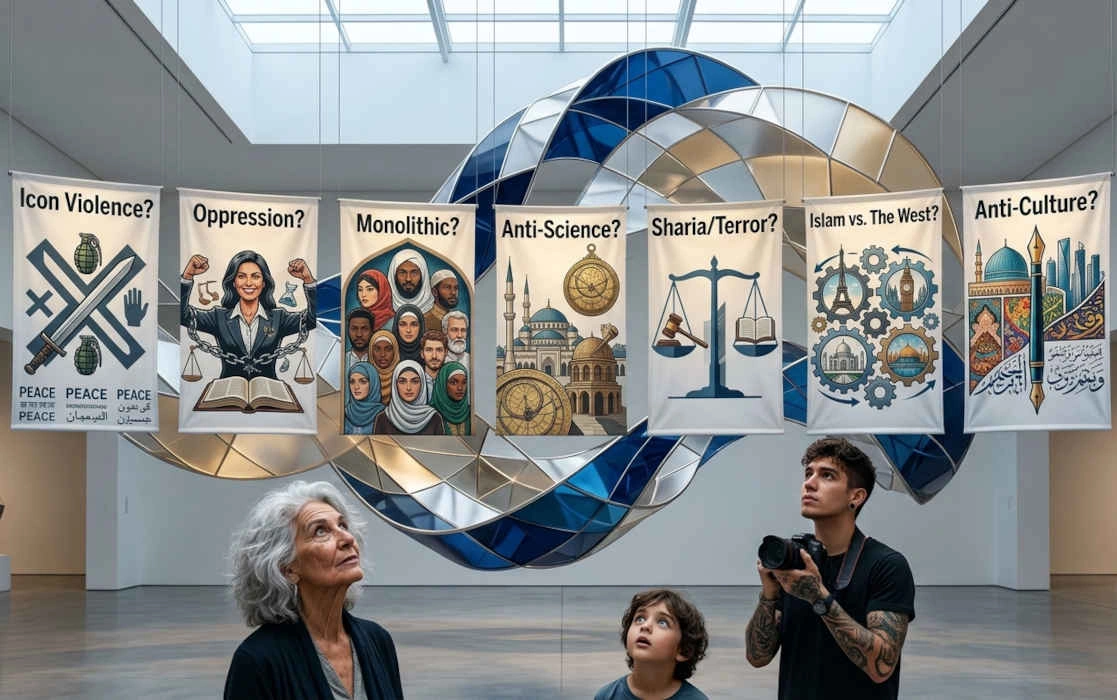
Islam and Muslims are often subject to numerous misconceptions, stemming from a lack of understanding of the religion, conflating individual behaviors with religious teachings, or biased media representation. An article by L'Autre Regard seeks to address these misconceptions by distinguishing between facts, interpretations, and prejudices. The article highlights the importance of understanding the diversity within Islam and Muslims. According to the article, one of the most frequent confusions is that all Muslims are Arabs.
This misconception arises from the association of Islam with the Arab world, as the Quran is written in Arabic and the Prophet Muhammad was Arab. However, the majority of Muslims are not Arabs. Islam is a global religion with significant populations in Indonesia, Pakistan, India, Bangladesh, sub-Saharan Africa, Turkey, and Europe. Muslims comprise a diverse population with different languages, cultures, traditions, and ways of life. The article emphasizes that it is essential to recognize this diversity.
Another common misconception is that Muslims form a homogeneous group with uniform thoughts. However, like other major religions, Islam has various currents, interpretations, and practices. Muslims can hold differing opinions on politics, society, family, and the role of religion. There are also different theological and juridical traditions within Islam. The article stresses that it is inaccurate to refer to "Muslims" as a single, uniform group, as being Muslim does not predetermine a person's opinions or personality.
The article also addresses the misconception that Islam is incompatible with democracy. This assertion often relies on generalizations based on specific political regimes or interpretations of the religion. In reality, Muslim populations live under various political systems, including democracies, monarchies, authoritarian republics, and hybrid regimes. Muslims can also have different conceptions of the relationship between religion and politics. The article highlights the need to distinguish between a religion and its interpretation by governments, political movements, or groups.
The debates on democracy, secularism, and the role of religion exist within Muslim societies. The article aims to promote a nuanced understanding of Islam and Muslims, moving beyond common stereotypes and misconceptions. By exploring these issues, the article seeks to contribute to a more informed and respectful dialogue about Islam and its place in the world.
The article "7 idées reçues sur l'islam" (7 Common Misconceptions About Islam) provides an in-depth examination of these issues, offering insights into the diversity and complexity of Islam and Muslim communities. By addressing these misconceptions, the article hopes to foster greater understanding and empathy towards Muslims and Islam.
Ultimately, the article encourages readers to approach Islam and Muslims with a more nuanced and informed perspective, recognizing the diversity and richness of Muslim cultures and traditions. By doing so, it aims to promote a more inclusive and respectful dialogue about Islam and its role in the world.
Key points
- The article highlights the diversity of Muslims and Islam, challenging common misconceptions about the religion and its adherents.