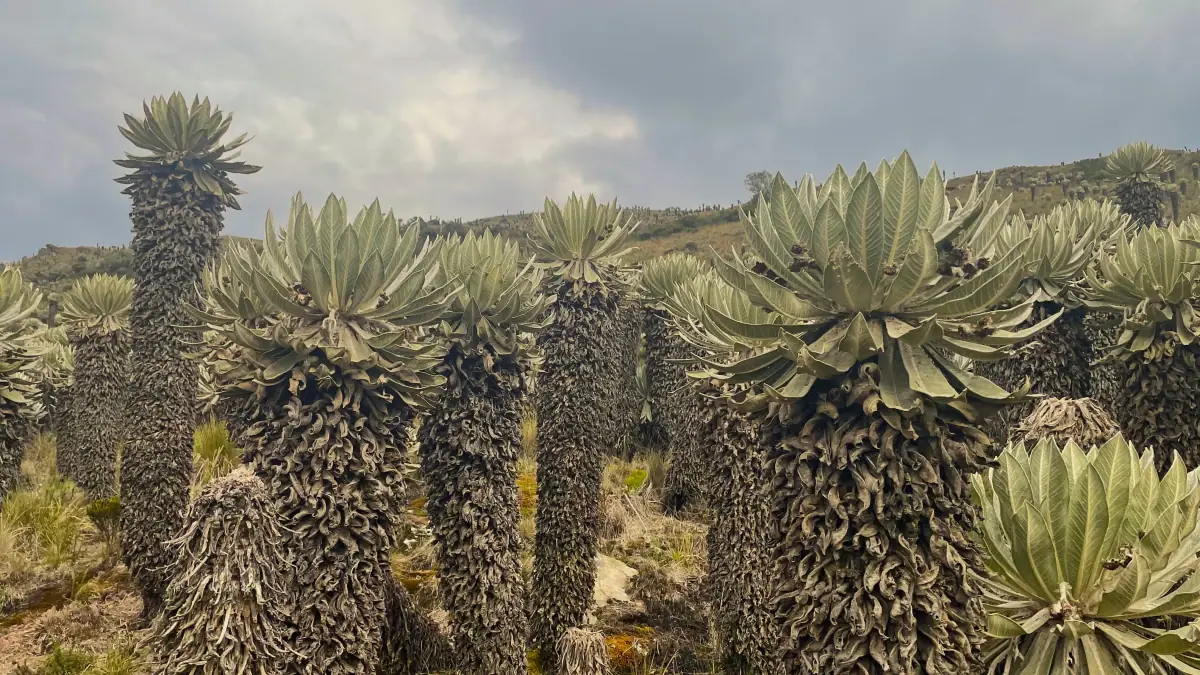
In the Andes Mountains, Moisés Moreno tends to his greenhouse, nurturing tiny seedlings of frailejons, a plant species vital to Colombia's water supply. The plants, related to sunflowers, have wooly fuzz on their leaves that protects them from the cold and absorbs water from the cloud cover, maintaining moisture in the páramos, the source of major rivers. Moreno, 53, used to contribute to the decline of frailejons, chopping them down to make way for potato fields and cow pastures.
However, after being injured in a cave-in while working for a coal mine, Moreno vowed to work above ground and began studying the páramo ecosystem. He started his greenhouse and leads tourists and volunteers on expeditions to replace wiped-out frailejons. Colombian expert Mauricio Diazgranados notes that nearly 150 species of frailejons exist, but two-thirds are at risk and 17 are endangered due to farming, cattle ranching, coal mining, and climate change.
The Muisca Indians considered frailejons sacred guardians of the water, and Diazgranados became captivated by the plants as a teenager in Colombia. Moreno's efforts to protect the páramos are echoed by Colombia's National Parks agency and armed forces, which have launched reforestation campaigns after wildfires scorched thousands of acres of frailejons. A popular cartoon character, Ernesto Pérez, has also raised awareness about the importance of conserving frailejons and the Andes' flora and fauna.
Volunteers guided by Moreno participate in a ceremony to help the frailejons survive, including reciting a prayer and blowing on a conch shell. The hike takes them up to 11,000 feet, past streams, waterfalls, and lagoons, in a state park where frailejons dot the landscape. However, barbed-wire fences erected by farmers and grazing cows pose threats to the plants.
The volunteers, including biologist Julieta Barba, have grown attached to the frailejons they've carried up the mountain, bestowing names on them. Barba has named hers "Gerry" in honor of her mother. Despite the challenges, the volunteers remain committed to helping the frailejons thrive in the harsh climate.
Diazgranados emphasizes that frailejons are a keystone species for maintaining the páramos and play a crucial role in water production. Efforts to protect the plants and their habitats are essential to preserving Colombia's water supply. As Moreno notes, "I felt inspired to do something to protect the páramos."
Colombia's frailejons have been a part of the country's ecosystem for centuries, with explorers first spotting the shrubs protruding from the mountain fog and remarking on their resemblance to hooded monks. The name frailejon, meaning "big friar," was born from this observation.
Key points
- Frailejons are vital for Colombia's water supply, and their decline could have significant consequences for the country's ecosystem.
- Climate change, farming, cattle ranching, and coal mining pose significant threats to the survival of frailejons and the páramos ecosystem.
- Conservation efforts, including reforestation campaigns and education initiatives, are underway to protect the frailejons and their habitats.
Reporting sources
- Meet Colombia's fuzzy 'water guardians' · YP Radio