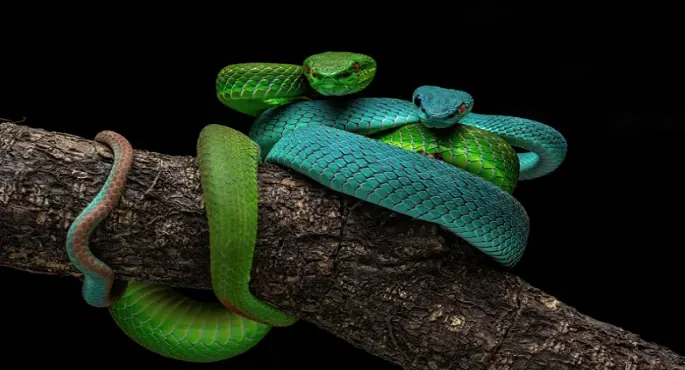
For a long time, scientists believed that reptiles lived in silence, but recent studies have found that these cold-blooded creatures communicate through various sounds. Reptiles, including crocodiles, turtles, and lizards, produce a range of vocalizations, such as chirps, grunts, and hisses. These sounds play a crucial role in their social interactions and survival. Researchers are now working to understand the significance of these vocalizations and their role in reptile communication.
Crocodiles are one of the most studied reptiles in terms of vocalization. Scientists have long observed that young crocodiles make sounds before hatching from their eggs, which seem to synchronize their hatching process. Some turtle species also produce sounds, including clicks and chirps, while still in their eggs. Researchers have compared the vocalizations of two turtle species, the river turtle and the western pond turtle, to better understand their communication methods.
The study found that river turtle hatchlings produce louder and more synchronized sounds while still in their eggs, possibly to coordinate their hatching and work together to escape their nest. In contrast, western pond turtle hatchlings make softer and less synchronized sounds. This difference in vocalization may be related to their different reproductive strategies, with river turtles laying over 100 eggs at a time and western pond turtles laying only a few eggs.
Researchers have also discovered that around 30% of lizard species produce vocalizations. For example, chameleons make sounds similar to barks or screams when interacting with each other, while anole lizards produce a hissing sound when threatened. The iguana, also known as the "crying lizard," can change the pitch of its distress call depending on the level of danger it perceives.
Iguanas produce a range of vocalizations, including simple grunts and more complex calls, which are generated by the asynchronous vibration of their vocal cords. These vocalizations may serve as a warning to other iguanas to remain still or make a greater effort to escape. Scientists have also found that some lizard species, such as the tokay gecko, can modify the pitch of their vocalizations to convey different messages, such as attracting a mate or defending their territory.
The study of reptile vocalizations has also revealed that some species can adjust their vocalizations in response to their environment. For example, researchers found that geckos raise the pitch of their vocalizations in noisy environments, a phenomenon known as the "Lombard effect." This ability to adapt their vocalizations may help reptiles communicate more effectively in different situations.
Overall, the study of reptile vocalizations has provided new insights into the complex social behaviors of these cold-blooded creatures. By understanding their communication methods, researchers can gain a better appreciation for the intricate lives of reptiles and their importance in their ecosystems. Further research is needed to fully explore the range of vocalizations and their significance in reptile communication.
Key points
- Reptiles, including crocodiles and lizards, use diverse vocalizations to interact and communicate.
- Researchers have discovered that some reptile species can modify their vocalizations to convey different messages.
- The study of reptile vocalizations has provided new insights into the complex social behaviors of these cold-blooded creatures.