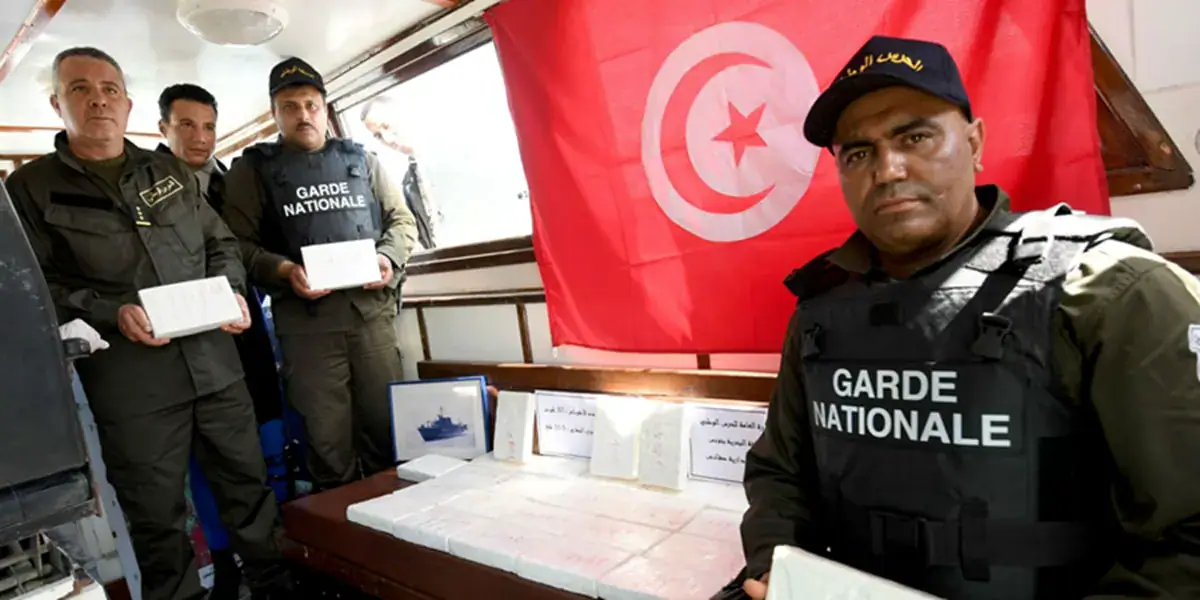
The Tunisian Customs has made significant strides in cocaine seizures, confiscating over 101 kg of the substance between January and September 2026. This amount already exceeds the total seizures made throughout 2025, which stood at 94 kg. According to reports from the TAP, this uptick is part of a broader trend that sees cocaine trafficking routes diversifying. The customs' efforts have resulted in seizures that are more than triple the total of 33 kg recorded in 2024.
The increase in cocaine seizures is attributed to various factors, including the strategic location of Tunisia. The country's borders, particularly with Libya, have become critical points in the global cocaine trafficking network. In February 2026, Tunisian authorities intercepted nearly 30 kg of cocaine at the Ras Jedir border crossing in a vehicle coming from Libyan territory. This seizure is part of a larger trend that has seen the Libyan border emerge as a significant transit point for cocaine.
A report by the United Nations Office on Drugs and Crime (UNODC), published in January 2026, highlights the evolving nature of cocaine trafficking routes. The report identifies Libya as an emerging transit point for cocaine, with shipments arriving via maritime routes from South America and overland corridors through the Sahel region. This development has significant implications for regional and global efforts to combat drug trafficking.
In addition to the Libyan border, Tunisian authorities have also identified European ports, particularly Marseille and Genoa, as key entry points for cocaine shipments. The TAP reports that cocaine is often hidden in private vehicles or trucks transported on ferries from these ports to La Goulette and Radès in Tunisia. From there, the substance is either sold domestically or redistributed to neighboring countries.
Despite the notable increase in seizures, it is essential to acknowledge that these numbers do not provide a comprehensive picture of the cocaine trade in Tunisia. The data only accounts for seizures made by customs and does not include interceptions by other security services. Therefore, it is challenging to determine the actual volume of cocaine consumed or sold in the country.
Experts, including Mohamed Ali Chaïbi, a responsible for combating narcotics at the judicial police in El Gorjani, emphasize the importance of collaborative efforts to combat cocaine trafficking. Chaïbi highlights the need for joint investigations and information sharing with partner countries to effectively tackle the complex networks involved in the cocaine trade.
The surge in cocaine seizures in Tunisia underscores the need for continued vigilance and cooperation among regional and international authorities. As trafficking routes continue to evolve, it is crucial for countries to share intelligence and coordinate efforts to disrupt and dismantle cocaine trafficking networks. The significant increase in seizures in 2026 serves as a testament to the effectiveness of these collaborative efforts.
Key points
- Tunisian customs seize over 101 kg of cocaine in the first 9 months of 2026, surpassing the 2025 total.
- The Libyan border and European ports are identified as key entry points for cocaine shipments.
- Collaborative efforts and information sharing among countries are crucial in combating cocaine trafficking networks.