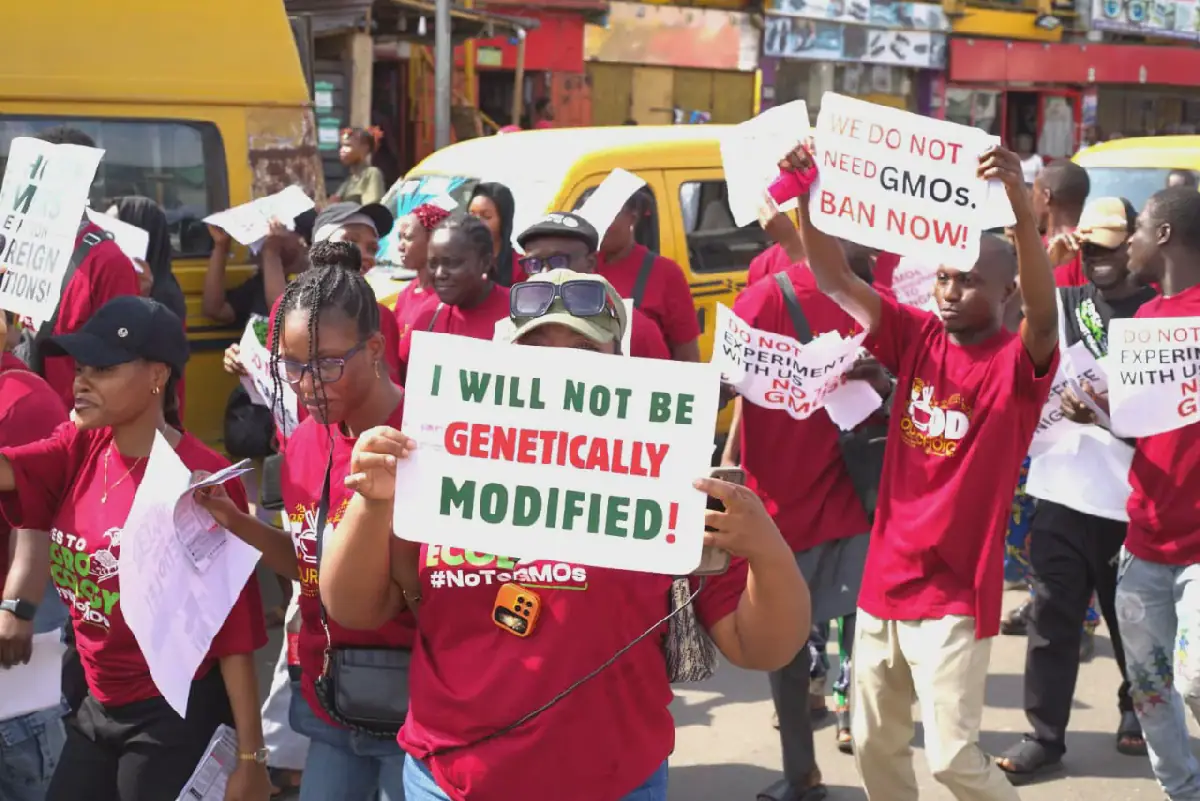
A coalition of scientists, farmers, environmentalists, and food sovereignty advocates has submitted a joint position paper to the Lagos State House of Assembly, urging a ban on genetically modified organisms. The paper, submitted during a mass awareness rally in Lagos on October 29, 2026, highlights potential health risks, environmental concerns, and threats to farmers' rights. The rally was organised by several groups, including the Health of Mother Earth Foundation and Environmental Rights Action.
The coalition, which includes over 70 organisations, has called for a ban on GMOs, the reversal of previously granted approvals, and an extensive investigation into their long-term health and environmental implications. They also urged the government to invest in agroecology and strengthen support for smallholder farmers. According to HOMEF's Media and Communications Manager, Kome Odhomor, the coalition's concerns are not peculiar to Nigeria, as several countries have imposed restrictions on GMOs.
Joyce Brown, HOMEF's Director of Programmes, noted that concerns about biodiversity are among the major reasons some countries restrict GMOs. She added that Lagos State could lead efforts to protect Nigeria's food system and environment. The proposed ban would build on a motion moved by the House of Representatives in 2024 seeking the suspension of GMOs and an investigation into approvals already granted.
Dr. Ifeanyi Casmir, a molecular biologist and public health policy analyst, called for a precautionary, transparent, and people-centred biotechnology policy. He cited concerns about potential allergenic, toxicological, reproductive, and ecological risks associated with GMOs. Casmir argued that Nigeria's food system, ecological diversity, and public health are already under pressure, warning that any adverse effects could be costly and difficult to reverse.
Olamide Martins, an Associate Director at CAPPA, questioned the country's biosafety regulatory framework, noting that over 20 products have been approved since 2016 for commercial planting and use in food, feed, and processing. He expressed concern over the absence of evidence of long-term, independent risk assessments, raising questions about food safety, environmental protection, and national food sovereignty.
Esele Ojeanelo, HOMEF Project Officer, warned that corporate control of patented seeds could undermine farmers' traditional rights to save, reuse, and share seeds. She said Nigeria risks losing control of its indigenous seed varieties and farming systems if farmers become increasingly dependent on multinational corporations for planting materials. The coalition also urged the Lagos State Government to address insecurity preventing farmers from accessing their farms.
The coalition's recommendations include providing smallholder farmers with improved extension services, infrastructure, better access to land, and improved access to markets. They also called for increased investment in agroecology, describing it as a nature-based agricultural approach capable of strengthening local economies while promoting food security and food sovereignty. The statement was endorsed by GMO-Free Nigeria, a coalition comprising over 70 organisations.
Key points
- The coalition cited concerns about potential health risks and environmental damage associated with GMOs.
- The proposed ban would build on a motion moved by the House of Representatives in 2024.
- The coalition urged the government to invest in agroecology and strengthen support for smallholder farmers.