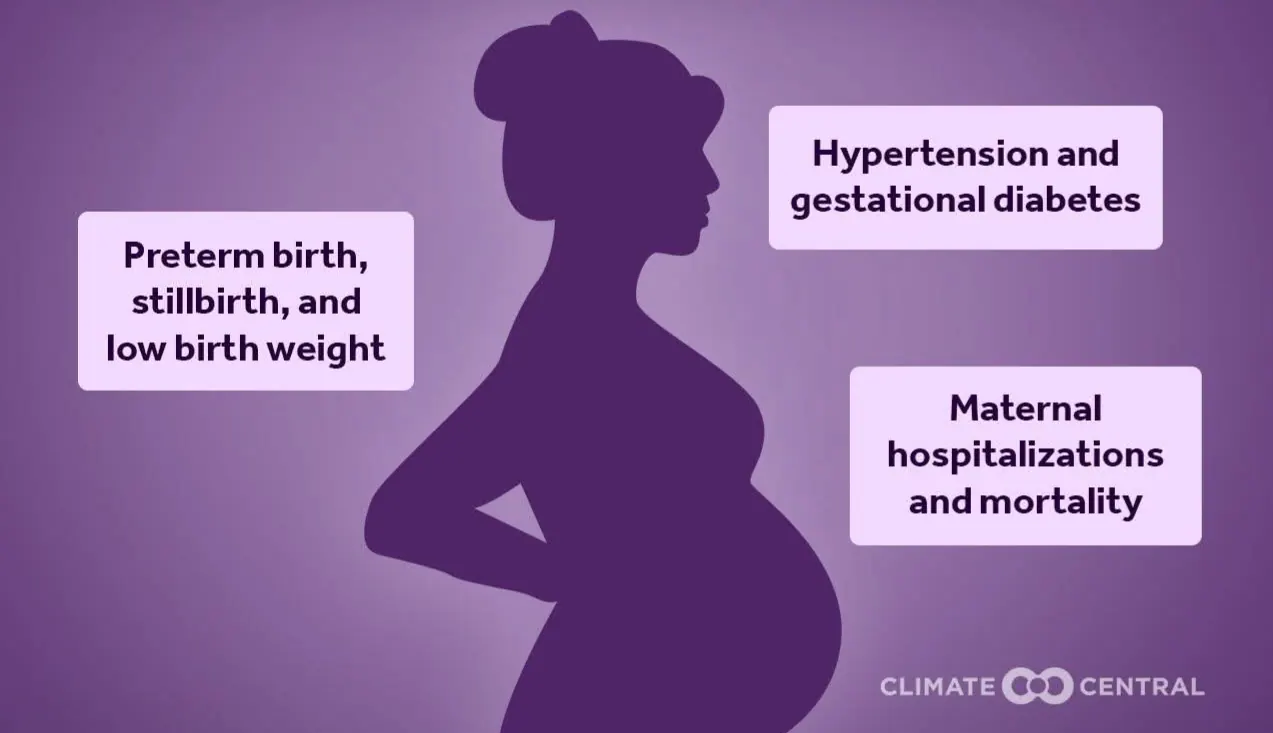
The United Nations has raised concerns over the growing threat extreme heat poses to pregnant women and newborns, warning that intensifying climate change is turning pregnancy and childbirth into a potentially fatal frontier of the global climate crisis. UN Climate Change Executive Secretary, Simon Stiell, stated that rising temperatures were increasingly linked to serious pregnancy and newborn complications, including premature births, stillbirths, and low birth weight.
A new survey commissioned by Wellcome involving maternal health professionals across five countries on five continents revealed widespread concern among healthcare professionals over the effects of extreme temperatures on maternal, fetal, and newborn health. According to findings, 73 percent of healthcare professionals surveyed said heat-related cases or complications had increased over the past five years. The concern extended beyond pregnant women, with 81 percent of respondents expressing concern that extreme heat would increasingly endanger maternal, fetal, and newborn health.
The survey also found that nearly all respondents (98 percent) had cared for a pregnant woman whose health they believed had been affected by extreme heat, while 99 percent had cared for a baby affected by extreme heat. Stiell emphasized that the figures demonstrate that the climate threat is no longer an abstract environmental problem but one increasingly being encountered by families and health workers.
Stiell warned that telling pregnant women to avoid excessive heat or “stay cool” was inadequate where basic infrastructure was unavailable. He noted that millions of vulnerable people live or work in conditions where escaping extreme temperatures is simply not possible. Stiell called for maternal and newborn health to be integrated directly into climate adaptation strategies and national heat-health plans.
The UN official identified three immediate priorities: incorporating pregnancy and newborn care into climate adaptation and heat-health plans; translating scientific evidence into practical protection for mothers and babies; and improving data collection and analysis to identify emerging risks and determine which interventions work. Stiell emphasized that issues not expressly included in government plans were often excluded from funding, monitoring, and protection.
Stiell also called for stronger data systems to establish where climate-related maternal and newborn health risks were increasing, identify the communities facing the greatest exposure, and determine where financing and technology were most urgently needed. He urged countries to deliver on the tripling of adaptation finance agreed at COP30 in Brazil and called on governments and the wider financial system to work towards mobilizing climate adaptation finance.
The UN is demanding that governments make maternal and newborn health a central part of climate adaptation and heat-response planning, including investment in resilient hospitals, reliable water and power supplies, trained health workers, heat alerts, better data, and increased climate adaptation finance. The measures, Stiell said, should include climate-resilient healthcare facilities, dependable water and electricity supplies, properly trained health workers, clearer medical guidance, heat-alert systems, and health services prepared before extreme heat emergencies occur.
Key points
- The UN warns that extreme heat poses a potentially fatal threat to pregnant women and newborns.
- A new survey shows that 73 percent of healthcare professionals have seen an increase in heat-related cases or complications over the past five years.
- The UN is calling for maternal and newborn health to be integrated into climate adaptation strategies and national heat-health plans.