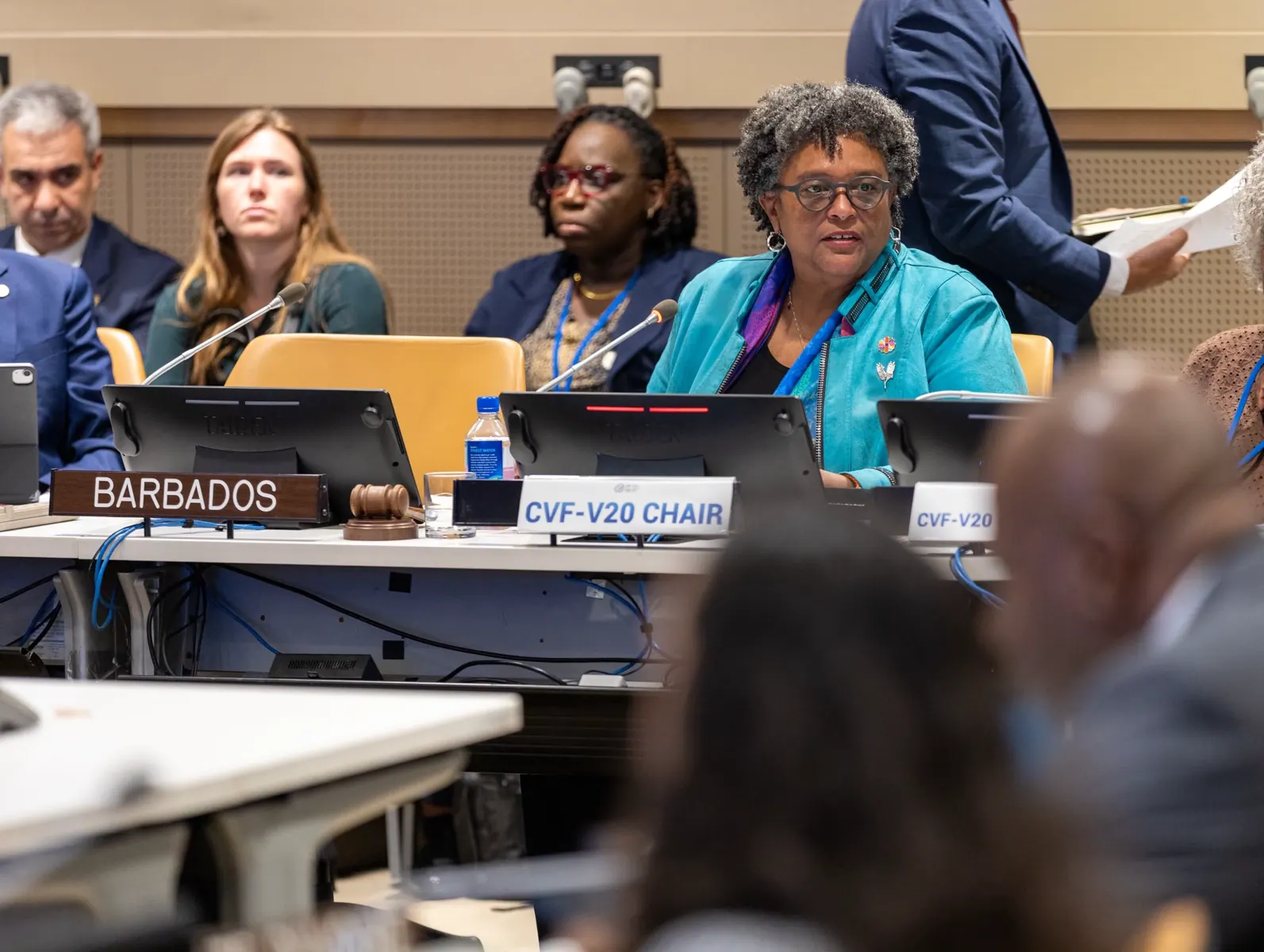
The fourth Climate Vulnerable Forum (CVF) Leaders Meeting was held in New York, where leaders discussed the impact of climate change on economic growth. Prime Minister Dr. Justin Nsengiyumva of Rwanda stated that climate vulnerability is a development constraint that demands a different approach to finance, adaptation, and emissions reduction. He emphasized that climate change is a standing tax on development, levied whether or not countries caused the damage.
According to the World Bank, climate risks could push GDP levels of some countries below baseline standards. The bank identifies dependence on climate-sensitive sectors, including rain-fed agriculture, as a major source of vulnerability. Rwanda, for example, contributes only a tiny share of global greenhouse-gas emissions, yet its economy is already exposed to floods, droughts, and changing rainfall patterns.
The CVF-V20, representing 77 climate-vulnerable developing countries, is pushing for financial and institutional arrangements that can respond to shocks while allowing countries to invest in long-term resilience. The Vulnerability to Viability (V2V) Compact and the Lifeline Fund were discussed at the New York meeting, alongside deeper South-South cooperation. These initiatives aim to support vulnerable countries in building resilience and adapting to climate change.
Prime Minister Nsengiyumva emphasized that resilience cannot become a substitute for cutting emissions. He argued that the full implementation of the Kigali Amendment to the Montreal Protocol is one of the most practical ways countries can simultaneously address climate change and reduce vulnerabilities. Rwanda is preparing to host the 38th Meeting of the Parties to the Montreal Protocol in Kigali from November 2-6.
The CVF-V20 Leaders' Declaration introduces the operationalization of the Lifeline Fund and a campaign for stronger representation in international decision-making. Nsengiyumva called for concessional finance and investment that match the urgency of climate vulnerability, stating that adaptation at the scale required cannot be financed on today's terms.
Climate-related disasters are increasing risks to growth, infrastructure, and livelihoods across the globe, according to the World Bank. The issue is not simply how to survive the next climate shock, but whether the international system can help vulnerable countries develop while the climate they depend on becomes less predictable.
The international community must ensure that developing economies can obtain the technologies needed to grow, while also providing access to affordable finance. The Lifeline Fund and the V2V Compact aim to support vulnerable countries in building resilience and adapting to climate change, and the CVF-V20 is pushing for stronger representation in international decision-making.
Key points
- Climate change is costing vulnerable countries, including Rwanda, 5-7% of GDP.
- The CVF-V20 is pushing for financial and institutional arrangements to support vulnerable countries in building resilience and adapting to climate change.
- Prime Minister Nsengiyumva emphasizes that resilience cannot become a substitute for cutting emissions.